


Yes. Candle fragrances can absolutely trigger headaches in sensitive people, and the culprits are usually volatile organic compounds and strong synthetic odorants drifting through the air you breathe. If a candle is burning right now and your temples are starting to throb, extinguish it, crack a window, and let the room clear before you do anything else. Once you can breathe easy again, switch to an unscented or clean-burning candle while you figure out your personal triggers.
- Extinguish the scented candle immediately and ventilate the room
- Switch to unscented or low-VOC candles during the transition period
- Log the scent, brand, and burn time so you can spot patterns
A clinical study found that perfume is a very common odor trigger among migraine patients, with headaches often starting within minutes of exposure. That kind of fast onset is exactly why the first move is removal, not troubleshooting.
Key Takeaways
Candle fragrance headaches result from a combination of VOC exposure, concentrated odorants, and individual trigeminal sensitivity, and reducing dose is the most reliable fix.
| Point | Details |
|---|---|
| Perfume is the top trigger | Floral and sweet synthetic scents cause headaches faster than woody or herbal ones. |
| Dose drives risk | Shorter burns, bigger rooms, and lower fragrance concentration all cut exposure. |
| Test one scent at a time | Log room size, scent family, and symptoms before trying a new candle. |
| Phthalates deserve scrutiny | Watch for DEP and DnHP on labels, common additives linked to headaches. |
| Wickofhope offers graduated options | Unscented, woodsy, and small-dose formats let sensitive readers reintroduce scent safely. |
Table of Contents
- What Causes A Candle Fragrance Headache?
- Which Candle Ingredients Should You Avoid?
- What Are The Safest Candle Options For Headache Sufferers?
- How Do You Test A New Candle Safely?
- What Home Adjustments Reduce Fragrance Headache Risk?
- Does A Stronger Fragrance Mean A Higher Headache Risk?
- Are Essential Oils Safer Than Synthetic Candle Fragrances?
- What Should Fragrance-Sensitive People Try Instead?
- Why This Site Focuses on Non-Toxic Candle Choices
- Find A Gentler Way To Bring Scent Back Into Your Home
- Sources
What Causes A Candle Fragrance Headache?
Your nose is more connected to your headache response than most people realize. When you inhale a strong scent, odor molecules bind to receptors that feed directly into the trigeminal nerve, the same nerve pathway responsible for a lot of migraine pain. This is called osmophobia when someone develops a heightened, almost defensive reaction to smell, and it’s remarkably common among people who already get migraines.
Paraffin-based candles complicate this further by releasing volatile organic compounds like toluene and benzene, on top of the fragrance oils themselves. Once those compounds hit your sinuses, they can cause irritation, mild inflammation, and in some people, blood vessel dilation that produces the throbbing, pressure-behind-the-eyes feeling many describe as a scent headache.
- Sweet, floral, and perfume-forward scents rank as the most frequently reported triggers
- Trigeminal activation can cause pain even without a true allergic reaction
- Sensitivity is not fixed. It shifts with sleep, stress, and hormones
Fragrance reactions often behave like an irritant response rather than an allergy, which means the same candle can feel fine on a good day and trigger a headache on a day when your body is already under strain.
That variability is why two people can burn the exact same candle and get two completely different results.
Which Candle Ingredients Should You Avoid?
Reading a candle label like a food label sounds excessive until you realize how much sits behind the word “fragrance.” Here’s what actually matters when you’re scanning for red flags.
- Paraffin wax. It’s petroleum-derived and tends to release more soot and VOCs as it burns compared to plant-based waxes.
- Phthalates. Look for or avoid acronyms like DEP and DnHP, which manufacturers use to make scent last longer and which toxicologists flag as likely contributors to headaches and worsened asthma.
- Concentrated “perfume” or “fragrance” blends. The vaguer the label, the harder it is to know what you’re actually inhaling.
- Dyes and additives. These add unnecessary smoke and soot without improving scent quality.
Here’s the catch: “natural” on a label guarantees almost nothing. A candle can be marketed as natural and still burn dirty if the wick sputters or the wax blend is poor quality, so soot production and burn behavior matter just as much as the ingredient list.
What Are The Safest Candle Options For Headache Sufferers?
Not every alternative fits every situation, so it helps to know the trade-offs before you swap products.
- Unscented candles. Zero fragrance load means zero fragrance trigger. This is your safest starting point if you’re not sure what’s setting you off.
- Low-fragrance coconut-soy or beeswax candles. These burn cleaner than paraffin and, at modest fragrance concentrations, tend to be better tolerated by people with sensitivities.
- Wax melts in small doses. Melting a small piece for a short window lets you control exposure far more precisely than a full candle burn.
- Diffusers. They spread scent farther and faster, which can work against you if the goal is minimizing dose. A side-by-side comparison of diffusers and candles is worth a look if you’re deciding between the two.
Woody, herbal, and earthy scent profiles generally trigger fewer reactions than sweet or floral ones. That said, essential oils are not automatically safe just because they’re natural. Anyone can react to any concentrated odor, plant-derived or synthetic.
Pro Tip: Start with the smallest available format, a wax melt or a single tealight, before committing to a full-size candle in a new scent.
How Do You Test A New Candle Safely?
Testing tolerance doesn’t need to be complicated, but it does need to be deliberate. Rushing this step is how people end up blaming the wrong product.
- Burn a small amount, a single wax melt cube or a tealight, in a well-ventilated room for 15 to 20 minutes.
- Leave the room afterward and note how you feel over the next two hours.
- Log the scent family, brand, room size, and anything else going on that day, poor sleep, stress, other fragrances you were exposed to.
- Wait at least a day before testing a different scent so you’re not stacking variables.
- Stop testing and see a doctor if you develop respiratory symptoms, visual disturbances, or migraine-level pain that doesn’t resolve.
| What To Track | Why It Matters |
|---|---|
| Scent family | Reveals whether florals or sweets are your specific trigger |
| Room size and ventilation | Small enclosed spaces concentrate fragrance faster |
| Other exposures that day | Perfume, cleaning products, and stress can stack with candle scent |
| Symptom onset time | Fast onset (minutes) tracks with known migraine trigger patterns |
What Home Adjustments Reduce Fragrance Headache Risk?
Small environmental changes often matter more than which candle you buy. Dose, not just ingredient, drives most reactions.
- Burn candles in larger, open rooms rather than small enclosed spaces
- Keep burn sessions short, 30 to 45 minutes, rather than letting a candle run for hours
- Trim the wick before each burn to cut down on soot output
- Run a HEPA and activated carbon air purifier in rooms where you frequently burn candles, and stay on top of regular HVAC filter changes
- Skip other fragrance sources, perfume, scented cleaners, air fresheners, on days you plan to burn a candle
Pro Tip: If you share a household with someone who has fragrance sensitivity, coordinate laundry and cleaning products on candle days rather than layering multiple scent sources at once.
Reducing other household fragrance exposure matters more than people expect, since headaches are often the result of cumulative exposure rather than one single product.
Does A Stronger Fragrance Mean A Higher Headache Risk?
Generally, yes, and the relationship is fairly direct. A candle labeled with a high fragrance load, sometimes marketed as “extra strong scent throw,” releases more odorant molecules per minute than a lightly scented version of the same product. That higher concentration means more material reaching your nasal receptors and trigeminal nerve endings in the same amount of time, which raises the odds of a reaction in someone who’s already sensitive.
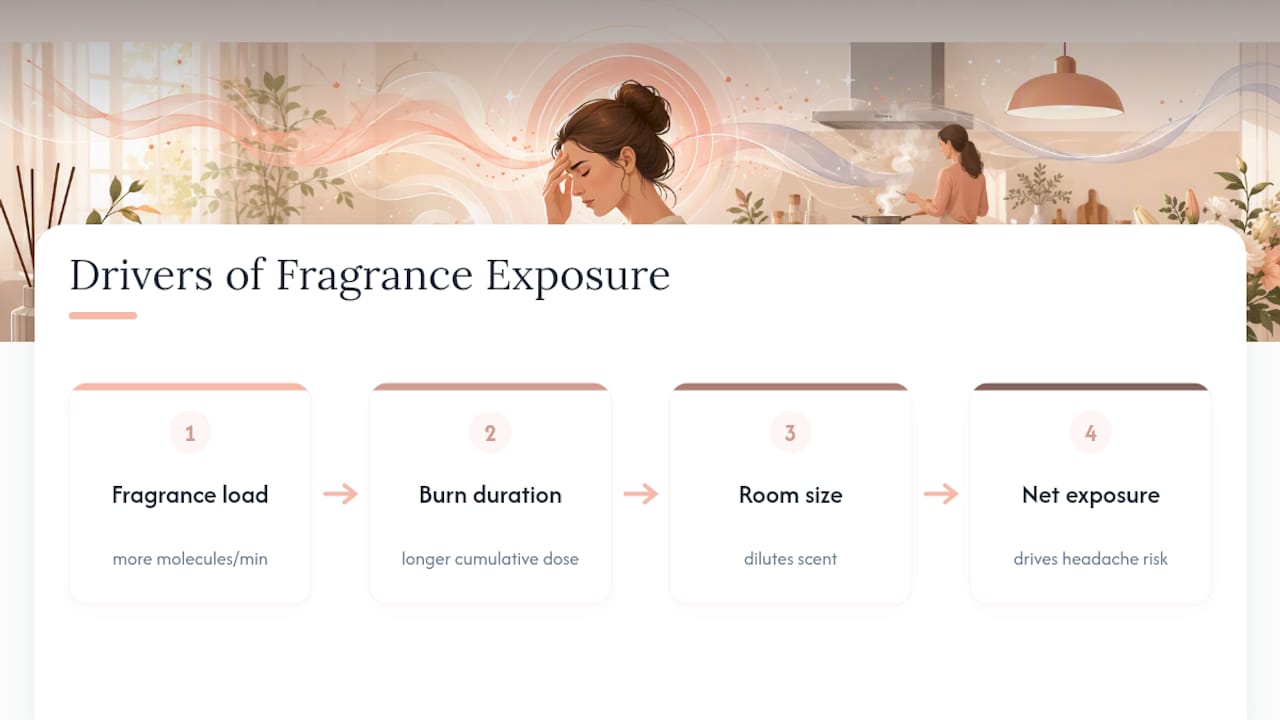
Burn duration compounds this. A heavily fragranced candle burning for three hours in a closed bedroom delivers a far larger cumulative dose than the same candle burning for 20 minutes in an open living room. This is why two people can react so differently to what looks like the same product: one person tests it briefly in a ventilated kitchen, another leaves it burning all evening in a small home office.
Room size acts as a natural dilution factor. The same candle in a 500 square foot open space disperses fragrance far more thinly than in a 100 square foot bathroom. If you love a particular scent but know it pushes you toward a headache, cutting the burn time in half or moving it to a bigger room often makes the difference between tolerable and triggering, without giving up the scent entirely.
This is also why “clean-burning” claims matter. A well-formulated candle at a moderate fragrance concentration puts far less total load into the air than a cheap, overloaded candle marketed as long-lasting.
Are Essential Oils Safer Than Synthetic Candle Fragrances?
Not automatically, and this trips up a lot of well-meaning shoppers who assume “essential oil” means “no risk.” Essential oils are still concentrated aromatic compounds, and a strong lavender or citrus oil can trigger the same trigeminal and osmophobia-driven response as a synthetic floral fragrance. The difference lies less in natural versus synthetic and more in what else rides along with the scent.
Synthetic fragrance blends are where phthalates like DEP and DnHP typically show up, added to help scent linger longer on the wax. Those additives carry their own irritant profile on top of whatever the base fragrance does to your trigeminal nerve. Essential oils skip that particular additive category, but they bring their own variability: oil quality, extraction method, and concentration all shift how strong the reaction can be from batch to batch.
The practical upshot: essential oil candles at low concentration tend to be gentler on sensitive noses than heavily loaded synthetic blends, but “essential oil” is not a blanket safety guarantee. Someone with true osmophobia can react to a pure cedarwood oil diffuser just as easily as a drugstore vanilla candle. Dose and personal tolerance still decide the outcome more than the source of the scent molecule.
What Should Fragrance-Sensitive People Try Instead?
If candles have burned you (literally, in headache terms) more than once, you don’t have to give up home fragrance entirely. You just need to change the format and the dose.
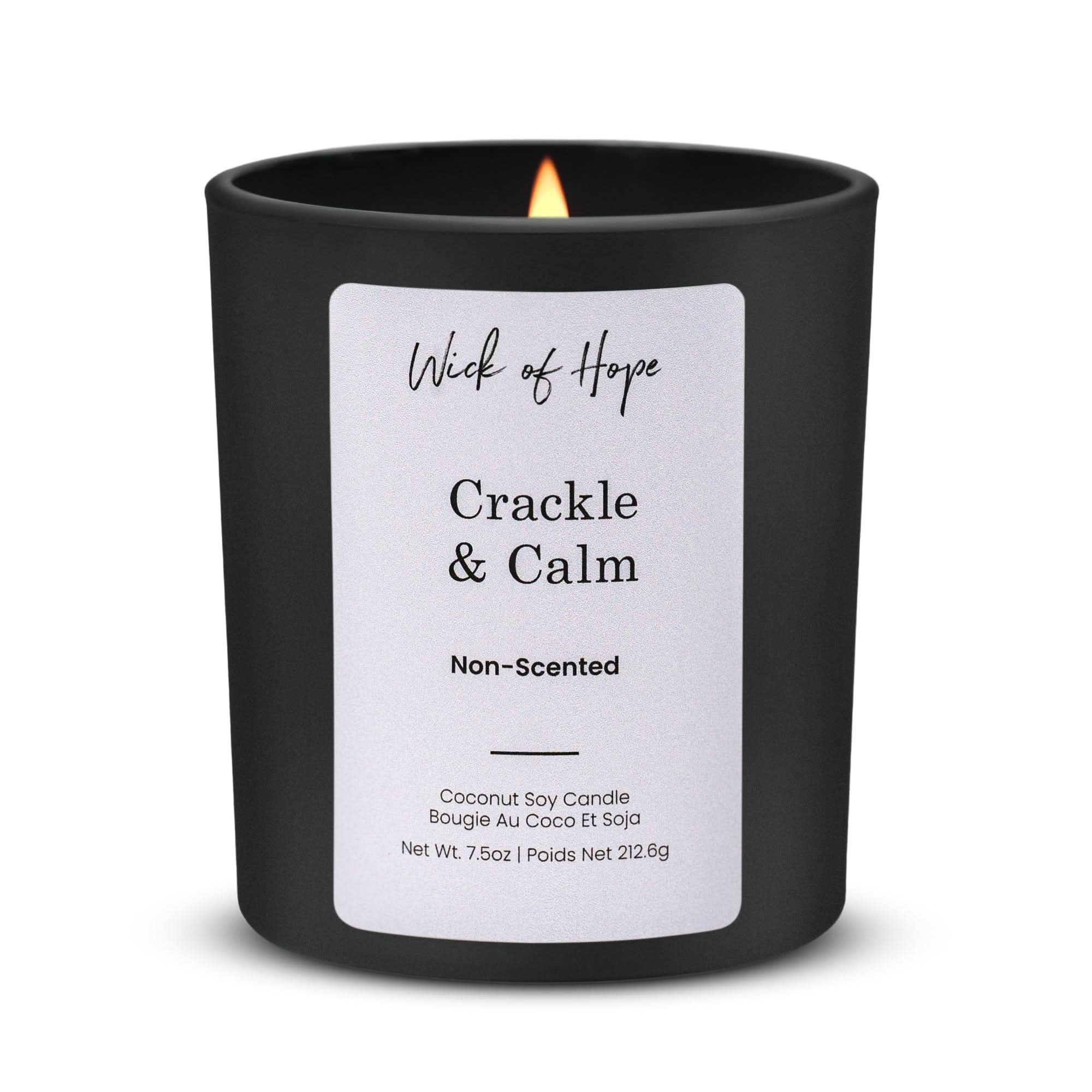
Unscented candles remove the variable altogether while still giving you the visual warmth and wick crackle people love about candles. For those who want a little scent without the risk profile of a heavily fragranced product, woodsy and herbal options in a coconut-soy base tend to sit at a gentler concentration than floral-forward synthetics. Wax melts let you portion out exactly how much scent hits the air, which is harder to do with a full candle burning for hours. Tealights offer the same portion control in an even smaller, shorter-burning format, useful when you’re still figuring out your personal thresholds.
Air purifiers with activated carbon filtration help on the passive side, pulling residual VOCs and particulates out of the air between burns. None of these swaps require abandoning the ritual of a lit candle. They just shift you toward lower total exposure while you learn what your nose and nervous system can actually tolerate.
Why This Site Focuses on Non-Toxic Candle Choices
Wickofhope is written and reviewed with a clean-candle, low-toxin lens, drawing on published research on fragrance and migraine triggers alongside firsthand product formulation experience. Wickofhope candles use coconut soy wax, wooden wicks, and vegan, biodegradable packaging, and every purchase supports women and children escaping crisis. That combination, backed by a 4.9-star rating across more than 650 reviews, reflects a real commitment to safer fragrance formulation, not just a marketing line.
— Andy
Find A Gentler Way To Bring Scent Back Into Your Home
If floral and perfume-heavy candles have been giving you trouble, Wickofhope gives you a lower-risk path back to scented living instead of forcing you to choose between fragrance and comfort. Start with the Crackle & Calm Candle, fully unscented and ideal for confirming whether candles themselves, not just the scent, are part of your trigger.
Once you’ve ruled that out, ease into scent with woodsy options built on coconut soy wax rather than paraffin. The Evergreen Stillness Candle in Pine and Cedar and the Ciderwood Candle in Oak Barrel Cider and Sandalwood both sit in the calmer, earthier scent families that tend to be better tolerated than sweet or floral blends. If you want to control your dose precisely while you test tolerance, the tealight and tealight seconds formats give you short, small-scale burns, and the full range of wax melts lets you portion scent in a way a full candle never can.
Read why non-toxic candles matter for the full formulation story, then browse the scented candle collection to pick your next low-risk scent to test.
Sources
- UCI faculty profile (Crystal Jicha / related commentary)
- Medical News Today — Why does perfume give me a headache?
- HuffPost — Is your scented candle unhealthy?


