


Coconut wax burns cleaner, holds fragrance more effectively, and comes from a renewable crop, which is why so many candle makers have shifted away from paraffin and even plain soy in recent years. It produces less soot than paraffin and burns at a slower, steadier rate, so a well-made coconut wax candle tends to last longer per ounce than most alternatives. It also carries a naturally neutral scent profile, which means your fragrance oils show up exactly as intended instead of competing with the wax itself.
Here’s the quick evidence behind that claim:
- Clean combustion: lower soot output means fewer particles settling on your walls, shades, or lungs.
- Strong scent throw: industry supplier data from Cargill’s NatureWax line points to excellent fragrance retention, both cold (unlit) and hot (burning).
- Longer burn time: slower melting means more hours of light and fragrance from the same candle.
- Renewable origin: coconut palms are a fast-cycling crop, which supports coconut wax’s reputation as one of the more sustainable wax choices on the market.
Key Takeaways
Coconut wax outperforms paraffin and most soy blends on scent retention and clean combustion, but pure coconut wax needs blending to burn reliably.
| Point | Details |
|---|---|
| Clean burn matters | Coconut wax produces less soot than paraffin, reducing residue and improving indoor air quality. |
| Scent throw is the standout benefit | High fragrance load capacity gives coconut wax strong cold and hot throw compared with firmer waxes. |
| Blends solve the softness problem | Pure coconut wax is too soft alone, so soy or beeswax blends add structure without losing scent strength. |
| Test before you commit | Check wick size, fragrance load, and burn time with a real burn test, not just the label. |
| Wickofhope uses coconut-soy blends | Wickofhope formulates candles with coconut-soy wax and wooden wicks for stronger scent throw and cleaner, longer burns. |
Table of Contents
- What Is Coconut Wax and How Is It Made
- The Real Benefits of Coconut Wax for Candles
- Coconut Wax vs. Paraffin, Soy, and Beeswax
- Where Coconut Wax Falls Short
- How to Choose a Coconut Wax Candle That Performs
- Why We Build Around Coconut-Soy Blends
- Ready to Try a Coconut-Soy Candle?
- Sources
What Is Coconut Wax and How Is It Made
Coconut wax starts as coconut meat or coconut oil, which is naturally liquid at room temperature. Manufacturers hydrogenate that oil, a process that raises its melting point and turns it into a solid, workable wax. That’s the same basic chemistry behind hydrogenating vegetable oil into shortening, just tuned for candle performance instead of baking.
Here’s something most buyers don’t realize: pure, 100% coconut wax is rarely what you’re actually burning. It’s naturally soft, almost butter-like, which makes it difficult to mold, ship, or burn predictably on its own. Most commercial coconut wax candles use a blend, typically coconut wax paired with soy wax or a touch of beeswax, to add structure while keeping coconut’s scent-carrying strengths front and center.
Despite the name, coconut wax doesn’t smell like coconut. It’s sensory neutral by design, with a creamy texture and soft, matte finish that candle makers prize for both performance and appearance.
The Real Benefits of Coconut Wax for Candles
Once you understand what coconut wax is, the “why” behind its popularity becomes obvious. Here’s what actually sets it apart.
Clean burn, less soot. Coconut wax candles produce meaningfully less soot than paraffin, which matters if you burn candles regularly in a bedroom, nursery, or home office. Less soot means less residue building up on ceilings, walls, and lampshades over time.

Exceptional fragrance throw. Coconut wax’s molecular structure lets it bind fragrance and essential oils very efficiently, supporting a high fragrance load without the scent turning muddy or weak. That translates to a strong cold throw (the scent you smell before lighting) and a strong hot throw once the candle is burning.
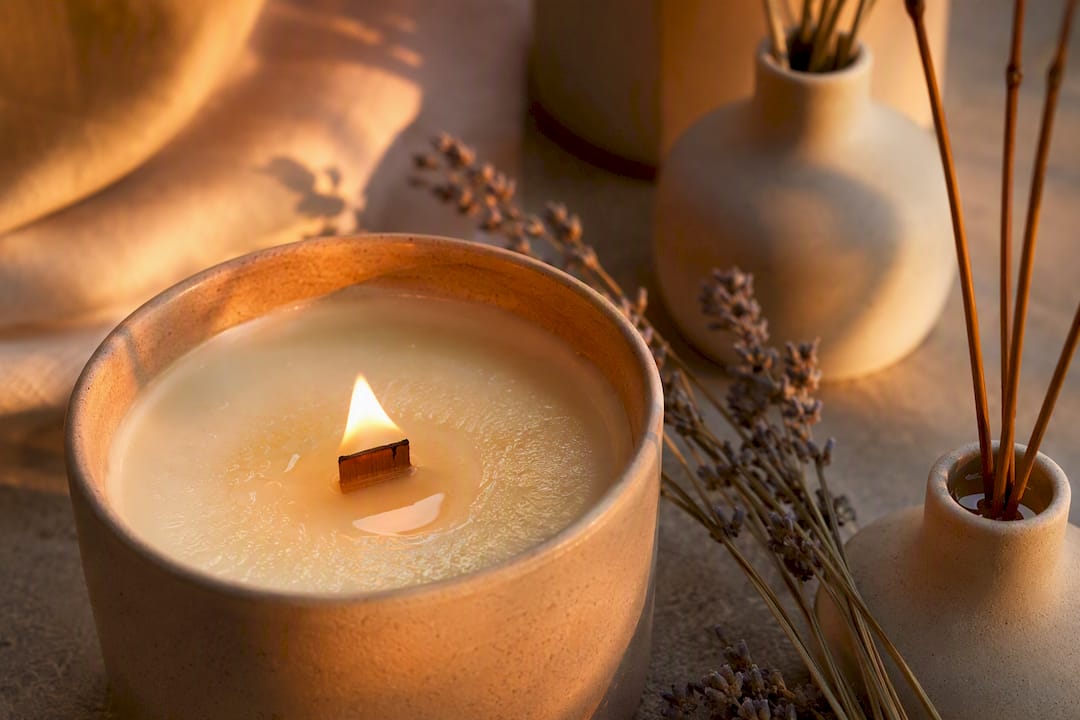
Longer, steadier burn. Slower, more even combustion means your candle lasts longer per dollar, and the flame stays more consistent from edge to edge instead of tunneling down the middle.
Renewable and biodegradable. Coconuts regenerate quickly compared with the petroleum extraction behind paraffin, which is why coconut wax shows up so often on lists of eco-friendly wax alternatives.
Creamy, premium appearance. The soft, matte finish takes color beautifully and gives finished candles a polished, high-end look, something consumer reviews frequently cite as a reason they’ll pay more for coconut-based candles.
Fewer petroleum byproducts. Because coconut wax skips the petroleum refining process paraffin depends on, scent-sensitive households often find it a gentler option, though individual sensitivities vary and no wax is a substitute for medical guidance if you have respiratory concerns.
Pro Tip: If you’re scent-sensitive, do a cold sniff test before buying. Coconut wax’s neutral base means what you smell is the fragrance oil, not the wax fighting it, so a clean cold throw is a good sign of quality.
Coconut Wax vs. Paraffin, Soy, and Beeswax
Every wax makes tradeoffs. Coconut wax wins on scent and clean burn, but it isn’t automatically the right pick for every project or budget.
| Dimension | Coconut Wax | Paraffin | Soy Wax | Beeswax |
|---|---|---|---|---|
| Clean burn / soot | Very low soot | Higher soot, petroleum residue | Low soot | Low soot, natural aroma |
| Burn time / longevity | Long, slow burn | Shorter, faster burn | Moderate to long | Very long |
| Fragrance throw | Strong cold and hot throw | Strong but synthetic-leaning | Moderate, softer throw | Weak, competes with natural honey scent |
| Origin / toxins | Plant-based, low toxin concern | Petroleum-derived | Plant-based | Animal-derived, natural |
| Melting point / wick needs | Soft, needs blending | Firm, widely compatible | Firm, widely compatible | Very firm, specific wicks |
| Typical cost | Highest | Lowest | Moderate | High |
If scent strength and clean combustion top your list, coconut wax or a coconut-soy blend usually wins. If budget is the priority, paraffin or soy will cost less. If you want a fully animal-derived option, beeswax burns clean but throws less scent. Most makers land on a coconut-soy blend because it captures coconut’s fragrance strength without coconut’s structural weaknesses.
Where Coconut Wax Falls Short
Coconut wax isn’t flawless, and any honest look at it has to say so.
- Higher cost per pound than paraffin and typically more than soy, which shows up in retail pricing.
- Soft melt point: pure coconut wax alone is often too soft for reliable candle making, which is why blends are the norm rather than the exception.
- Wicking challenges: an undersized wick paired with soft wax can cause tunneling or an uneven melt pool, so wick selection matters more than with firmer waxes.
- Storage and shipping sensitivity: coconut wax softens faster in heat, so candles need sturdier packaging and care during summer shipping or transit through hot climates.
Pure 100% coconut wax is often too soft for stable candle making on its own. Commercially available coconut wax is almost always a curated blend, engineered to balance that softness against structural integrity and shelf stability.
How to Choose a Coconut Wax Candle That Performs
Here’s what to check before you buy, and what to test once the candle arrives.
- Check the wax blend on the label. Look for the coconut wax percentage and what it’s blended with, usually soy or a small amount of beeswax.
- Ask about fragrance load. Reputable makers can tell you the fragrance load range they tested, which affects both scent strength and burn safety.
- Do a cold sniff test. Unlit, the candle should smell like the fragrance, not like raw wax.
- Run an initial burn test. Watch for soot, an even melt pool edge to edge, and a burn time that matches what’s advertised.
- Confirm the wick is sized correctly. A proper coconut-soy wick pairing prevents tunneling and keeps the flame steady.
- Ask about shipping practices. In warmer months, look for vendors who mention melt-point stability or use insulated packaging.
Pro Tip: Burn any new candle for at least three hours on its first light. That’s usually long enough for the wax pool to reach the edge of the vessel, which prevents tunneling for the rest of the candle’s life.
Why Coconut Wax Holds Scent So Well
Coconut wax’s molecular structure allows it to absorb and retain fragrance oils more efficiently than firmer waxes, which is the real driver behind its strong cold and hot throw. That’s also exactly why nearly every commercial coconut wax product is blended: pure coconut wax’s softness works against structural stability, but pairing it with a firmer plant wax like soy lets makers keep the scent-carrying benefit while gaining a candle that holds its shape and burns evenly. If you’re formulating at home, start testing fragrance loads in the 6% to 10% range and adjust in small increments, since coconut-soy blends respond differently than straight soy.
Pro Tip: When testing a new fragrance in a coconut-soy blend, change only one variable per batch, either the fragrance percentage or the wick size, never both. It’s the only way to know which change actually fixed or caused a burn issue.
Why We Build Around Coconut-Soy Blends
At Wickofhope, we lean on coconut-soy blends because they deliver the fragrance strength coconut wax is known for while keeping the burn structure customers expect from a reliable candle. It’s also why our reviews reflect real satisfaction, not just marketing promises, and why every candle ties back to our mission of supporting women and children escaping crisis.
Ready to Try a Coconut-Soy Candle?
You’ve seen why coconut wax earns its reputation: cleaner burn, longer life, and fragrance that actually holds up from cold sniff to final flicker. Wickofhope builds every candle around a coconut-soy blend specifically to capture that scent strength without the softness problems pure coconut wax brings on its own.
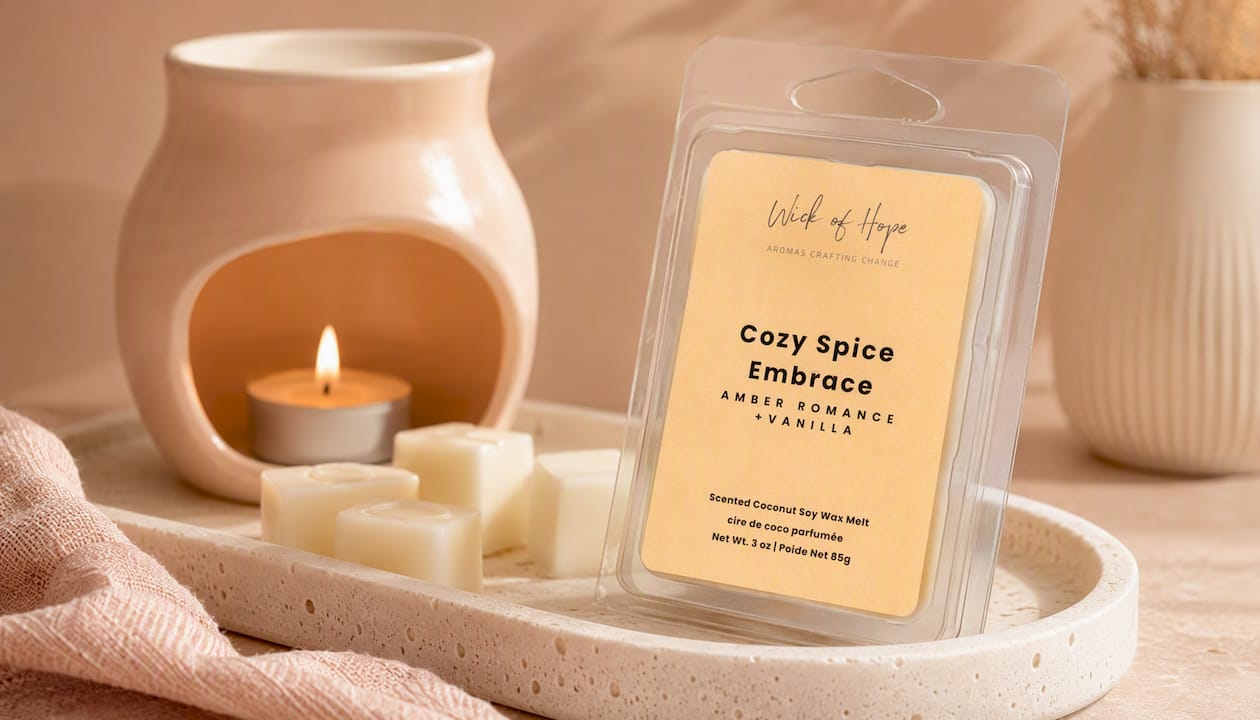
Every candle uses FSC-certified wooden wicks, vegan ingredients, and biodegradable packaging, and each purchase helps fund crisis support for women and children rebuilding their lives. Browse our full lineup of scented candles to find a fragrance that fits your space, or start with our 8oz wooden wick candles if you want a proven size for testing burn time and scent throw at home.
Sources
- Coconut Wax for Candle Making: Myths, Facts and Why It Is Trending - Candle Creations
- NatureWax coconut wax product information - Cargill
- Coconut Wax Candles: The Ultimate Guide to a Cleaner, Better Burn - Discover the Cure Within
- How to Choose the Best Coconut Wax for Candles and Skincare - Plant In (Alibaba)
- What Is Coconut Wax? Benefits, Uses & Why is it Loved - WickMagic


