


Candles are not automatically bad for houseplants, but they can cause real harm through heat, soot, and fragrance chemicals if you burn them too close, too often, or without ventilation. The three risk factors that actually matter are direct heat (leaf scorch), soot landing on leaves (blocked light and clogged pores), and volatile organic compounds from certain waxes and fragrance oils. The single best fix is simple: choose a clean-burning wax, keep a real buffer between flame and foliage, and crack a window while the candle is lit.
Here’s what that looks like in practice:
- Keep candles at a safe horizontal distance from most houseplants.
- Never place a lit candle directly above a plant with insufficient vertical clearance.
- Avoid heavily fragranced paraffin candles in rooms with delicate or thin-leaved species.
Pro Tip: Trim your wick to a quarter inch before every burn to ensure safety and quality as explained in how to easily make your own scented candles. A long, untrimmed wick flickers and smokes more, which sends extra soot straight toward nearby leaves.
Key Takeaways
Candles harm houseplants mainly through heat, soot buildup, and VOC exposure, and clean wax, safe distance, and ventilation address nearly all of that risk.
| Point | Details |
|---|---|
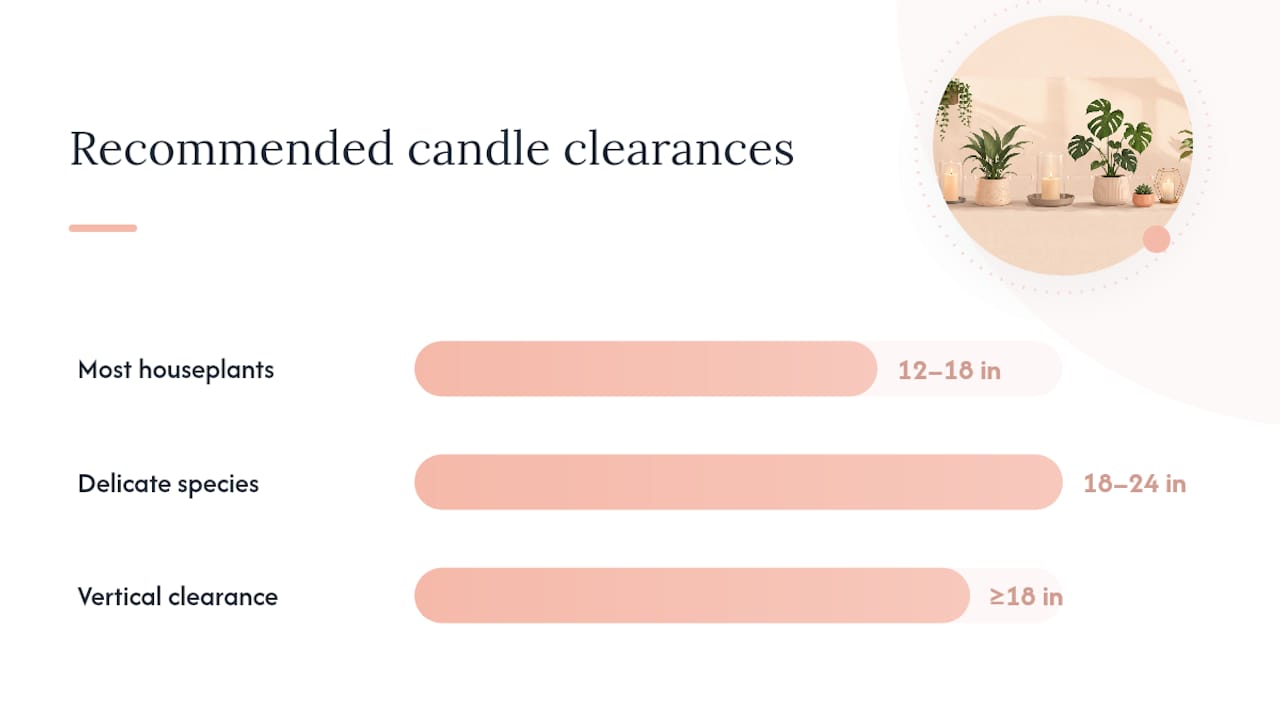
| Keep a real buffer | Stay 12 to 18 inches horizontally for hardy plants, 18 to 24 inches for delicate species. |
| Mind vertical clearance | Leave at least 18 inches below a candle placed above any plant. |
| Cap burn time | Limit continuous burns and ventilate during and after. |
| Watch for soot and curling | Wipe leaves monthly and observe for 72 hours after suspected exposure. |
| Choose clean-burning wax | Wickofhope’s coconut soy candles with wooden wicks reduce soot compared to paraffin blends. |
Table of Contents
- How Do Candles Affect Plant Health?
- Which Candle Materials Are Safest for Plants?
- How Far Should Candles Be From Plants?
- What Does Candle Damage Look Like on Leaves?
- When Should You Skip Candles Near Plants Entirely?
- A Plant-First Take on Candle Habits
- A Cleaner Way to Light Up a Room Full of Plants
- Sources
How Do Candles Affect Plant Health?
Three separate mechanisms do the damage, and they don’t all act the same way.
Heat is the most obvious one. A candle flame radiates warmth outward and upward, and a leaf sitting too close will scorch the same way it would under a heat lamp left on too long. Soil warms too, if the candle sits directly above a pot, which can stress roots even when the leaves look fine.
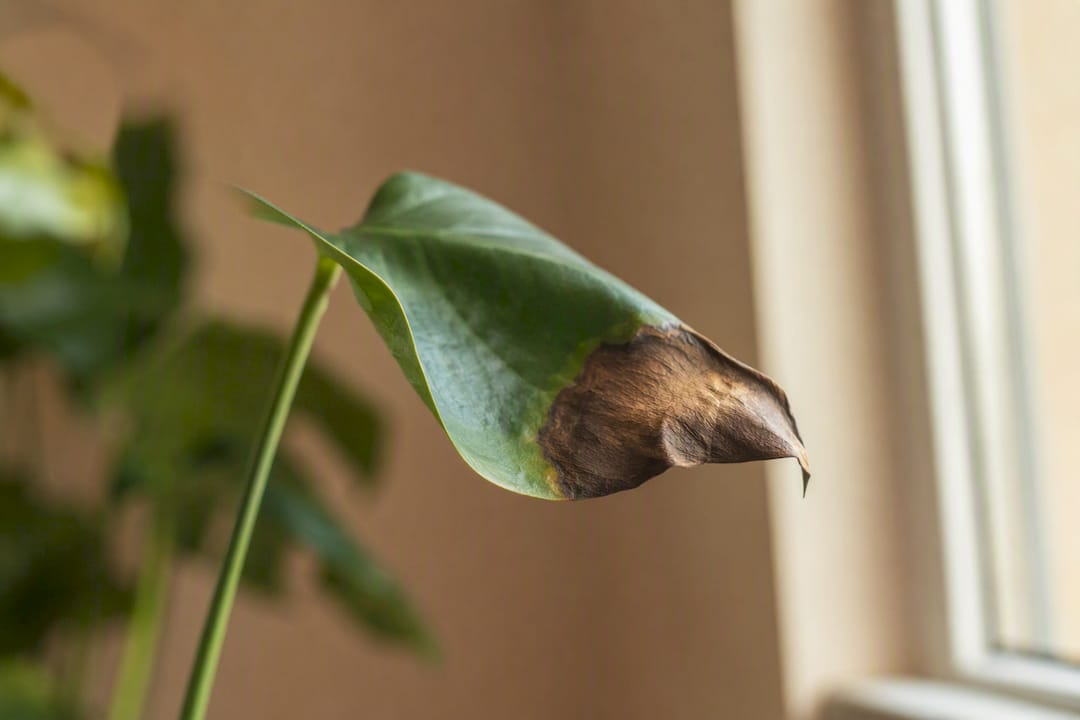
Soot is the quieter problem. Every candle produces some carbon particulate, and a flickering or “stressed” flame produces a lot more of it. That soot settles on leaf surfaces, where it physically blocks light from reaching the chlorophyll underneath and can clog the stomata plants use to breathe. Over weeks of regular burning, a fine black film builds up that most people mistake for dust.
Then there are the volatile organic compounds released by fragrance oils and lower-grade waxes. These gaseous chemicals can settle on foliage and interfere with the plant’s ability to photosynthesize efficiently, and residue can linger on leaf surfaces well after the flame goes out.
Lab testing on scented candle combustion found that particulate matter from candle burning can exceed standard indoor air quality guideline thresholds in enclosed spaces, especially with frequent, unventilated use.
- Heat: causes scorch and soil stress at close range.
- Soot: blocks light and clogs stomata over time.
- VOCs: settle on leaves and can persist for days.
Which Candle Materials Are Safest for Plants?
Not all candles behave the same way once you light them, and the wax and wick matter more than most people assume.
Paraffin, a petroleum byproduct, tends to burn dirtier than natural alternatives, especially when paired with synthetic fragrance oils. Coconut soy, soy, and beeswax candles burn measurably cleaner. Controlled emissions testing shows that candle material and burn stability strongly influence how much soot, PAHs, and ultrafine particulate a candle releases, with unstable or “stressed” flames producing far higher output regardless of wax type.
Wick choice matters just as much. Cotton wicks and FSC-certified wooden wicks tend to burn steadier than cheaper wicks, which reduces the flicker that drives up soot production. Our own comparison of beeswax versus soy candles breaks down how each wax performs in real burn tests.
A quick checklist for plant-friendly candle shopping:
- Choose natural wax (coconut soy, soy, or beeswax) over paraffin blends.
- Pick unscented or lightly scented options for rooms with sensitive plants.
- Look for a cotton or wooden wick, not a metal-core wick.
- Trim the wick and avoid drafty spots to keep the flame steady.
Pro Tip: “Natural” on a label doesn’t guarantee a clean burn. Check the ingredient list for the actual wax type and skip candles that just say “wax blend.”
How Far Should Candles Be From Plants?
Distance depends on the plant, the flame size, and the airflow in the room, but there are workable rules of thumb.
For most common houseplants, a horizontal buffer of 12 to 18 inches keeps leaves out of scorch range and limits soot buildup on foliage. Delicate or thin-leaved species like ferns, orchids, and prayer plants need more room, closer to 18 to 24 inches, since their tissue damages more easily and shows stress faster. Vertical clearance gets overlooked constantly. If a candle sits on a shelf above a plant, leave at least 18 inches so rising heat doesn’t warm the soil or concentrate around the foliage below.
Flame size and drafts change the math. A tall pillar candle throws more heat than a squat votive, and a window draft or ceiling fan can bend a flame sideways, effectively shrinking your safe distance on one side.
On burn time, the three-hour guideline that shows up in most fire-safety literature also works well for plant health. Longer sessions mean more accumulated soot and VOC exposure in the same stretch of air. Crack a window during the burn and for a while after, and let the room air out fully before you consider the space “clear.”
| Plant sensitivity | Recommended distance | Vertical clearance | Guidance on burn duration |
|---|---|---|---|
| Hardy, thick-leaved plants | Moderate distance from candle | Adequate vertical clearance | Limit burn duration appropriately |
| Standard houseplants | Keep a noticeable buffer | Maintain sufficient clearance | Practice moderate burn times |
| Delicate, thin-leaved plants | Greater distance recommended | Consider separate room or larger clearance | Prefer shorter burn sessions |
Pro Tip: If you have a dense plant collection, burn on the opposite side of the room and consider a HEPA filter with activated carbon nearby. It pulls particulate and VOCs out of the air faster than ventilation alone.
What Does Candle Damage Look Like on Leaves?
Candle stress usually shows up gradually, and it’s easy to mistake for other problems if you don’t know what to look for.
Watch for browned or curled leaf edges facing the candle’s direction, a faint gray or black film on leaf surfaces that wipes off on a cloth, and slower growth than the plant showed before you started burning regularly nearby.
If you suspect exposure, give the plant a 72 hour observation window in a fresh-air spot away from the candle. VOC residue and particulate film can linger on leaf surfaces for a couple of days after the flame is out, so moving the plant helps it recover faster.
- Gently wipe leaves with a damp, soft cloth to remove soot film.
- Relocate the plant to better airflow, away from the candle zone.
- Hold off on repotting unless roots show separate signs of stress.
- If symptoms persist past a week, check in with a local nursery or a plant-care forum for input on possible chemical damage.
Pro Tip: Wipe leaves monthly even without suspected damage. A quick clean keeps stomata clear and makes early soot buildup easy to spot.
When Should You Skip Candles Near Plants Entirely?
Some situations call for skipping the candle altogether, and it’s not only about the plants.
People with asthma, COPD, or cardiovascular conditions, along with pets sensitive to smoke or essential oils, are reasons on their own to reconsider frequent burning in shared living spaces. On the plant side, ferns, orchids, prayer plants, and other thin-leaved, humidity-loving species are the most reactive to heat and soot, and they’re often better off in a separate room from regular candle use.
If you want ambiance without the tradeoffs, LED candles, battery-operated flameless options, and ultrasonic diffusers—all used sparingly, since even essential oil mist can stress sensitive foliage—work well. Clean wax melts placed well away from your plant shelf are another middle ground.
- Asthma, COPD, or heart conditions in the household: consider flameless alternatives.
- Pets sensitive to smoke or fragrance: ventilate heavily or skip scented candles.
- Ferns, orchids, prayer plants: keep in a separate room from frequent burning.
- When in doubt, prioritize people and delicate collections over ambiance.
A Plant-First Take on Candle Habits
Most of the anxiety around candles and plants gets the risk backward. The bigger issue usually isn’t whether you burn a candle at all, it’s whether you’re burning a cheap paraffin blend three feet from a fern with no airflow for four hours straight. Distance, wax quality, and ventilation do almost all the work. I’d rather see a plant owner burn a clean coconut soy candle across the room with a window cracked than skip candles entirely out of vague worry. The research backs a measured approach, not a fearful one, so weigh ambiance against your specific plants and adjust from there.
A Cleaner Way to Light Up a Room Full of Plants
If you’ve made it this far, you already know paraffin and heavy synthetic fragrance are the real culprits, not candles as a category. Wickofhope makes that distinction easy to act on: our candles use coconut soy wax and FSC-certified wooden wicks, which burn steadier and produce less soot than the cheap blends most stores sell, and we offer unscented options for rooms with delicate species.

Browse our signature coconut soy candles for a steady, low-soot burn, or check the full scented candle collection if you want fragrance without the paraffin tradeoffs. Prefer flame-free ambiance near a dense plant shelf? The Cozy Spice Embrace wax melt delivers scent without an open flame at all. Every purchase also supports women and children escaping crisis, so lighting up your space does a little good beyond your own living room. Pick a candle, set it across the room from your ferns, and enjoy the evening.
Sources
- Impact of scented candle use on indoor air quality and airborne microbiome | Scientific Reports
- Emissions of soot, PAHs, ultrafine particles, NOx, and other compounds from stressed burning of candles (Atmosphere, 2026)
- That cosy candle? It’s also polluting the air you’re breathing (The Conversation)
- Volatile organic compound — Wikipedia


