


FSC-certified wooden wicks are wooden candle wicks made from timber traceable through Forest Stewardship Council chain-of-custody systems. They give you two things at once: responsible sourcing and a clean, metal-free burn. Before you buy, check for the FSC logo and a certificate number on the product page. That single step tells you whether the claim is real.
TL;DR:
- FSC certification confirms the wood comes from a sustainably managed forest and is verified through Chain of Custody tracking by an independent auditor.
- Checking the certificate number online ensures the certification is current, active, and issued to the manufacturer, not just the retail brand.
- Match the wick size to the container diameter and verify the materials list for non-toxic adhesives and wax compatibility before purchasing.
- Testing a wick involves full burn cycles, trimming before each use, and adjusting size based on melt pool and soot observations to prevent tunneling or smoke.
- FSC certification indicates responsible sourcing but does not guarantee burn performance or absence of chemicals in adhesives, so proper testing and verification remain essential.
Table of Contents
- What Does FSC Certified Mean for Wooden Wicks?
- How Do You Verify an FSC Claim on a Candle?
- What Should You Check Before Buying a Wooden-Wick Candle?
- How Do You Test a Wooden Wick Before Committing?
- How Do You Trim and Care for a Wooden-Wick Candle?
- Why Trust This Guide on FSC-Certified Wicks?
- FSC Certified Wicks: What to Look For and How to Choose
- Meet the Secret Forest Walks Candle
- Where to Verify FSC Claims Yourself
- Sources
What Does FSC Certified Mean for Wooden Wicks?
The FSC label tells you that the wood in your candle wick came from a forest managed under Forest Stewardship Council standards, tracked at every step by an independent auditor. That tracking system has two parts, and knowing the difference matters if you want to shop smart.
Forest Management (FM) certification applies to the forest itself. Chain of Custody (CoC) certification follows the wood after it leaves the forest, through the mill, the wick manufacturer, and finally the candle brand you buy from. CoC is the part that matters most for you as a buyer, because it’s the paper trail that proves the wick in your hand actually came from that certified forest, not just a forest somewhere.
You’ll see three label variants on packaging:
- FSC 100%: every fiber traces back to FSC-certified forests
- FSC Mix: a blend of certified wood, recycled material, and controlled sources
- FSC Recycled: made entirely from reclaimed wood fiber
Here’s what certification does not promise: it says nothing about how the wick burns, whether adhesives used in its construction are non-toxic, or how it performs in your specific wax blend. FSC certification tracks well over 200 million hectares of forest worldwide, and that scale is exactly why the label carries weight. But sourcing integrity and burn performance are two separate questions, and a smart buyer checks both.
How Do You Verify an FSC Claim on a Candle?
A brand can print a leaf logo on a box without much oversight. An actual FSC claim is checkable, and it only takes a few minutes.
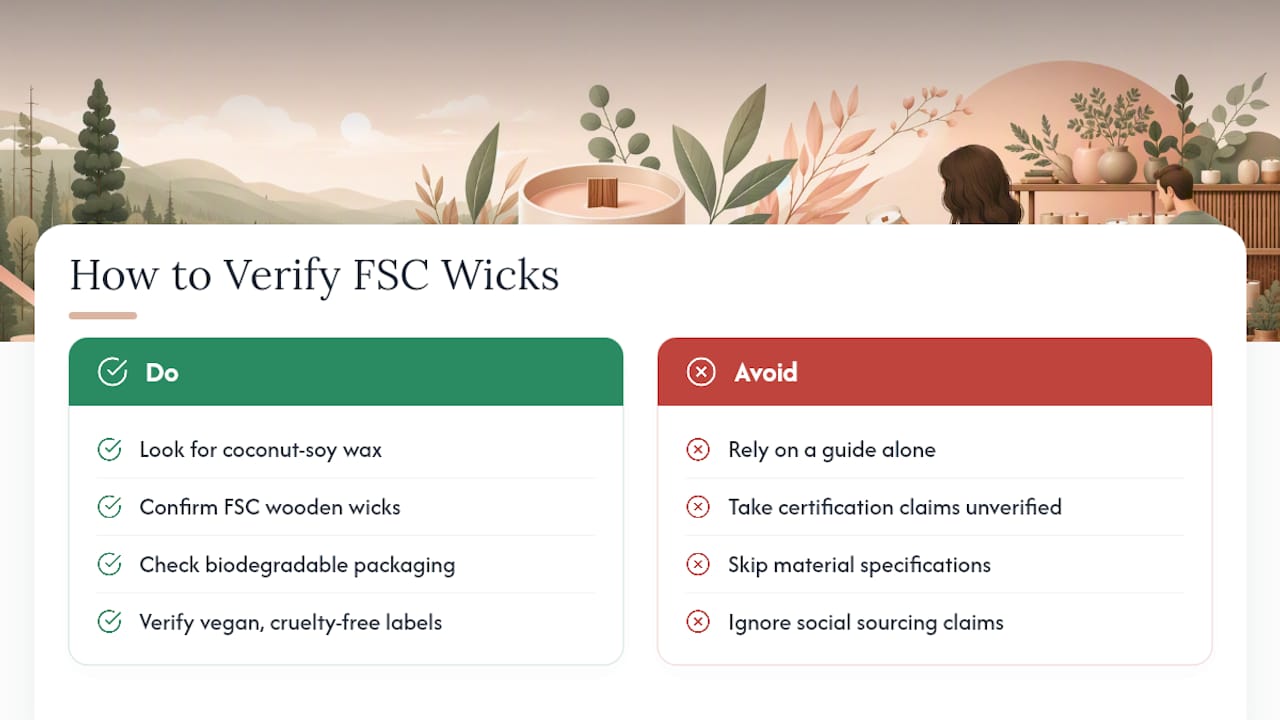
- Look for the certificate or license number printed on the packaging or listed on the product page.
- Enter that number into the FSC Certificate Database to confirm the certification is active and current.
- Check that the manufacturer, not just the retail brand, holds its own Chain-of-Custody certification.
- Look for transparent sourcing language, such as the specific mill or country of origin for the timber.
If a product page only says “eco-friendly” or “sustainably sourced” with no certificate number anywhere, treat that as a red flag. Vague language without a traceable number is marketing, not proof.
Pro Tip: Save a screenshot of the certificate number and its database match before you buy. If you ever want to double-check a reorder, you’ll have it on hand instead of hunting through old packaging.
What Should You Check Before Buying a Wooden-Wick Candle?
A wooden wick that looks right on the shelf can still perform poorly in the wrong candle. Matching wick size to container and wax type is where most disappointing burns actually start.
- Wick width and container diameter should match. A wick built for a 3-inch vessel will struggle to fully melt a wider one, leaving hard wax clinging to the sides.
- Confirm the FSC claim plus the materials list. Look for wording that names non-toxic adhesives, since even a certified wood wick can be undercut by a glue base loaded with unwanted chemicals.
- Check for stated wax compatibility. Coconut-soy blends, straight soy, and paraffin all burn differently, and a wick sized for one may underperform in another.
- Read for recommended fragrance load guidance. Heavier fragrance oil concentrations can drown a wick that’s otherwise perfectly sized.
- Scan customer reviews for real burn reports, not just star ratings. A candle with hundreds of reviews mentioning “even melt pool” or “no tunneling” tells you more than a spec sheet alone.
Retail product pages worth trusting typically list the wick’s exact dimensions, the recommended container size, and the origin of the softwood, often American-milled stock run through certified suppliers. If a page skips all of that, it’s asking you to buy on faith.
How Do You Test a Wooden Wick Before Committing?
Wick performance depends on wax type and fragrance concentration, which means a size that works beautifully in one blend can underperform in another. Testing before you commit, or before you scale a small candle-making batch, saves both money and wasted wax.
- Run the first burn to a full melt pool, letting the candle burn until wax reaches the container’s edge. This can take one to four hours depending on diameter.
- Trim the wick before every burn, and observe how much soot collects on the container wall.
- Watch the melt pool depth. A pool that stays shallow while the sides stay solid means the wick is too small for that container.
- Adjust one variable at a time. If soot is heavy or the flame gutters, try a slightly larger wick before switching wax entirely.
- Test in small batches first. Three or four candles with varied wick sizes tell you more than one candle burned once.
Proper pool formation isn’t cosmetic. A wick that’s undersized will tunnel down the middle and waste wax on the sides; one that’s oversized will smoke and blacken your container. Getting the size right the first time is worth the extra ten minutes of testing.
How Do You Trim and Care for a Wooden-Wick Candle?
Wooden wicks reward a little routine care, and the payoff is that soft, restorative crackle without the smoke.
- Trim to about 1/8 inch to 3/16 inch before every burn, once the wax has fully cooled and hardened.
- A clean, low trim produces a crisp crackle with minimal soot. A wick left too long will smoke and blacken your container’s rim.
- Keep the container away from drafts and off any surface sensitive to heat, since the glass can warm considerably during a long burn.
- Tunneling (a narrow channel down the center) usually means the first burn was cut short. Let subsequent burns run longer to even out the pool.
- Mushrooming or heavy soot often points to a wick that’s too large for the fragrance load or wax blend in use.
Pro Tip: Keep a small pair of wick trimmers or clean scissors near your candle stash. Trimming takes seconds, and it’s the single habit that separates a clean, calm burn from a smoky one.
Why Trust This Guide on FSC-Certified Wicks?
Wickofhope builds every candle around coconut-soy wax and FSC-certified wooden wicks, packaged in biodegradable materials with vegan, cruelty-free ingredients throughout. That combination is the same standard this guide asks you to look for elsewhere.
Customers have responded with high satisfaction ratings, and the company supports social causes with every purchase. That’s not a footnote. It’s built into how the brand sources and sells.
If you want to see certification claims and material specs laid out on an actual product page rather than taking a guide’s word for it, browse the scented candle collection and compare what’s listed against the checklist above.
FSC Certified Wicks: What to Look For and How to Choose
Most advice on eco-friendly candles stops at “look for soy wax and skip paraffin.” That’s incomplete. The wick matters just as much as the wax, and it’s the part shoppers check least carefully.
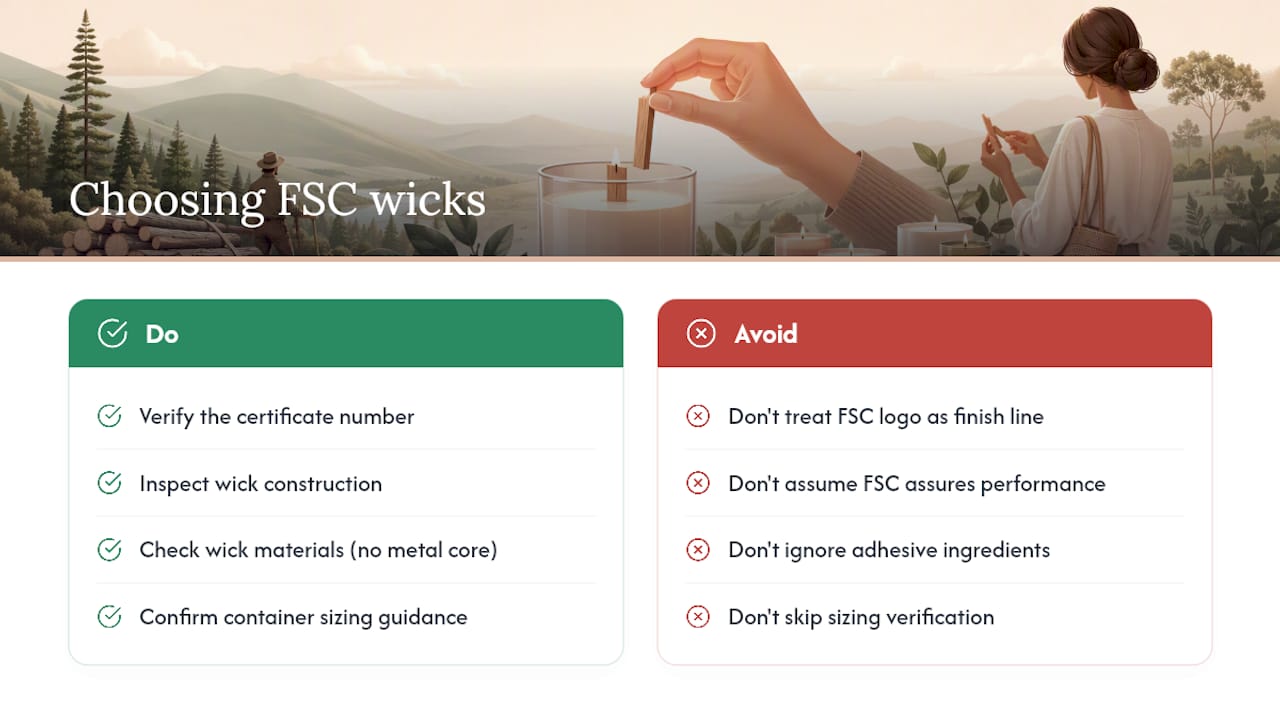
The FSC label solves a sourcing problem, not a performance problem. It tells you the timber came from a responsibly managed forest with a traceable paper trail. It does not tell you whether that wick is sized right for your candle, or whether the adhesive holding it together is something you want burning in your living room. Too many buyers treat the leaf logo as a finish line when it’s really a starting point.
My honest read: prioritize the certificate number first, because that’s the claim most brands fudge or skip entirely. Then look at construction, materials, and stated container sizing. A wooden wick with no metal core already solves the lead-exposure concern that pushed the industry away from metal-core wicks in the first place. What’s left to verify is whether the brand cared enough to get the details right, not just the marketing.
— Andy
Meet the Secret Forest Walks Candle
If you want to see FSC certification and clean-burn construction working together in one candle, the Secret Forest Walks Candle | Sandalwood + Musk pairs a warm, woodsy fragrance with coconut-soy wax and a wooden wick built to the same standards outlined above.
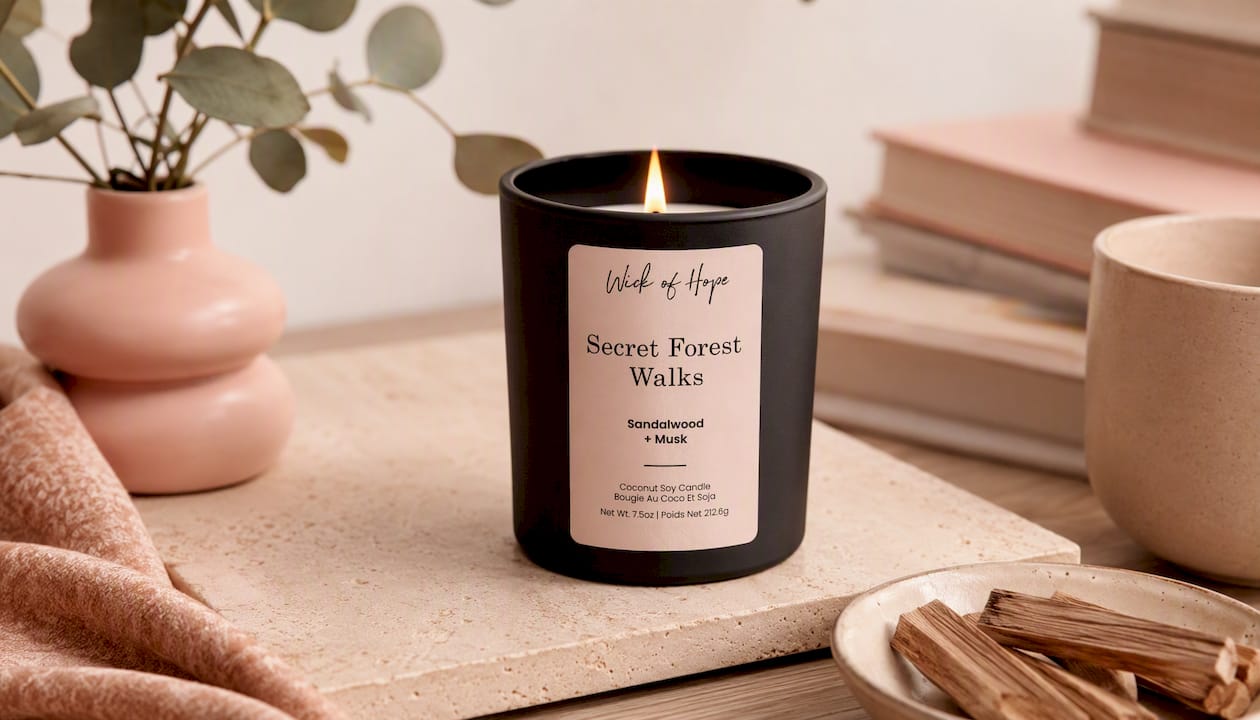
The product page lists the certification and material details you should always look for: FSC-sourced wick, non-toxic ingredients, and biodegradable packaging, all in one place instead of scattered across vague marketing copy. For a deeper look at why the brand builds every candle this way, the piece on wooden wick benefits walks through the reasoning in more detail. When you’re ready, the Sandalwood + Musk candle is available to order directly, with each purchase also supporting women and children escaping crisis.
Where to Verify FSC Claims Yourself
- The FSC label guide breaks down what 100%, Mix, and Recycled claims actually mean.
- How the FSC system works explains Chain-of-Custody tracking in more depth.
- For a third-party explainer on certified sourcing more broadly, see Cozee Bay’s guide to FSC certification.
- Use the FSC Certificate Database directly to confirm any certificate number is active before you buy.
Sources
- What the FSC Labels Mean | Forest Stewardship Council
- How the FSC system works | Forest Stewardship Council
- What is FSC®? | Forest Stewardship Council
- Analysis of lead in candle particulate emissions (PubMed entry)


