


A hand-poured candle is one melted, scented, and poured by a person in small batches instead of by an automated factory line, and for eco-conscious buyers, that difference is worth paying for. You get cleaner-burning wax, closer quality control on every batch, and a stronger scent throw than most mass-produced candles deliver. Hand-poured is the right choice if you care about what you’re breathing at home and want a candle that actually smells like its label once it’s lit.
- Cleaner wax: soy and coconut-soy blends burn with less soot than paraffin
- Better quality control: small batches mean a maker actually checks each pour
- Stronger scent: proper curing time lets fragrance bind fully with the wax
Key Takeaways
Hand-poured candles justify their price through cleaner natural wax, manual quality control, and proper curing time that most mass-produced candles skip entirely.
| Point | Details |
|---|---|
| Definition matters | Hand-poured means manually melted, blended, and poured in small batches with direct quality checks. |
| Cure time signals quality | One to two weeks of curing lets fragrance bind with wax for a stronger hot throw. |
| No candle is bird-safe | Even natural wax candles release particles that can affect sensitive bird respiratory systems. |
| Check wick and wax details | Look for named wax types, FSC-certified wicks, and phthalate-free fragrance labeling before buying. |
| Wickofhope meets the checklist | Coconut-soy wax, FSC wooden wicks, and biodegradable packaging back a 4.9-star rating across 650-plus reviews. |
Where to Learn More
- Candle safety guidance from Health Canada
- Candle-making basics and wick selection from CandleScience
- Browse Wickofhope’s scented candle collection
Table of Contents
- What “Hand-Poured” Actually Means and What Goes Into One
- Why Do Hand-Poured Candles Cost More Than Store Brands?
- How Can You Tell if a Candle Is Genuinely High Quality?
- How Do You Burn a Hand-Poured Candle Safely?
- Reducing Waste With Refillable Candles and Better Packaging
- Where Wick of Hope Fits the Quality Checklist
- What Most Buying Guides Get Wrong About Hand-Poured Candles
- Ready to Try a Hand-Poured Candle That Backs Up Its Claims?
- Frequently Asked Questions
- Sources
What “Hand-Poured” Actually Means and What Goes Into One
Hand-poured means exactly what it sounds like: a person melts the wax, blends in fragrance oil, and pours each container by hand in a batch small enough to monitor closely. Automated factory lines pour thousands of units an hour with no one checking pour temperature or fragrance load candle by candle. A small-batch maker can catch a bad pour before it ships.
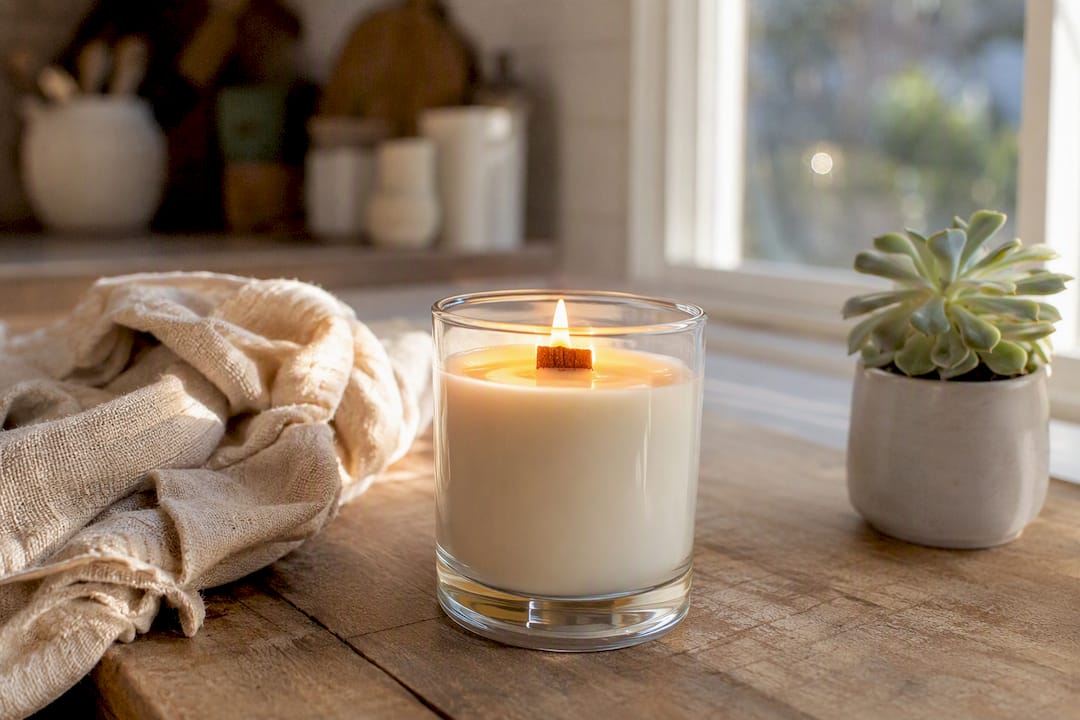
Most quality hand-poured candles use soy wax or a coconut-soy blend rather than paraffin, because these natural waxes burn cleaner and release less soot. Wicks matter too. Cotton wicks are standard, but wooden wicks, especially those certified by the Forest Stewardship Council, add a gentle crackle and burn evenly in wider jars.
Fragrance is where things get technical. Reputable makers use phthalate-free, candle-safe fragrance oils rather than straight essential oils, since essential oils can break down chemically at candle-burning temperatures and produce inconsistent scent.
Pro Tip: If a candle label just says “natural fragrance” with no mention of phthalate-free testing, ask the maker directly. Vague fragrance language is one of the most common gaps between marketing and manufacturing.
Why Do Hand-Poured Candles Cost More Than Store Brands?
The price gap comes down to labor, ingredients, and time, not markup for its own sake. A machine that pours 500 candles an hour has no labor cost per unit worth mentioning. A person pouring 40 candles by hand, testing burns, and adjusting fragrance ratios batch by batch does.
Ingredients cost more too. Soy and coconut-soy wax blends run higher than paraffin, phthalate-free fragrance oils cost more than industrial fragrance compounds, and FSC-certified wooden wicks aren’t cheap compared to generic cotton.
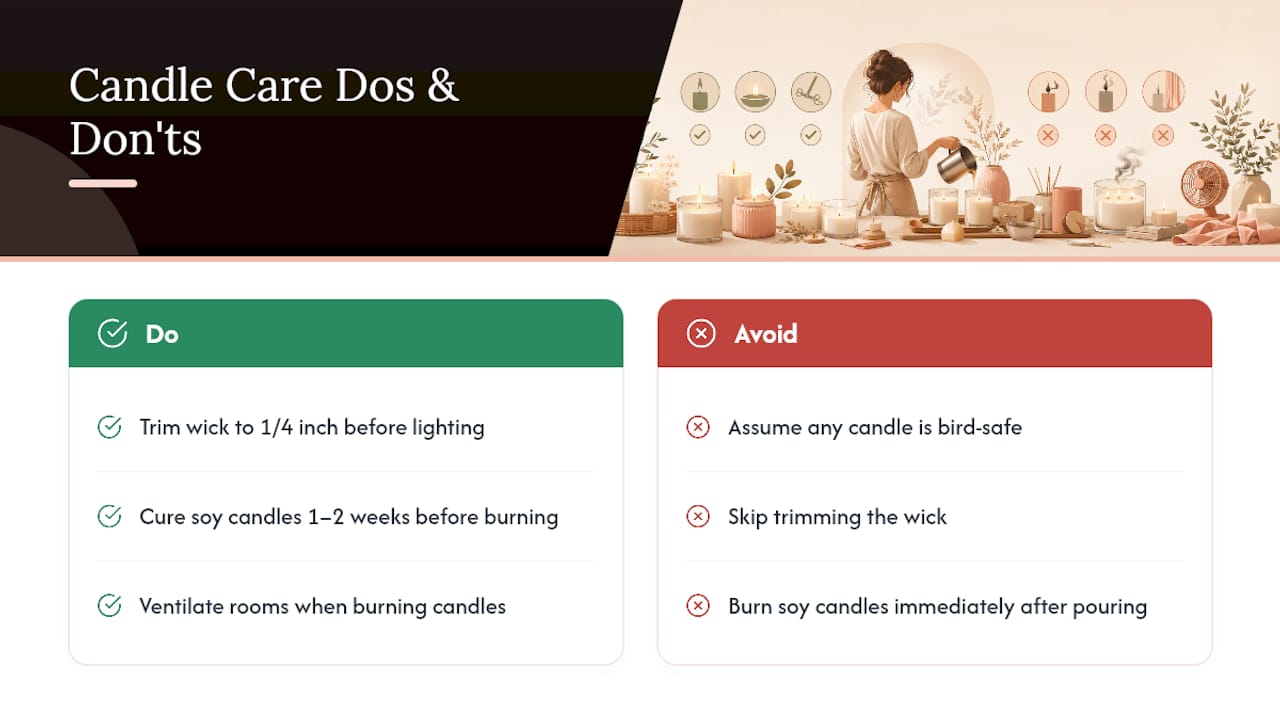
Then there’s curing. Handcrafted soy candles typically need one to two weeks after pouring for the fragrance to bind properly with the wax, which is what produces a strong hot throw once lit. Skip that step and you get a candle that smells great in the jar and disappointing when burning. Makers who bother to cure their inventory are paying for shelf space and patience most mass producers skip entirely.
- Labor: manual pouring, test burns, and batch-by-batch quality checks
- Ingredients: natural wax blends, vetted fragrance oils, and better wicks
- Curing time: one to two weeks for full scent development
- Longevity: a well-made candle burns longer and often comes in a refillable jar, offsetting the higher upfront cost
How Can You Tell if a Candle Is Genuinely High Quality?
Not every candle marketed as “artisan” or “small-batch” actually delivers on that promise. Here’s how to check before you buy, whether you’re browsing online or standing at a craft market table.
- Read the wax type. Look for soy, coconut-soy, or another named natural wax. If the listing just says “premium wax blend” with no specifics, that’s a red flag.
- Check for phthalate-free or candle-safe fragrance language. This tells you the maker sourced fragrance oils meant for combustion, not fragrance meant for lotion or soap.
- Look at wick details. Cotton is fine; FSC-certified wood wicks or lead-free cores are a stronger signal of a maker who sources carefully.
- Look for cure time or burn hours listed. A maker who states “cured two weeks” or “45-hour burn time” has actually tested the product.
- Ask about pour temperature and test burns if it isn’t listed. Makers following recommended pour temperatures around 120 to 140 degrees Fahrenheit tend to produce a smoother finish with fewer air pockets.
- Check reviews and return policy. A maker with hundreds of genuine reviews and a clear return policy has less to hide than one with none.
Pro Tip: At a craft market, ask the maker how long they cure their candles before selling. A confident, specific answer, like “ten days minimum,” tells you more than any label on the jar.
How Do You Burn a Hand-Poured Candle Safely?
Getting the most scent and life out of your candle starts with the first burn. Let it melt all the way to the edges of the container on that first light, which can take two to four hours depending on jar size. Cutting it short creates a “tunnel” where wax never melts evenly again.
Trim the wick to about a quarter inch before every lighting. A too-long wick produces a bigger flame, more soot, and faster burn-through.
Burn any candle for no more than three to four hours per session, and let it cool completely before relighting. Wide jars, generally over four inches across, often need two or three wicks positioned evenly apart to get a full melt pool without one wick working overtime.
On pets: there’s no such thing as a truly bird-safe candle. Birds have extremely sensitive respiratory systems, and even natural, cleaner-burning candles release airborne particles and fragrance compounds that can affect them. If you keep birds, the safer move is ventilation, unscented or low-fragrance options, and keeping candles out of the room your birds live in entirely. Dogs and cats tolerate most candles better, but good ventilation and monitoring still apply.
- Let the first burn create a full melt pool before extinguishing
- Trim the wick to a quarter inch before each lighting
- Cap burn sessions at three to four hours
- Wipe out cooled wax residue with a paper towel before reusing or refilling the jar
Reducing Waste With Refillable Candles and Better Packaging
Choosing a refillable vessel over a single-use jar is one of the simplest ways to cut candle waste at home. Refill and jar-return programs keep glass and ceramic containers in circulation instead of sending them to the recycling bin after one burn, the same logic that’s pushed refill systems across other household categories.
Packaging matters just as much as the vessel. Biodegradable boxes, paper-based fill instead of plastic bubble wrap, and minimal outer packaging all reduce what ends up in landfill after the unboxing moment passes.
Preparing a jar for reuse is simple: scrape out leftover wax with a butter knife once it’s cooled slightly but is still soft, wipe with a paper towel, then wash with warm soapy water. A clean jar is ready for a refill, a new candle, or repurposing as a small planter or storage container.
Where Wick of Hope Fits the Quality Checklist
Wick of Hope builds every candle around the same standards outlined above: clean-burning coconut-soy wax, FSC-certified wooden wicks, and biodegradable packaging with no single-use plastic padding. Every purchase also supports women and children escaping crisis, which is a rare thing to find paired with a 4.9-star rating across more than 650 reviews.
A candle that burns clean, smells intentional rather than synthetic, and funds something bigger than the sale itself is what “artisanal” is supposed to mean in the first place.
Three products worth knowing:
- The 8oz Candle (Seconds) suits budget-conscious buyers who want the same coconut-soy formula at a lower price, with only minor cosmetic imperfections.
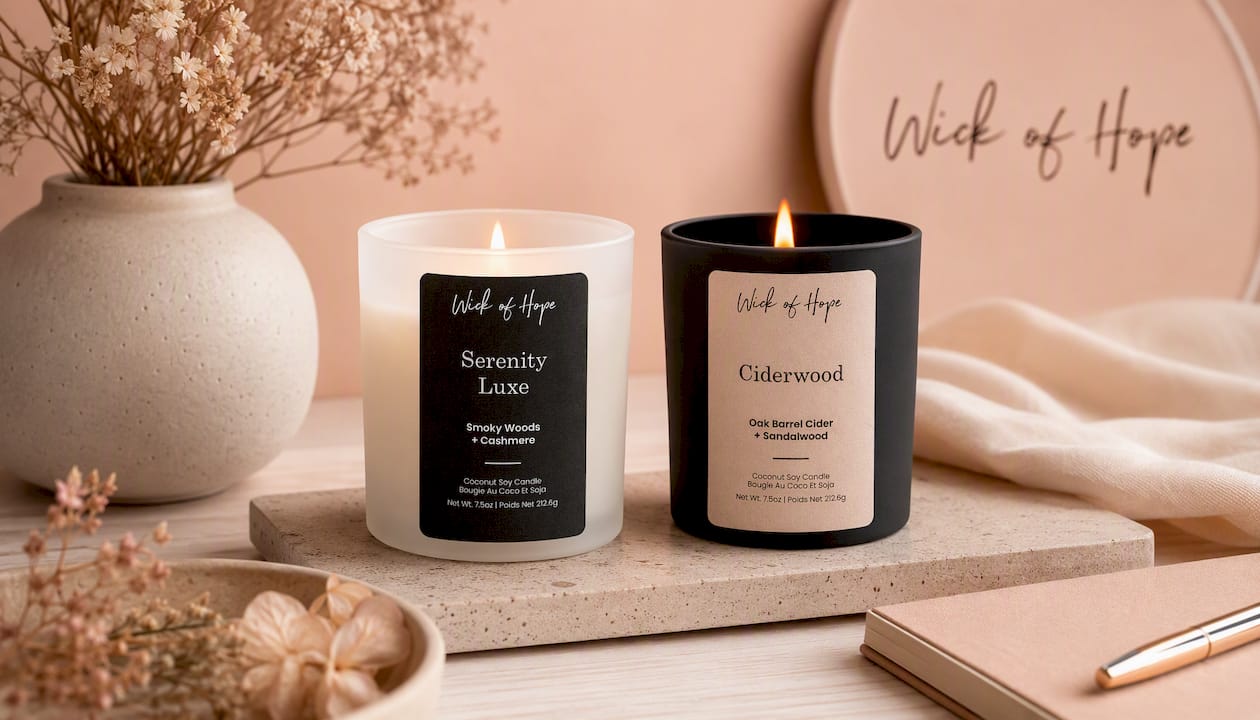
- The Serenity Luxe Candle in Smoky Woods and Cashmere is the flagship option for gift-giving, with a deep, layered fragrance built for cold-weather evenings.
- The Ciderwood Candle in Oak Barrel Cider and Sandalwood suits anyone who wants a warmer, spiced scent without leaning sweet.
Each product page lists wax type, wick material, and fragrance details up front, so you can check the same quality signals covered earlier before you buy.
What Most Buying Guides Get Wrong About Hand-Poured Candles
Most advice on this topic treats “hand-poured” as a marketing term rather than a manufacturing claim, and that’s the gap worth closing. The real signal isn’t the phrase on the label. It’s whether a maker names their wax type, states a cure time, and can answer a direct question about pour temperature without stumbling.
Conventional wisdom also overstates how safe “natural” candles are around every pet. Soy and coconut-soy wax genuinely burn cleaner than paraffin, but clean-burning isn’t the same as risk-free, especially for birds. A responsible buyer treats any burning candle as something to ventilate around, not something to trust blindly because the label says non-toxic.
If you take one thing from this guide, prioritize the cure time and wick material over the fragrance description. A beautifully described scent means nothing if the wax was poured yesterday or the wick chokes out halfway through the jar. Everything else, the packaging, the story, the price point, matters less than those two technical details.
Ready to Try a Hand-Poured Candle That Backs Up Its Claims?
You’ve now got the checklist: clean wax, real cure time, honest fragrance labeling, and a maker willing to talk about how they actually pour. Wickofhope was built around exactly that standard, using coconut-soy wax, FSC-certified wooden wicks, and biodegradable packaging with no shortcuts hidden behind pretty branding.
Every order also funds support for women and children escaping crisis, so your purchase does more than fill a room with scent. If you want a lower-cost entry point, the 8oz Candle (Seconds) gives you the full formula at a reduced price. For a gift or a deeper seasonal scent, browse the Serenity Luxe Candle or explore the full scented candle collection and pick the one that matches the room you’re lighting it in.
Frequently Asked Questions
What does “hand-poured” mean on a candle label? It means a person melted the wax, mixed in fragrance oil, and poured each candle manually in a small batch, rather than a machine producing hundreds per hour with no individual oversight.
Are hand-poured soy candles better than paraffin candles? Soy and coconut-soy blends burn with less soot than paraffin and tend to carry fragrance more cleanly, though quality still depends on the specific maker’s process and ingredients.
How long should a hand-poured candle cure before burning? Most soy-based candles benefit from one to two weeks of curing after pouring, which lets the fragrance fully bind with the wax and improves scent strength once lit.
Is any candle actually safe for birds? No. Birds have highly sensitive respiratory systems, and even natural, low-fragrance candles release airborne particles that can affect them, so the safer approach is ventilation and keeping candles out of rooms where birds live.
How often should I trim a candle wick? Trim the wick to about a quarter inch before every lighting to keep the flame controlled and reduce soot buildup.
Sources
- Candle safety — Health Canada
- How to make soy candles — Food52
- Candle-making basics — CandleScience
- Comprehensive guide to candle regulations (Japa Regulatory Solutions)


