


Yes, most candle jars are recyclable, but only after you’ve stripped them down to bare, clean glass. Before that jar goes anywhere near your recycling bin, you need to do three things: melt or scrape out every trace of wax, pull the metal wick tab and any glued-on labels, and confirm your jar is standard container glass rather than a heat-treated specialty type. Skip any of those steps and your local facility may reject the whole batch, not just your jar.
Here’s what has to happen first:
- Remove all wax residue. Even a thin film can gum up the recycling stream.
- Pull the metal wick tab and lid. Mixed materials confuse sorting equipment.
- Check the glass type. Standard container glass recycles differently than thicker, oven-safe glass.
Municipal programs like Recycle BC confirm glass and aluminum candle containers are acceptable, provided the wax is gone and, when curbside pickup doesn’t take glass, a depot fills the gap.
Key Takeaways
Recycling a candle jar successfully depends on three factors working together: correct glass type, complete wax removal, and separation of metal or mixed materials before disposal.
| Point | Details |
|---|---|
| Check the glass type first | Standard soda-lime glass recycles more reliably than thick, heat-resistant, or borosilicate jars. |
| Remove wax completely | Use the freezer, hot-water, or oven method, then dispose of solid wax in regular trash, never down a drain. |
| Strip metal and labels | Pull wick tabs, separate metal lids, and remove adhesive labels before recycling glass. |
| Know your local options | Use curbside collection when available, or find a depot through programs like Recycle BC when it isn’t. |
| Reuse durable jars first | Thick or specialty glass jars often make better long-term keepsakes than recycling candidates, and Wickofhope designs its packaging with standard, recyclable-friendly glass in mind. |
Table of Contents
- Can Candle Jars Be Recycled? It Depends on the Glass
- How Do You Clean a Candle Jar Before Recycling?
- Where Should You Take a Cleaned Candle Jar?
- What Can You Do With a Candle Jar That Won’t Recycle?
- What Wick of Hope Looks for in Recyclable Candle Packaging
- Whether Candle Jars Are Accepted by Recycling: The Short Answer With Conditions
- How Glass Type Changes What Happens After You Recycle
- Why Wax Residue Disqualifies an Otherwise Good Jar
- Removing Wick Tabs, Lids, and Labels Before You Recycle
- Choosing Between Curbside, Depots, and Take-Back Programs
- Reuse and Upcycle Ideas Worth Trying First
- What the Research Actually Supports
- A Cleaner Way to Candle, From the Jar Out
- Frequently Asked Questions
- Sources
Can Candle Jars Be Recycled? It Depends on the Glass
Not all glass is created equal, and this is where most well-meaning recyclers get tripped up. The jar sitting on your nightstand might look like ordinary glass, but recycling facilities care deeply about what kind it actually is.
Most candle containers are made from container glass commonly used for jars, bottles, and drinking glasses. It melts at a predictable temperature, which is exactly what commercial glass furnaces are built around. That predictability is why soda-lime glass has such a smooth path back into new containers.
Heat-resistant glass, sometimes marketed as premium apothecary-style candles, is a different story. It’s engineered to withstand thermal shock, which means it melts at a different furnace temperature than soda-lime glass. When the two get mixed in a recycling load, facilities often can’t process them together, so specialty glass frequently gets diverted or rejected outright rather than risk contaminating an entire batch.
A few clues can help you tell the two apart:
- Thickness and weight. Heat-resistant jars tend to feel noticeably heavier and thicker-walled.
- Embossed markings. Some manufacturers stamp “ovenproof” or a glass-type code directly on the base.
- Brand documentation. Product pages or packaging inserts sometimes specify the glass type outright.
If you can’t tell by looking, Lifestyle Packaging notes that standard container glass is usually your safest bet for curbside acceptance, while decorative or heat-treated glass often needs specialist handling. Glued-on decorations, wax-coated finishes, or bonded metal accents complicate things further. Any of those can push a jar out of the recyclable category and into either landfill or reuse territory, so it’s worth checking before you assume.
How Do You Clean a Candle Jar Before Recycling?
Wax residue is the single biggest reason recyclable jars end up rejected. A film of leftover wax coats the glass, contaminates the recycling stream, and can gum up sorting machinery designed for clean containers. Getting a jar recycling-ready takes a few minutes, and you likely already own everything you need.
Here’s the order to try these methods, fastest to most stubborn:
- Freezer method. Pop the jar in the freezer for a few hours. Wax contracts as it cools and typically pops right out or loosens enough to pry free with a butter knife.
- Hot-water melt-and-pour. Fill the jar with near-boiling water, let it sit for a few minutes until the wax softens and floats, then pour off the water and wax once it cools and solidifies on the surface.
- Oven or double-boiler for stubborn residue. Place the jar upside down on a lined baking sheet in a low oven (around 170°F) until the wax melts and drips out, or set the jar in a pot of simmering water to loosen thick buildup.
- Final scrape and wipe. Use a butter knife or old spoon to scrape remaining residue, then wipe with a paper towel and a little dish soap.
Chatelaine recommends exactly this sequence for household candle jars, and the safety notes matter: never pour melted wax down your sink, since it hardens inside pipes and causes clogs. Solid wax scraps belong in your regular trash, not your drain.
Once the glass is clean, remove the metal wick tab. It usually pries loose easily with pliers or a flathead screwdriver once the wax around its base has softened.
Pro Tip: Keep an old jar candle labeled “wax catcher” near your stove. Every time you scrape a jar, drop the wax bits inside instead of the trash. Once it’s full, you’ve got a head start on DIY fire starters or a rustic tealight remake.
If you’re working through a whole shelf of empties, our step-by-step wax removal guide walks through each method with more visual detail.
Where Should You Take a Cleaned Candle Jar?
Once your jar is spotless, the next question is where it actually goes. That answer depends more on your municipality than on the jar itself.
Start with your curbside program’s rules. Most cities accept clean glass containers in either a blue box or a dedicated glass stream, and “clean” typically means free of wax, food residue, and labels wherever possible. If your curbside service doesn’t take glass at all, a depot is your fallback. Recycle BC confirms depots accept glass containers specifically for residents whose curbside collection doesn’t include glass, and portals like Circular Materials can help you locate the nearest one.
A few other notes worth keeping in mind:
- Aluminum tins used for travel candles typically go straight into your regular recycling stream once wax is removed, no depot required.
- Metal lids and screw tops should be separated from glass jars before recycling; most facilities sort them differently.
- Brand take-back programs, sometimes run through TerraCycle-style partnerships, offer another route for jars your municipality won’t accept. These programs shift often, so check the brand’s current site before mailing anything in.
When in doubt, a quick call to your municipal waste line clears up more confusion than guessing ever will.
What Can You Do With a Candle Jar That Won’t Recycle?
Not every jar is destined for the recycling bin, and that’s not necessarily a loss. Thick, heat-resistant, or decoratively finished jars often make better keepsakes than recyclables anyway.
A cleaned candle jar has real second-life value:
- Bathroom storage. Cotton balls, hair ties, and Q-tips look tidier in glass than in their original packaging.
- Planters for small succulents. Drainage isn’t ideal, but succulents tolerate infrequent watering well.
- Desk organization. Pens, paper clips, and loose change all have a home in a repurposed jar.
- DIY candle refills. Melt in new wax and a fresh wick for a low-waste refill, especially handy with sturdier jars.
If you’re reusing a jar for food storage, make sure every trace of fragrance oil and wax is gone first, since scent oils can linger and transfer to whatever you store. Durable, specialty glass jars are actually the best candidates for long-term reuse rather than recycling. They were built to handle heat and stress that the average container jar wasn’t, so they’ll outlast a dozen reuse cycles before showing wear.
What Wick of Hope Looks for in Recyclable Candle Packaging
At Wickofhope, sustainability shapes every material decision we make, starting with what goes into the jar and what the jar itself is made from. Our candles are poured from natural coconut soy wax and finished with FSC-certified wooden wicks, paired with biodegradable packaging designed to leave less behind, not more.
When you’re shopping for candles with an eye on what happens after the flame burns out, a few habits go a long way:
- Favor jars made from standard container glass over heavily embossed or ultra-thick decorative vessels.
- Check a brand’s product page for material specifics before assuming a jar is curbside-friendly.
- Look for any mention of take-back programs or refill options, since availability shifts often.
A candle’s environmental footprint doesn’t end at the wick. It extends to the jar, the wax, and what happens to both once the scent fades.
Our recyclable packaging breakdown covers exactly which materials we use and why we chose them.
Whether Candle Jars Are Accepted by Recycling: The Short Answer With Conditions
Most municipal recycling programs will accept a candle jar, but acceptance always comes with strings attached. The jar has to be glass or aluminum, completely free of wax, and stripped of any metal or mixed-material components before it goes in the bin.
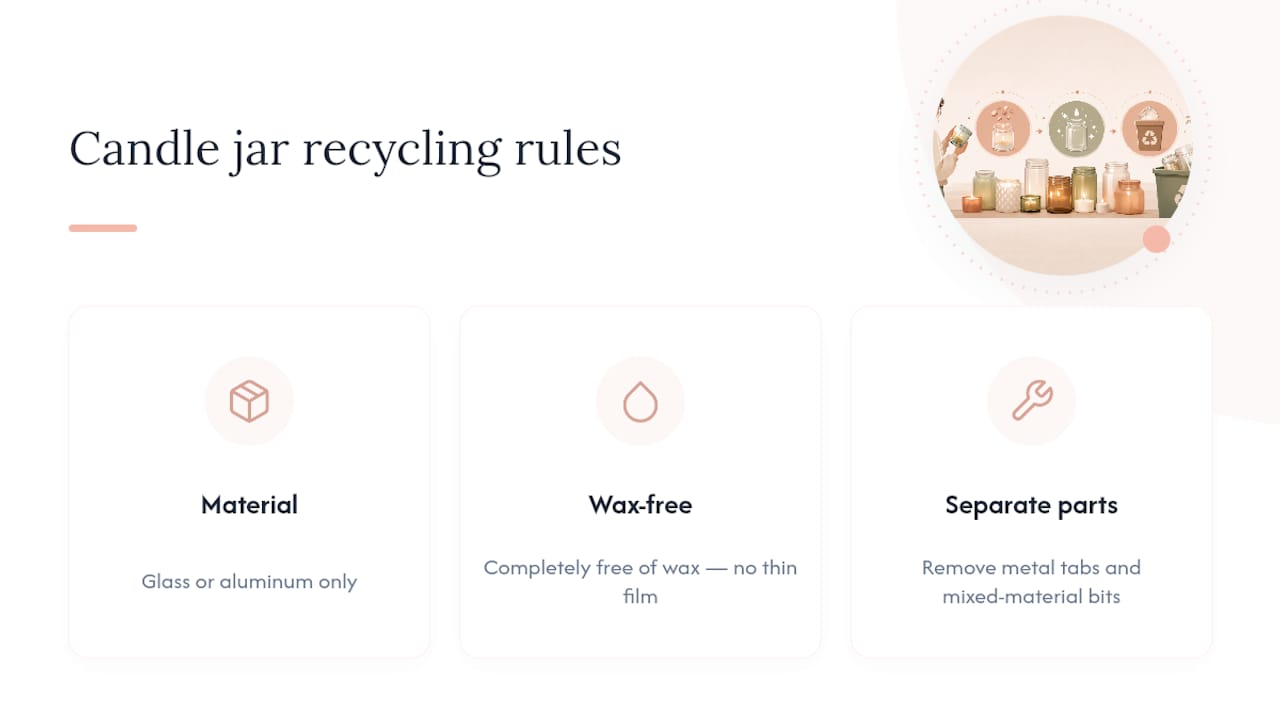
Programs like Recycle BC don’t reject candle jars categorically. They reject contaminated jars, meaning ones still coated in wax, still holding a wick tab, or still wearing a glued label. That distinction trips up a lot of well-intentioned recyclers who assume a quick rinse is enough. A jar with even a thin wax film left inside is treated the same as an unwashed jar by most sorting facilities, since the wax can coat other glass in the same batch during processing.
The good news is that the bar for acceptance isn’t complicated to clear. It just takes a few extra minutes of prep that most people skip because they don’t realize it matters. Wax residue, metal tabs, and paper labels are the three most common reasons a perfectly good glass jar ends up in a landfill instead of a new bottle. None of those three problems require special tools or chemicals to solve, just the cleaning steps covered earlier in this guide.
If your municipality has specific rules that differ from general guidance, always defer to your local program. Some cities sort glass by color, some don’t accept glass curbside at all, and depot requirements vary from one region to the next.
How Glass Type Changes What Happens After You Recycle
The glass in your hand determines which furnace it can go into, and that single fact explains most of the confusion around candle jar recycling. Soda-lime glass, the type used in the overwhelming majority of mass-market candles, has a well-established recycling pipeline because it shares a melting profile with bottles, jars, and other container glass already flowing through the system.
Heat-resistant glass, including borosilicate, doesn’t share that melting profile. It’s manufactured to resist thermal shock, useful for a candle that burns hot for hours, but that same property means it behaves differently in a recycling furnace. Facilities sort specifically for container glass specifications, and a mixed load containing borosilicate can force an entire batch to be diverted rather than processed. That’s not a minor inconvenience for a recycling plant. It’s a quality control failure that costs money and wastes material that would have otherwise recycled cleanly.
This is why a jar’s weight and thickness matter more than most people assume. If a candle jar feels unusually heavy for its size, or the glass has a slightly different color cast than a typical mason jar, it’s worth a second look before tossing it in with your regular glass recycling. When you’re not sure, contacting the brand directly to ask about glass type is an underused step that clears up the ambiguity fast.
Why Wax Residue Disqualifies an Otherwise Good Jar
Wax is the single most common reason a recyclable jar gets rejected, and it’s almost entirely preventable. Even a small amount of leftover wax can coat sorting equipment, contaminate other glass in the same collection stream, and mark an otherwise perfectly good container as trash rather than recyclable material.
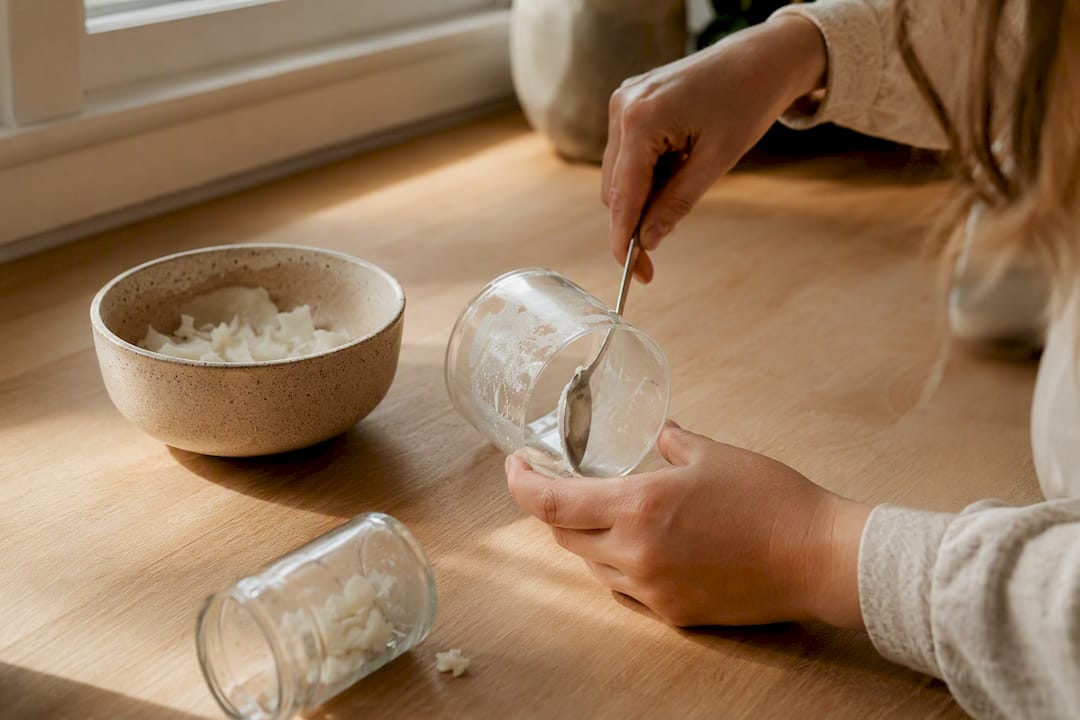
The reason it matters so much comes down to processing mechanics. Recycling facilities sort and clean glass in bulk, not jar by jar. A single contaminated container can transfer residue to dozens of others during the sorting and washing stages, and facilities don’t have the capacity to hand inspect every piece that comes through. That’s why the bar for “clean enough” is higher than most people expect.
Three household methods handle this reliably. The freezer method works fastest for candles with minimal wax left, since cold temperatures cause wax to contract and separate from glass. Hot water melt-and-pour handles moderate residue by softening wax until it floats free. For the truly stubborn cases, a low oven or double-boiler setup melts even thick, hardened layers loose.
Whichever method you choose, the wax itself needs somewhere to go afterward. Solid wax belongs in regular household trash, never down a drain, since it re-solidifies inside pipes and creates plumbing problems that are far more expensive to fix than a candle jar was ever worth. A final wipe with dish soap and warm water removes any lingering film before recycling.
Removing Wick Tabs, Lids, and Labels Before You Recycle
A perfectly clean jar can still get rejected if it’s carrying the wrong hardware. Metal wick tabs, screw-on lids, and adhesive labels are all common contaminants that recycling facilities sort out, and leaving them attached defeats the purpose of cleaning the jar in the first place.
The wick tab is usually the easiest fix. Once the wax around its base has softened from any of the cleaning methods above, the tab typically lifts free with a pair of pliers or the flat edge of a screwdriver. It’s small enough that many people forget it’s even there, but sorting machinery treats a jar with an embedded metal tab as mixed material rather than pure glass.
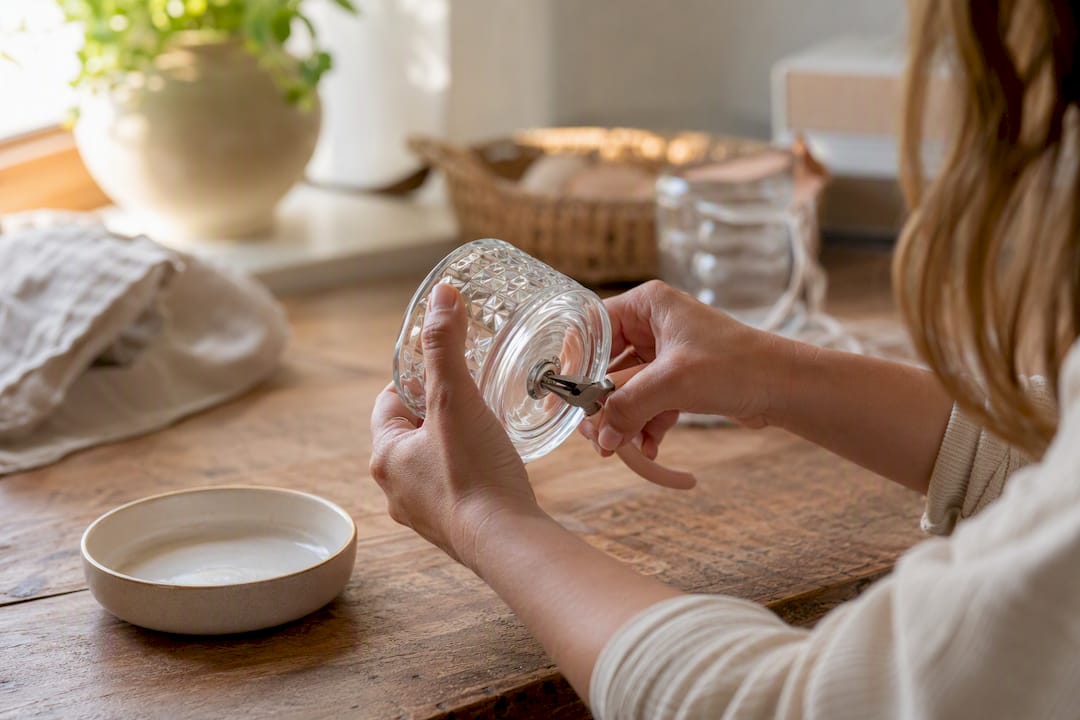
Lids present a slightly different situation. Metal screw-top lids should be separated entirely and recycled through your metal stream rather than left on the jar. Plastic lids, less common on candle jars but still out there, generally can’t go in glass or metal recycling and need to be checked against your local plastics program.
Labels are the last piece of the puzzle. Paper labels typically come off with warm soapy water and a bit of scrubbing, while some adhesive residue may need a small amount of dish soap or a plastic scraper to fully lift. Glued-on decorative elements, like ribbons, wax seals, or ornamental trim, should be removed as well since they can interfere with the sorting process even in small amounts.
Choosing Between Curbside, Depots, and Take-Back Programs
Once a jar is fully clean and stripped of hardware, where it goes next depends heavily on where you live. Curbside programs remain the simplest option when they’re available, and most treat cleaned glass jars the same as any other glass container in your household recycling.
Not every municipality collects glass curbside, though. In those cases, a depot becomes the practical answer. Recycle BC explicitly supports this model, directing residents without curbside glass collection to drop containers at a depot instead. Locating one is usually a quick search away through your municipal website or a regional portal.
Brand take-back programs add a third option, and they’re worth knowing about even if you don’t use one every time. Some candle brands run collection programs, occasionally through partnerships with services like TerraCycle, specifically for jars that don’t fit neatly into standard municipal recycling. These programs are valuable precisely because they can accept specialty glass that curbside systems reject, but their availability shifts frequently. Always verify a program is still active on the brand’s current website before packaging anything up to mail in.
Aluminum tins deserve a separate mention here since they’re often overlooked. Once wax is removed, aluminum candle tins generally go straight into standard metal recycling streams without needing a special drop off point.
Reuse and Upcycle Ideas Worth Trying First
Before you send a jar off for recycling, it’s worth asking whether it has more life left in it. Reuse keeps a jar in circulation far longer than recycling ever could, and the sturdier the glass, the more this option makes sense.
Refilling is the most direct route. A cleaned jar with a fresh wick and new wax becomes a candle again, and the same jar can handle several rounds before showing wear. Beyond candles, jars make surprisingly good storage for bathroom essentials, small desk supplies, or kitchen odds and ends like loose spices.
For anyone drawn to a project, unusual jar shapes open up creative possibilities beyond basic storage, whether that’s a small planter, a catch-all for jewelry, or a display piece entirely on its own. Latvian Candles has some genuinely inventive takes on repurposing distinctive candle vessels that go beyond the usual pen holder suggestion.
The decision point is usually about durability. A thin, standard glass jar that’s already showing wear is a fine recycling candidate. A thick, heat-resistant jar that’s still structurally solid is often better off getting a second life than getting melted down.
What the Research Actually Supports
Most advice on candle jar recycling treats it as a binary question: recyclable or not. That framing misses the real story. The material science is clear that soda-lime glass and borosilicate behave completely differently in a furnace, yet most consumer guides skip past that distinction entirely and jump straight to “clean your jar and toss it in the bin.”
That oversimplification is where good intentions go to waste, sometimes literally. A well-meaning household that dutifully cleans a heat-resistant jar and puts it in curbside glass may be contributing to a contaminated load that gets diverted anyway. The conventional wisdom undersells how much the type of glass matters compared to how clean it is.
If I had to prioritize one habit for readers to adopt, it wouldn’t be perfecting a wax-removal technique. It would be learning to identify glass type before anything else. Cleaning a jar you’ll never successfully recycle is wasted effort. Reuse deserves more credit than it gets, too. A jar that survives a decade of refills does more for the planet than one that gets melted down once.
A Cleaner Way to Candle, From the Jar Out
If you’ve made it this far, you already care about what happens after the flame goes out, and that’s exactly the mindset Wickofhope builds around. Our candles start with clean-burning coconut soy wax and FSC-certified wooden wicks, poured into jars chosen with standard, recyclable-friendly glass in mind rather than decorative extras that complicate disposal.
Every purchase also supports women and children escaping crisis, so the impact of choosing Wickofhope extends well beyond your own home. If you’re ready to swap out a candle that leaves you guessing about its jar for one built with an end-of-life plan already in mind, browse the Fresh Beginnings Candle in Cotton and Green Tea or explore the full collection of coconut soy candles to find a scent that fits your space. Add one to your cart today and see the difference clean packaging makes once the wick burns down.
Frequently Asked Questions
Are candle jars recyclable if they still have wax inside? No. Wax residue is one of the most common reasons recycling facilities reject an otherwise recyclable jar. Remove all wax using the freezer, hot-water, or oven method before recycling.
Can you recycle candle jars with the metal wick tab still attached? It’s best not to. Pry the tab loose with pliers once the surrounding wax has softened, and recycle it separately through your metal stream.
How do I know if my candle jar is standard glass or heat-resistant glass? Look for embossed markings like “ovenproof,” check the brand’s product page for material specifics, or compare thickness and weight to a typical mason jar. Heavier, thicker jars are more likely to be heat-resistant.
What should I do with candle jars my curbside program won’t accept? Take them to a local depot, check whether the brand runs a take-back program, or reuse the jar for storage, planting, or a DIY candle refill.
Can aluminum candle tins go in regular recycling? Yes, once the wax is fully removed, aluminum tins typically go straight into standard metal recycling without needing a special depot.
Sources
- Recycle BC Resident Q&A
- How To (Properly) Recycle And Reuse Candle Jars - Chatelaine
- Can You Recycle Glass Candle Jars?


