


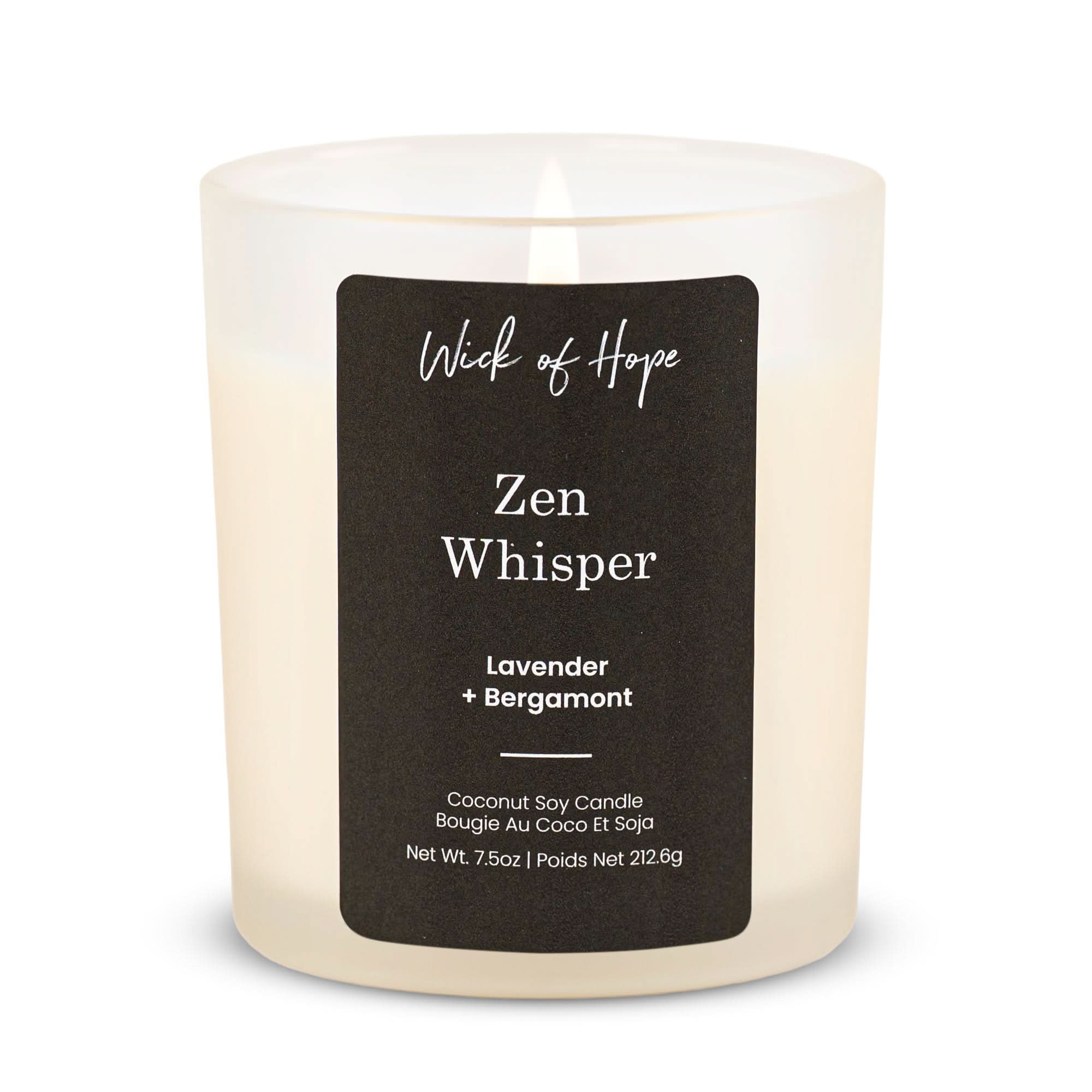
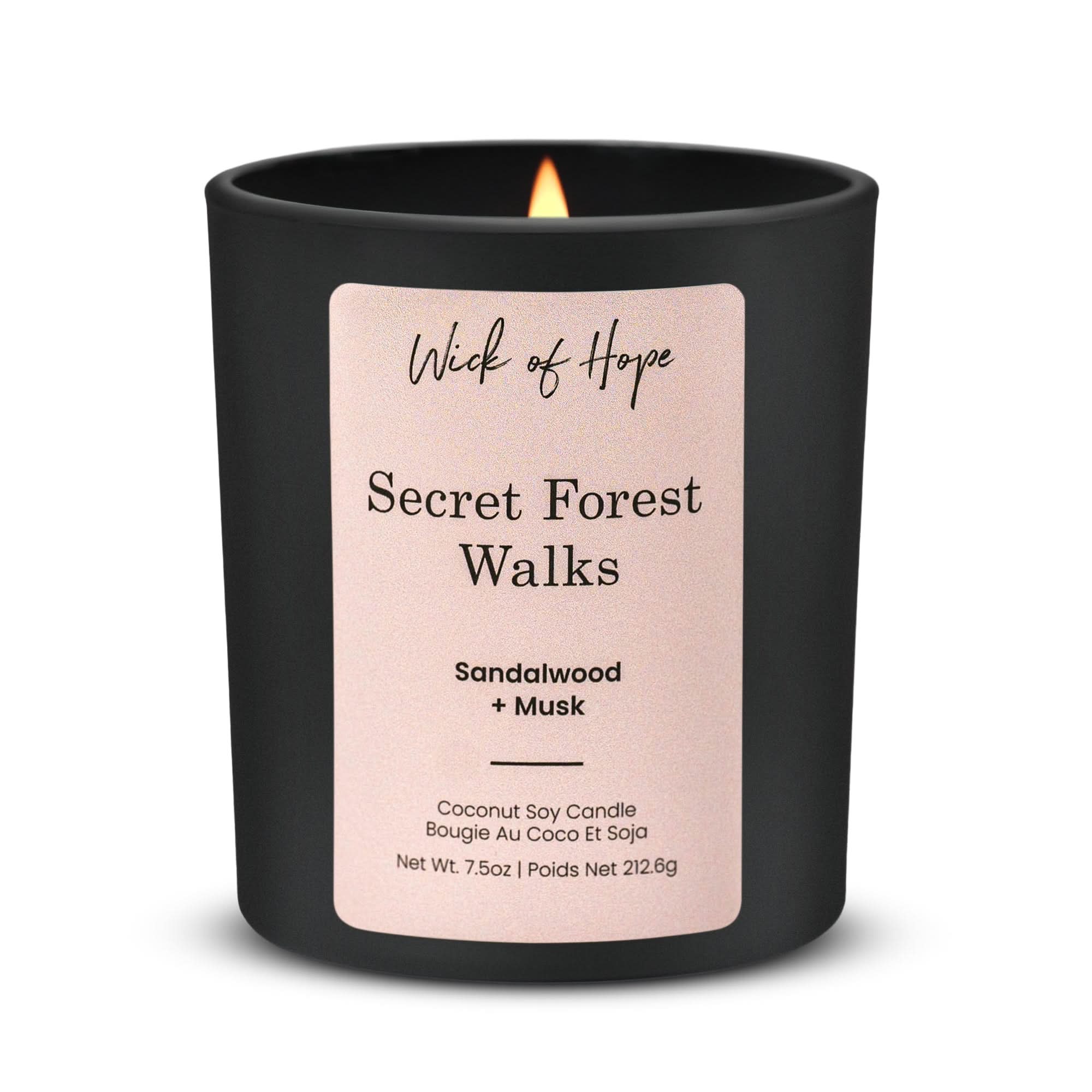
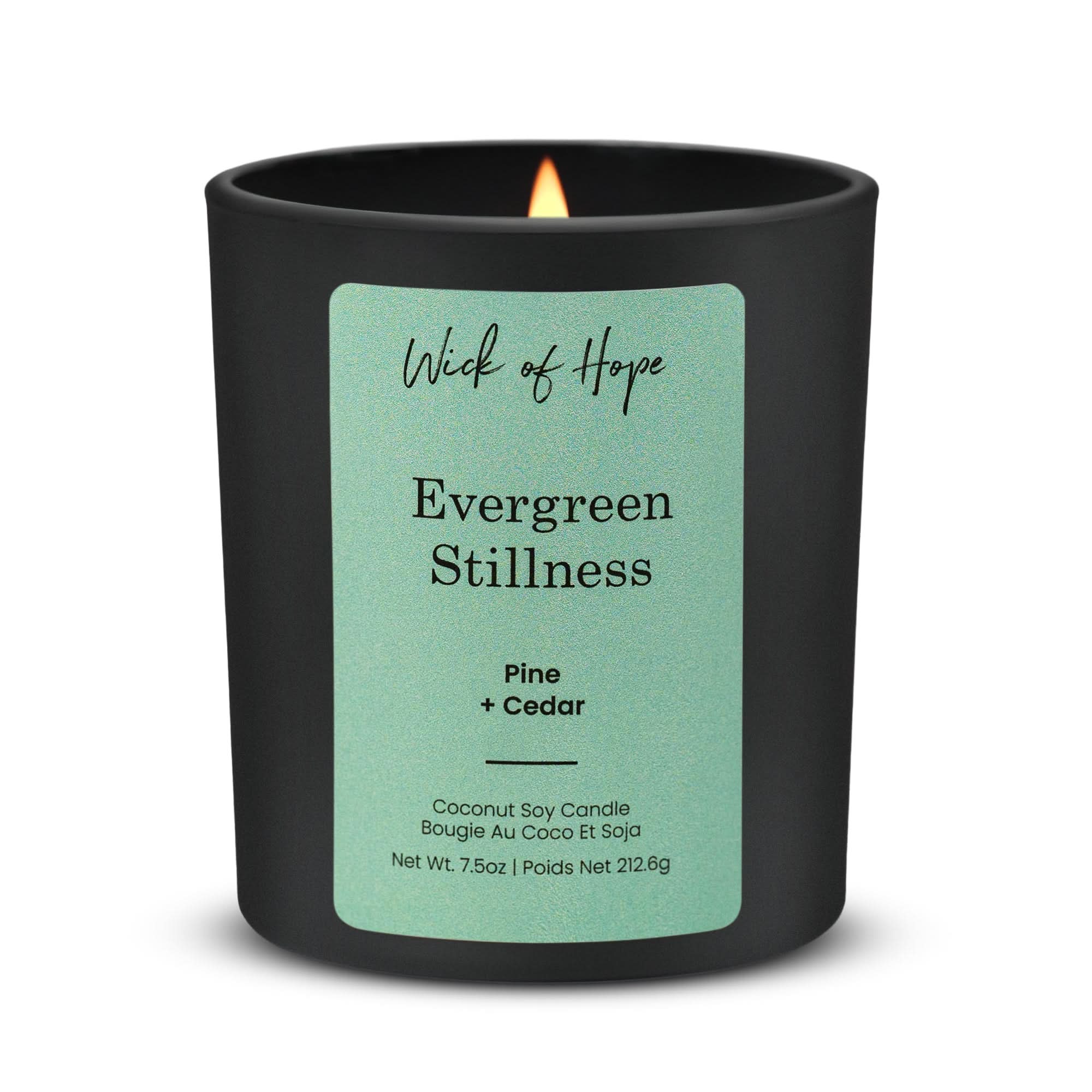
For focus, relaxation, or grounding, Wickofhope’s three intention-designed meditation candles are the clearest starting point: the Zen Whisper Lavender + Bergamot for calming a busy mind, the Secret Forest Walks Sandalwood + Musk for deep, earthy grounding, and the Evergreen Stillness Pine + Cedar for a restorative, forest-fresh session. Each is made from natural coconut-soy wax with an FSC-certified wooden wick, uses non-toxic fragrance, and carries a social-impact commitment: every purchase supports women and children escaping crisis.
Three reasons to buy with confidence:
- Clean burn: Coconut-soy wax and wooden wicks produce minimal soot, so your air stays clear during practice.
- Scent with purpose: Each fragrance is chosen to support a specific meditative state, not just to smell pleasant.
- Session-ready burn time: Burn times are sized to roughly match typical meditation session lengths, from short focus blocks to longer evening wind-downs.
Key Takeaways
Clean-burning, intention-focused meditation candles made from coconut-soy wax with FSC-certified wooden wicks offer the clearest path to a distraction-free, restorative practice.
| Point | Details |
|---|---|
| Wax type determines air quality | Choose coconut-soy, soy, or beeswax over paraffin to keep your practice space free of soot and synthetic residue. |
| Scent should match your intention | Lavender and bergamot support calm focus; sandalwood and musk ground deeper sessions; pine and cedar refresh and renew. |
| First burn prevents tunneling | Let the wax pool reach the full vessel edge on the first burn to preserve scent throw and total burn time. |
| Verify sustainability claims specifically | Look for FSC-certified wicks, named wax types, phthalate-free fragrance, and a clear social-impact statement, not just “natural” labeling. |
| Wickofhope covers all three intentions | The Zen Whisper, Secret Forest Walks, and Evergreen Stillness candles are clean-burning, vegan, and backed by a social-impact mission. |
Table of Contents
- What are the best Wickofhope meditation candles?
- What should you look for when buying a meditation candle?
- How do different wax types and wicks affect your meditation experience?
- How do you use a candle during meditation?
- How do burn time and candle care affect your practice?
- What safety and sustainability claims actually matter?
- What types of meditation candles are available?
- Why material quality and intention design matter for meditation
- Wickofhope candles are worth trying for your next session
- Sources
What are the best Wickofhope meditation candles?
These three candles cover the most common meditation intentions, and each one earns its place for a specific reason.
The Zen Whisper opens with soft lavender and a bright bergamot lift. Lavender is one of the most studied calming essential oils, with a direct effect on the limbic system, making it a natural fit for anxiety-reduction or pre-sleep sessions.
Secret Forest Walks layers warm sandalwood with a grounding musk base. Sandalwood has a long history in contemplative traditions and tends to slow the mental chatter that makes sitting still feel difficult.
The Evergreen Stillness brings pine and cedar together for a clean, forest-like atmosphere. Its pine and cedar scent profile positions it as a grounding option that also feels refreshing, useful for morning practice or breath-focused sessions.
All three are clean-burning and coconut-soy based, with biodegradable packaging and vegan ingredients.
What should you look for when buying a meditation candle?
Not every candle marketed for meditation deserves the label. A few specific checks separate genuinely clean, purposeful candles from decorative ones with wellness branding.
- Wax type: Coconut-soy, pure soy, or beeswax all burn cleaner than paraffin. Paraffin is petroleum-derived and can release soot and potential irritants into the air during a session.
- Wick material: Cotton or FSC-certified wooden wicks are the standard for clean burning. Avoid wicks with metal cores.
- Scent source: Essential oils offer a more transparent fragrance profile than synthetic fragrance oils. If a label says “fragrance” without specifying the source, that is a gap worth noting.
- Burn time vs. session length: A candle rated for 20–25 minutes suits a single focused session. Longer candles (40–60+ hours total) work for regular practitioners who want one candle to last weeks.
- Packaging and sustainability: Biodegradable or recyclable packaging is a meaningful signal. Styrofoam or excessive plastic wrapping contradicts a wellness positioning.
- Ingredient transparency: A brand willing to list every ingredient, including fragrance components, is showing you something most mass-market candles will not.
On price and value: burn time per dollar is a more useful metric than sticker price. A $28 candle with 50 hours of burn time costs less per session than a $15 candle that tunnels after three burns.
Pro Tip: Ask the brand directly whether their fragrance oils are phthalate-free. Many “natural” candles still use phthalate-containing fragrance compounds. A brand that answers quickly and specifically is one worth trusting.
How do different wax types and wicks affect your meditation experience?
The wax in your candle shapes everything from scent clarity to how much residue ends up in your lungs during a 30-minute sit.
Beeswax
Beeswax burns slowly and cleanly, with a naturally warm, honey-like scent. It is one of the oldest candle materials and produces virtually no soot. The trade-off: it is not vegan, and it tends to carry fragrance less efficiently than blended waxes.
Soy wax
Soy wax is plant-based, biodegradable, and burns cooler than paraffin, which extends the life of the fragrance. Pure soy can sometimes produce a softer scent throw, but it remains a solid choice for anyone prioritizing indoor air quality. Buyers focused on air quality consistently benefit from natural waxes and transparent fragrance sourcing to reduce soot and potential irritants.
Coconut-soy blends
Coconut-soy blends combine the clean burn of soy with the creamier texture and stronger scent throw of coconut wax. The result is a candle that holds fragrance well, burns evenly, and stays free of the petroleum residue associated with paraffin. For meditation specifically, this matters: you want the scent to be present without being sharp or chemical.
Paraffin
Paraffin is the most common candle wax globally because it is inexpensive and holds fragrance well. For meditation, it is the least ideal choice. It is a petroleum byproduct, and burning it in an enclosed space can introduce soot and volatile compounds that work against the clean, calm environment you are trying to create.
Wooden wicks vs. cotton wicks
A wooden wick produces a soft, audible crackle as it burns. That sound is not incidental: for candle-gazing practices, the gentle crackling adds a sensory layer that supports presence. Cotton wicks burn quietly and consistently, which suits practitioners who prefer silence. FSC-certified wooden wicks, like those used by Wickofhope, confirm that the wood is sourced from responsibly managed forests.
What to trust on a candle label: Ingredient transparency, a named wax type (not just “natural wax”), a specified wick material, and a realistic burn-time range. Vague claims like “clean” or “non-toxic” without supporting detail are marketing language, not evidence. A brand that lists its fragrance components and wax source is giving you something you can actually verify.
Scent reaches the brain through the olfactory system, which connects directly to the limbic system, the region governing emotion and memory. Essential oils like lavender, frankincense, and sandalwood are consistently recommended for meditation because they tend to support calm and focus through this pathway. Synthetic fragrance oils can mimic those scents but do not carry the same botanical compounds.
How do you use a candle during meditation?
Candle-gazing meditation, known as Trataka, is a recognized practice in which sustained focus on a flame supports concentration and relaxation. You do not need to follow a formal Trataka practice to benefit from a meditation candle, but the steps below work for both.
- Prepare your space. Place the candle on a stable, heat-safe surface at eye level or slightly below. Dim other lights. If you are pairing the session with a broader relaxation ritual, set that environment first.
- Set an intention. Before lighting, take one breath and name what you want from the session: calm, clarity, or release. This is not ceremonial for its own sake. It gives your attention a direction.
- Light the candle and settle. Sit comfortably with your spine upright. Let the scent reach you naturally. Do not force deep breathing yet.
- Choose your focal technique. For Trataka, soften your gaze on the flame and hold it without blinking as long as comfortable. For scent-supported mindfulness, close your eyes and follow the fragrance with each inhale.
- Use breath cues. Inhale for four counts, hold for four, exhale for six. The longer exhale activates the parasympathetic response. Repeat for the duration of your session.
- Close with intention. Before extinguishing the candle, take one conscious breath and acknowledge the session. Snuff the flame rather than blowing it out to avoid a smoke plume.
For a 10–20 minute focus session, the Zen Whisper’s lavender and bergamot combination works well. Bergamot is slightly uplifting, which prevents the drowsiness that pure lavender can sometimes bring.
For a grounding or pranayama session, Secret Forest Walks or Evergreen Stillness suits the slower, earthier rhythm of breath-retention practices. Scented candles used in meditation and aromatherapy can reduce stress and sharpen concentration when the fragrance base is appropriate for the session type.
For a longer evening relaxation practice, pair a warm, musky scent like Secret Forest Walks with low lighting and a body-scan sequence. Burn time matters here: choose a candle sized for the session so you are not watching the clock.
On color: if you choose candles partly by color, blue and purple are traditionally associated with calm and spiritual awareness, while white signals clarity and new beginnings. Candle color meanings can reinforce your intention without overcomplicating the practice.
How do burn time and candle care affect your practice?
Burn time is the most practical spec on a candle label, and it is the one most buyers overlook until a candle tunnels or burns out after three sessions.
Short-burn candles rated for 20–25 minutes exist specifically for single-session rituals. They are ideal for beginners or anyone who meditates in short, consistent blocks. For regular practitioners with longer sessions, a candle with a total burn time of 40–60+ hours offers better value and scent consistency over weeks of use.
The single most important candle care rule: On the first burn, let the wax pool reach the full edge of the vessel before extinguishing. This prevents tunneling, where the wick burns straight down the center and leaves a thick ring of unused wax on the sides. A tunneled candle loses both burn time and scent throw.
Step-by-step care for every burn:
- Trim the wick to roughly ¼ inch before each lighting. A long wick produces a larger, sootier flame.
- Burn for at least one hour per inch of candle diameter on the first use.
- Keep the candle away from drafts, which cause uneven burning and excess soot.
- Stop burning when about ½ inch of wax remains at the bottom. Burning past this point can overheat the vessel.
Troubleshooting quick fixes:
- Excess soot on the glass: Wick is too long. Trim it, wipe the glass with a damp cloth when cool, and relight.
- Uneven burn: Candle is in a draft. Move it to a still spot and rotate the vessel a quarter turn each session.
- Weak scent throw: Room may be too large, or the candle has not reached a full melt pool. Give it more time on the first burn.
For placement guidance by room and session type, Wickofhope’s room-by-room candle placement guide covers the specifics.
What safety and sustainability claims actually matter?
A candle burning near your face during a 30-minute sit is not a trivial safety consideration. These are the checks worth making before you light anything.
Safety checklist:
- Place the candle on a stable, flat, heat-resistant surface where it cannot be knocked over.
- Never leave a burning candle unattended, even briefly.
- Keep candles away from pets and children. Cats in particular are drawn to flame and are sensitive to many essential oils.
- Trim the wick to ¼ inch before every burn.
- Burn within your line of sight and in a ventilated room.
- Stop use when ½ inch of wax remains.
Wickofhope’s full candle safety checklist covers ten specific points worth reviewing before your first burn.
Sustainability claims worth verifying:
- Biodegradable packaging: Meaningful when it replaces plastic. Wickofhope uses biodegradable packaging across its range.
- FSC-certified wicks: Confirms the wood is sourced from responsibly managed forests, not a vague “natural wood” claim.
- Vegan and cruelty-free: Rules out beeswax and animal-derived fragrance components. Wickofhope’s candles meet both standards.
- Transparent fragrance sourcing: The most overlooked claim. “Natural fragrance” can still include synthetic compounds. Ask whether fragrance oils are phthalate-free and whether essential oils are specified by botanical name.
Social-impact signals: A credible social-impact claim names who benefits, how the funds are distributed, and at what point in the purchase the contribution is made. Wickofhope’s model is clear: each candle purchase directly supports women and children escaping crisis. That specificity is what separates a genuine mission from a marketing line. The brand’s Spa Luminary collection further details its toxin-free fragrance approach and sustainability practices.
What types of meditation candles are available?
The vessel and format of a candle shape how you use it, how long it lasts, and whether it fits your practice space.
Pillar candles are freestanding, typically uncontained, and burn for a long time. They suit dedicated altar or meditation room setups where the candle stays in one place. The exposed wax and larger flame make them visually striking for candle-gazing, though they require a proper holder and more careful placement.
Votives are small, cylindrical candles designed to be burned in a holder. They offer a shorter burn time, usually 10–15 hours, which makes them practical for regular short sessions. Their compact size also makes them easy to store and replace.
Tins and travel candles are the most practical format for anyone who meditates away from home, whether in a hotel room, at a retreat, or outdoors. The lid doubles as a snuffer and protects the wax during transport. Burn times vary widely by size, from a single session to 20+ hours.
Tealights are the most affordable entry point. A standard tealight burns for roughly 4–6 hours total, making them suitable for very short sessions or for setting an ambient mood around a longer practice. They are not ideal as the sole focal point for Trataka because the small flame can be harder to hold visually.
Ceramic and reusable vessels are worth noting separately: a candle poured into a ceramic jar gives you a tactile, grounding object that remains useful after the wax is gone, extending the ritual value of the purchase beyond the burn itself.
Why material quality and intention design matter for meditation
Most candles sold as “meditation candles” are regular home fragrance products with a wellness label. The distinction matters more than it sounds.
When you sit down to meditate, your environment either supports the practice or competes with it. A candle that produces visible soot, a sharp synthetic fragrance, or an uneven flame is a distraction, not an anchor. The physical quality of what you burn shapes the quality of the session.
What shifted my thinking on this was paying attention to the difference between a session with a clean-burning, intentionally scented candle and one with a generic paraffin jar from a big-box store. The paraffin candle smelled fine at first. By minute fifteen, there was a faint chemical edge to the air and a thin film of soot on the nearby surface. The session felt shorter than it was.
A coconut-soy candle with a wooden wick and a well-chosen essential oil blend does something different. The scent stays consistent, the flame is steady, and the soft crackle of the wick gives your attention something gentle to return to. That is not a luxury preference. It is a functional one.
Wickofhope’s social-impact model adds a dimension that genuinely changes how a purchase feels. Knowing that a candle supports women and children escaping crisis does not make the wax burn differently, but it does make the act of buying and using it feel like part of something larger. For a practice built around intention, that alignment is worth more than a lower price tag.
Wickofhope candles are worth trying for your next session
Wickofhope holds a 4.9-star rating from over 650 reviews, and the feedback consistently points to the same things: clean scent, long burn, and the satisfaction of buying from a brand with a clear mission.
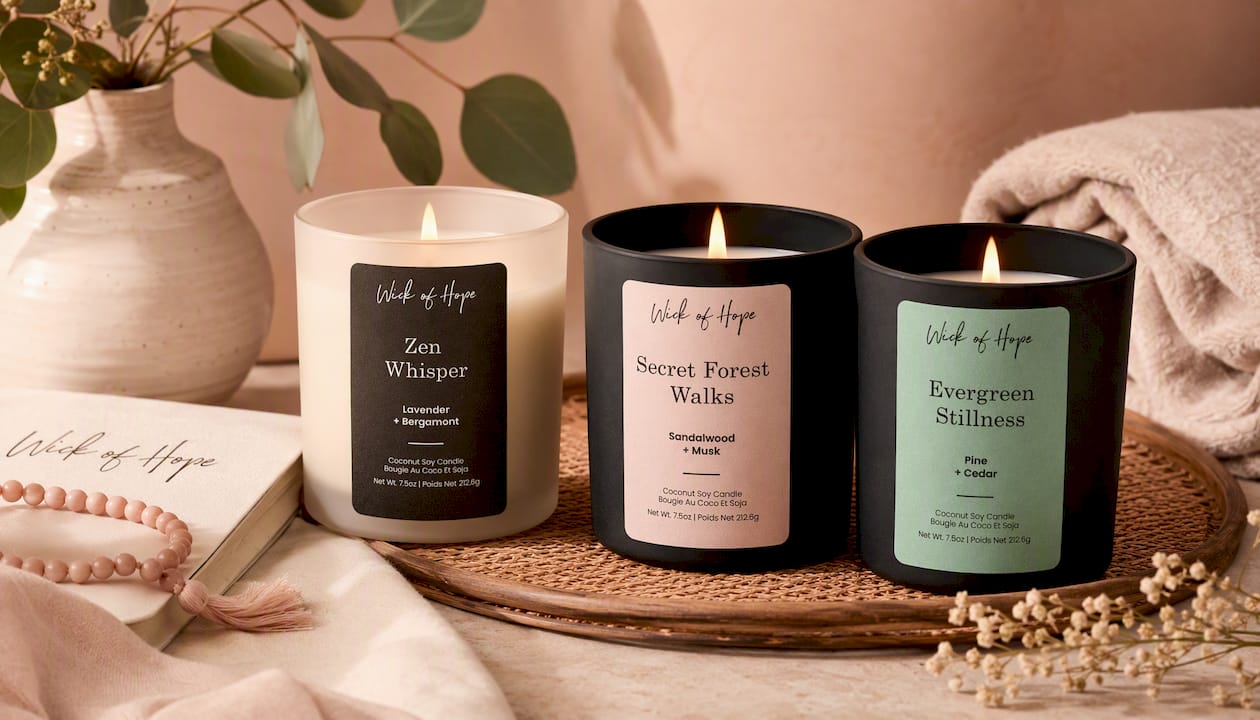
The three candles covered in this article are ready to order directly: the Zen Whisper for calm focus, Secret Forest Walks for grounding, and Evergreen Stillness for renewal. Each ships in biodegradable packaging, burns clean from the first light, and supports a cause that matters. If you want to compare the full range before deciding, the best candles for relaxation guide on the Wickofhope site is a good next step.
Sources
- Best Scented Candles For Practicing Mindfulness Meditation
- Candle meditation: a step-by-step guide to practice at home - Calm


