


Beeswax candles are not vegan by the standard definition. Beeswax is an animal product, produced by worker bees and harvested from their hives, which places it outside the boundaries of veganism as defined by leading authorities like The Vegan Society and PETA.
- Beeswax is an animal-derived product. Worker bees secrete it to build honeycomb, making it a byproduct of bee biology, not a plant or mineral source.
- Some vegans accept ethically harvested beeswax; most definitions do not. A small segment of the vegan community takes a harm-reduction approach and accepts beeswax from small-scale, low-intervention apiaries. The majority of vegan frameworks, however, exclude any animal-derived ingredient regardless of sourcing.
The nuance matters because it shapes every buying decision you make, from reading a candle label to choosing between soy, coconut, and other plant-based waxes.
Key Takeaways
Beeswax is an animal product that most vegan definitions exclude, making plant-based waxes like coconut/soy blends the clearest choice for conscious consumers who want both ethical and low-toxicity candles.
| Point | Details |
|---|---|
| Beeswax is not vegan | It is an animal-derived product excluded by The Vegan Society and PETA’s definitions. |
| Verify every ingredient | Check for beeswax, tallow, and stearic acid origin; wick coatings and fragrances can also contain animal byproducts. |
| Best vegan wax options | Coconut/soy blends and non-GMO soy offer long burn times, excellent scent throw, and full plant-based sourcing. |
| Emissions depend on conditions | Wax type, wick quality, and burning habits all affect indoor air quality, not wax origin alone. |
| Wickofhope is a verified option | Coconut soy wax, FSC wooden wicks, vegan ingredients, biodegradable packaging, and a 4.9-star rating from 650+ reviews. |
Table of Contents
- Are beeswax candles vegan? Understanding what beeswax actually is
- How different vegan definitions treat beeswax
- Ethical and environmental trade-offs: beeswax vs. plant-based waxes
- What vegan candle wax alternatives actually feel like
- How to verify a candle is truly vegan before you buy
- Downsides of beeswax candles and how they compare on safety
- What to choose if you want vegan and low-toxicity candles
- The honest case for choosing plant-based waxes
- Vegan candles that are also clean-burning: Wickofhope
- Sources
Are beeswax candles vegan? Understanding what beeswax actually is
Beeswax is a natural wax secreted by glands on the abdomen of worker honeybees. The bees use it to construct the hexagonal cells of the honeycomb, where they store honey and raise larvae. Because it originates entirely from a living animal, it is technically an animal product in the same category as honey, lanolin, or silk.
How harvesting works in the U.S.
Commercial and small-scale beekeepers in the United States typically harvest beeswax through a similar sequence of steps:
- Comb removal. Beekeepers pull frames from the hive, often after removing bees with smoke or brushes.
- Uncapping and rendering. The wax cappings are cut away, then melted and filtered to remove debris and bee matter.
- Filtering and solidifying. The liquid wax is strained and poured into molds, producing the clean blocks sold to candle makers.
Each of these steps involves hive disturbance. Smoking calms bees temporarily but causes stress responses, and commercial beekeeping practices can include smoke, hive disturbance, and replacement feeding that critics argue can harm bees. Accidental bee deaths during comb removal are common, particularly at industrial scale.
The gap between backyard apiaries and industrial operations is real. A small-scale beekeeper tending a few hives may handle bees gently and harvest only surplus wax. A large commercial operation prioritizes throughput, which typically means more frequent hive openings, higher stress on colonies, and less attention to individual bee welfare.
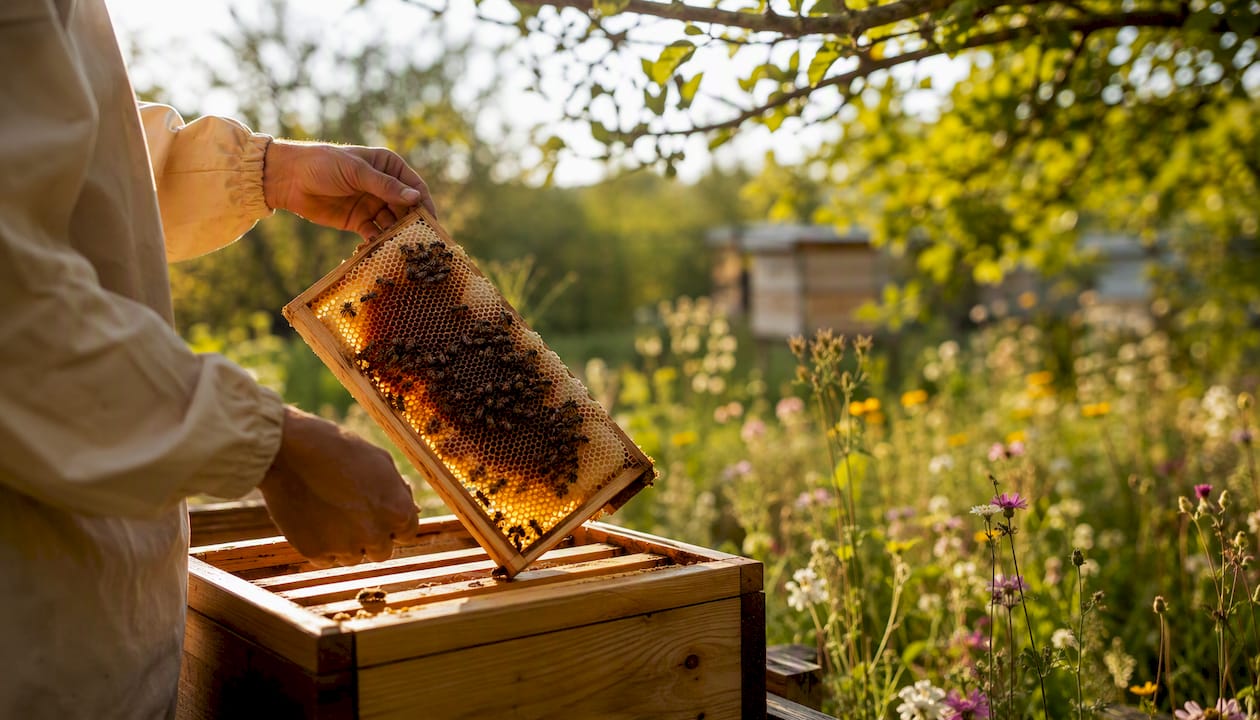
A note on scale: The U.S. is home to a large number of managed honeybee colonies, with the majority concentrated in commercial operations that supply both honey and wax to manufacturers. The wax in most mass-market candles traces back to this industrial system, not a backyard beekeeper.
How different vegan definitions treat beeswax
The disagreement over whether beeswax is vegan comes down to one core question: is veganism about excluding all animal products, or about minimizing harm? That distinction explains why some vegans accept ethically harvested beeswax while others do not.
- Technical/strict definition. Veganism excludes all animal-derived ingredients. Beeswax comes from bees, so it is not vegan. Full stop. This is the position of The Vegan Society and most formal certification bodies.
- Pragmatic/harm-reduction definition. Some vegans weigh the relative harm of each product. They may accept beeswax from small, ethical apiaries while avoiding factory-farmed animal products.
- Cruelty-free vs. vegan. These two labels are not interchangeable. A product can be labeled “cruelty-free” (meaning it was not tested on animals) while still containing beeswax. A product labeled “vegan” should contain no animal-derived ingredients at all, though third-party certification is the only reliable way to confirm this.
The practical takeaway: if you follow a strict vegan lifestyle, beeswax does not qualify regardless of how it was sourced. If your approach is harm-reduction focused, the sourcing model matters, and you will need to ask specific questions before buying.
Ethical and environmental trade-offs: beeswax vs. plant-based waxes
Neither beeswax nor plant-based waxes are ethically neutral. Each comes with its own set of trade-offs worth understanding before you decide.
Arguments against using beeswax:
- Bees produce wax for their own survival, not for human use.
- Commercial harvesting involves hive disturbance, stress, and accidental deaths.
- Replacing harvested wax forces bees to expend significant energy rebuilding comb, which can weaken colonies.
Arguments that careful beekeeping is acceptable:
- Managed honeybees contribute to pollination of crops and wild plants.
- Small-scale beekeepers often act as stewards of bee health, monitoring for disease and supporting colony strength.
- Some brands use stewardship models and ethical sourcing that some consumers accept, even if most vegans still avoid beeswax entirely.
On the environmental side, plant-based waxes carry their own concerns. Soy is the most common alternative, but most U.S. soy is genetically modified and grown in monocultures that rely on pesticides. Rapeseed (canola) wax has a lower carbon footprint per acre but is less widely available in finished candles. Coconut wax is often praised for its clean burn, though coconut farming raises land-use questions in tropical regions.
| Factor | Beeswax | Soy Wax | Coconut/Soy Blend |
|---|---|---|---|
| Vegan status | No (animal product) | Yes | Yes |
| Burn time | Long | Moderate | Long |
| Soot level | Low | Low | Very low |
| Environmental concern | Bee welfare, colony stress | GMO crops, monoculture | Tropical land use |
| Price point | High | Low to moderate | Moderate to high |
| Scent throw | Mild | Good | Excellent |
What vegan candle wax alternatives actually feel like
Plant-based waxes have improved significantly, and the best options now match or exceed beeswax on most performance measures.
- Soy wax. The most widely available vegan option in the U.S. Soy burns cleanly, holds fragrance well, and is affordable. The main concern is GMO sourcing. Look for non-GMO or certified soy if that matters to you. Soy candles also tend to have a softer, creamier appearance that many people find appealing.
- Coconut/soy blends. A favorite among clean-candle makers. The coconut wax adds a longer burn time and a smoother scent throw, while soy keeps costs manageable. This blend is what Wickofhope uses, and it performs beautifully with a crackling wooden wick.
- Rapeseed (canola) wax. More common in European markets but available online in the U.S. It has a good burn profile and a lower carbon footprint than soy in many growing regions. Scent throw is solid, though it can be slightly softer than coconut blends.
- Candelilla wax. A plant-derived wax from the candelilla shrub, native to northern Mexico and the southwestern U.S. It is harder than beeswax and often used in small amounts as a vegan binder. Rarely used as a primary candle wax on its own.
- Synthetic/plant esters. Some specialty candle makers use fully synthetic or esterified plant waxes. These can be engineered for specific melt points and scent throw, but they are less common in consumer candles and vary widely in quality.
For U.S. shoppers, soy and coconut/soy blends are the easiest to find, both online and in natural grocery stores. Soy candles offer a genuinely greener home option when sourced thoughtfully.
How to verify a candle is truly vegan before you buy
Reading a candle label carefully takes about 60 seconds and can save you from an unpleasant surprise. Verifying a candle is vegan requires checking every component, not just the wax.
Ingredient checklist — watch for these:
- Beeswax (obvious, but sometimes listed as Cera alba)
- Tallow (rendered animal fat, occasionally used in cheap candles)
- Stearic acid (can be plant-derived from palm or soy, or animal-derived from beef tallow — the label alone won’t tell you which)
- Wick coatings (some cotton wicks are coated in beeswax or animal-derived stiffeners)
- Fragrance oils (most are synthetic and vegan, but some use animal-derived musks — ask if it matters to you)
- Colorants (carmine, a red dye from insects, occasionally appears in colored candles)
Two questions worth asking a manufacturer:
- “Is your stearic acid plant-derived or animal-derived?”
- “Are your wick coatings and fragrance carriers free from animal byproducts?”
Pro Tip: Look for candles certified by Vegan Action (the “Certified Vegan” logo) or The Vegan Society’s sunflower trademark. These certifications require ingredient-level verification, not just a self-declared label.
Downsides of beeswax candles and how they compare on safety
Beeswax has genuine advantages: it burns slowly, drips less than paraffin, and has a naturally warm, honey-like scent. But it comes with real drawbacks that conscious buyers should weigh.
Practical downsides of beeswax candles:
- Cost. Beeswax candles typically cost two to four times more than comparable soy or coconut candles.
- Allergens. Some people are sensitive to propolis or other hive compounds that remain in less-refined beeswax.
- Sourcing inconsistency. Without third-party verification, you cannot confirm whether the beeswax came from a small ethical apiary or a large commercial operation.
On emissions, a peer-reviewed review via NCBI confirms that candle emissions vary by wax type, wick, and burning conditions, and can influence indoor particulate and VOC levels. Beeswax is often marketed as the cleanest-burning option, but emissions depend on wax quality, wick type, and additives rather than wax origin alone. A well-made coconut/soy candle with an FSC-certified wooden wick can perform just as cleanly, and sometimes better, than a poorly made beeswax candle.
Pro Tip: Trim your wick to about ¼ inch before every burn. A long wick produces a larger, unsteady flame that generates more soot and burns through wax faster, regardless of wax type. Good burning habits matter as much as ingredient choices for healthier candles at home.
What to choose if you want vegan and low-toxicity candles
The clearest path to a candle that is both vegan and low-toxicity is a plant-based wax with transparent ingredient sourcing and a natural wick. Specifically, look for:
- A base wax of coconut, soy, or a coconut/soy blend
- An FSC-certified wooden wick or uncoated cotton wick
- Fragrance oils verified as free from animal-derived musks
- Biodegradable or recyclable packaging
- A third-party vegan certification or a brand that documents its supply chain
Wickofhope meets every one of these criteria. Their candles are made from natural coconut soy wax, burned with FSC-certified wooden wicks, and packaged in biodegradable materials. Every product is vegan and non-toxic, with non-toxic candle benefits that go beyond just skipping beeswax.
That 4.9-star rating across 650-plus reviews reflects something real: customers who care about what they burn in their homes, and who keep coming back.
The honest case for choosing plant-based waxes
There is a version of the beeswax debate that gets lost in the back-and-forth about definitions: the question of what you actually want your candle to do.
If you light a candle for calm, for warmth, for a restorative moment at the end of a long day, the ethical weight of that choice matters. Not because veganism requires perfection, but because conscious consumers tend to feel better when their purchases align with their values. A candle that smells beautiful and burns cleanly, knowing it contains no animal byproducts and that its purchase supports women and children escaping crisis, carries a different kind of warmth.
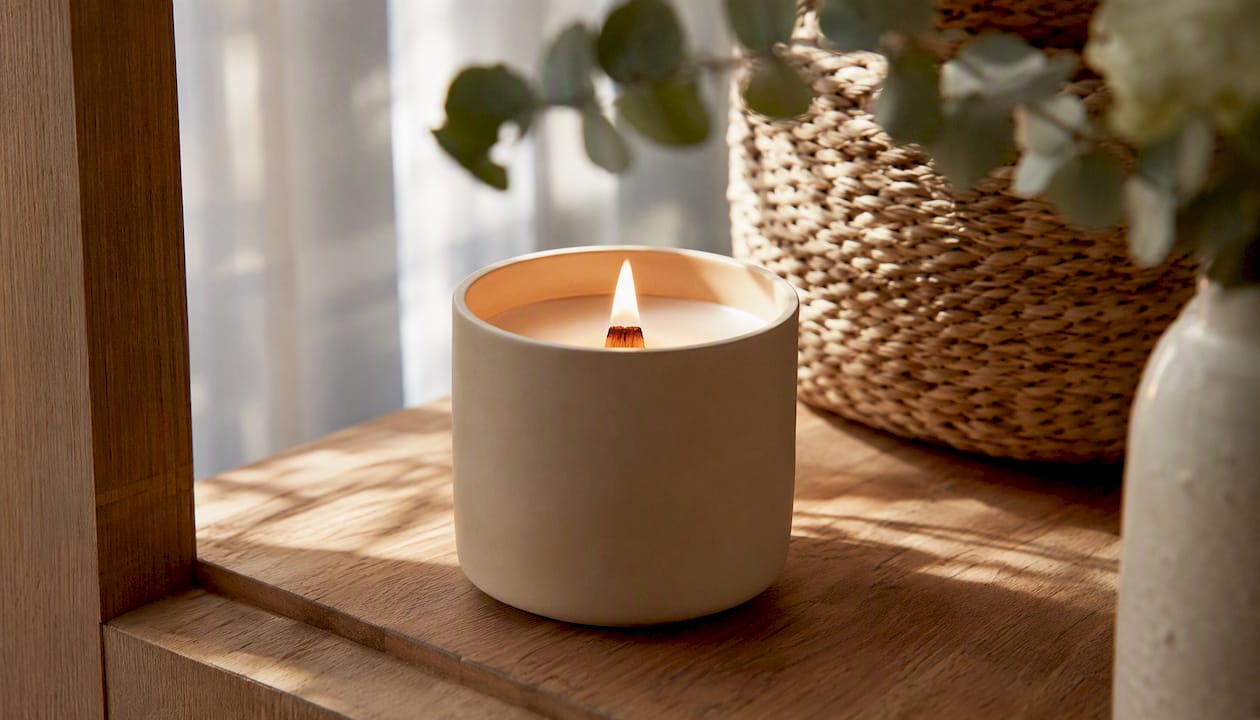
The argument that “ethical beeswax is fine” is technically defensible for some consumers. But in practice, most people buying candles in the U.S. cannot verify the sourcing of the beeswax in a given product. The label says “beeswax.” It does not say which apiary, which practices, or whether the colony was healthy. Plant-based waxes sidestep that uncertainty entirely.
Coconut/soy blends, in particular, have closed the performance gap with beeswax. The scent throw is excellent, the burn is long and even, and the crackling of a wooden wick adds a sensory dimension that beeswax candles rarely match. The transparency argument also favors plant-based options: a brand that lists “coconut soy wax, fragrance oil, FSC wooden wick” on its label is giving you something to verify. A brand that lists “beeswax” is asking you to trust a supply chain you cannot see.
Vegan candles that are also clean-burning: Wickofhope
Wickofhope makes the choice straightforward. Every candle in the collection is built on natural coconut soy wax, poured with FSC-certified wooden wicks, and packaged in biodegradable materials. No beeswax, no tallow, no ambiguous stearic acid. Just clean, restorative fragrance you can feel good about.
The Cozy Spice Embrace Wax Melt is a warm, amber-and-vanilla blend that fills a room without any of the ethical uncertainty of beeswax. It is fully vegan, non-toxic, and made to the same standard as every Wickofhope product. For a broader look at the full range of coconut soy candles, the collection page shows every scent and format currently available. And if you want to understand the social mission behind every purchase, the Empower Change page explains how each candle directly supports women and children escaping crisis.
Rated 4.9 stars from over 650 reviews. Browse the collection and find your next favorite scent.
Sources
These sources informed the research behind this article and are worth consulting for more depth:
- PMC8157593
- Is Beeswax Vegan? Making Sense of the Sticky Beeswax Debate – Tom’s of Maine
- Selecting the Purest Candles: Without Tallow, Paraffin, or Beeswax
- Is Beeswax Vegan? Bee Exploitation and Debate in the Vegan Community
- Vegan materials for candles | Candeliss


