


Choose wood wicks when you want ambiance and a stronger initial scent throw, since their wider flame heats fragrance oils faster. Choose cotton wicks when you want reliable, low-maintenance burning that tolerates drafts and relights easily. The trade-off is simple: wood gives you crackle and mood, cotton gives you consistency. Everything below explains why, and how to get the best out of either one.
TL;DR:
- Wooden wicks produce a wider, flickering flame that creates a strong initial hot throw and a crackling ambiance, especially suitable for large rooms.
- Cotton wicks relight easily after blowing out, tolerate drafts, and work reliably with various wax types, making them ideal for smaller or draft-prone spaces.
- Proper wick sizing and maintenance, like trimming to about 1/8 inch for wood wicks and removing char, are critical for optimal burn and relight performance.
- Wooden wicks are more sensitive to drafts, ceiling fans, and require careful sizing; incorrect width can cause sputtering or difficulty staying lit.
- Starting with cotton wicks is recommended for beginners, while wood wicks benefit larger spaces and those seeking a stronger scent throw with ambiance.
Table of Contents
- Wood Wick vs Cotton Wick: The Core Trade-Offs
- Why the Two Wicks Burn So Differently
- Trimming, Char, and Relighting: Keeping Either Wick Happy
- Matching the Wick to the Room and the Job
- How Wick of Hope Tests and Supports Wooden Wick Candles
- The Wick You Choose Says More About Your Room Than Your Taste
- Ready to Bring Wooden Wick Ambiance Home?
- Sources
Wood Wick vs Cotton Wick: The Core Trade-Offs
Every candle wick is doing one job: pulling melted wax up to feed a flame. But how it does that job creates two very different candle experiences. Here’s the quick breakdown.
Wooden wicks:
- Produce a wider, flickering flame that creates the audible crackle people love
- Generate a wider melt pool, which tends to release fragrance oil faster and stronger early in the burn
- Deliver a notably strong initial hot throw when sized correctly
- Need more frequent trimming and char removal to stay lit
- Are more sensitive to drafts, ceiling fans, and open windows
Cotton wicks:
- Relight easily after being blown out, even without trimming first
- Tolerate a wider range of airflow conditions without sputtering
- Work reliably across nearly every wax type on the market
- Some are chemically treated or paraffin-dipped, which can affect soot and aroma if you’re avoiding petrochemical coatings
One caveat worth knowing before you buy or pour: wood wick sizing is far less forgiving than cotton. A wood wick that’s slightly too narrow for its vessel will struggle to stay lit at all, while cotton wicks have more room for error.
Why the Two Wicks Burn So Differently
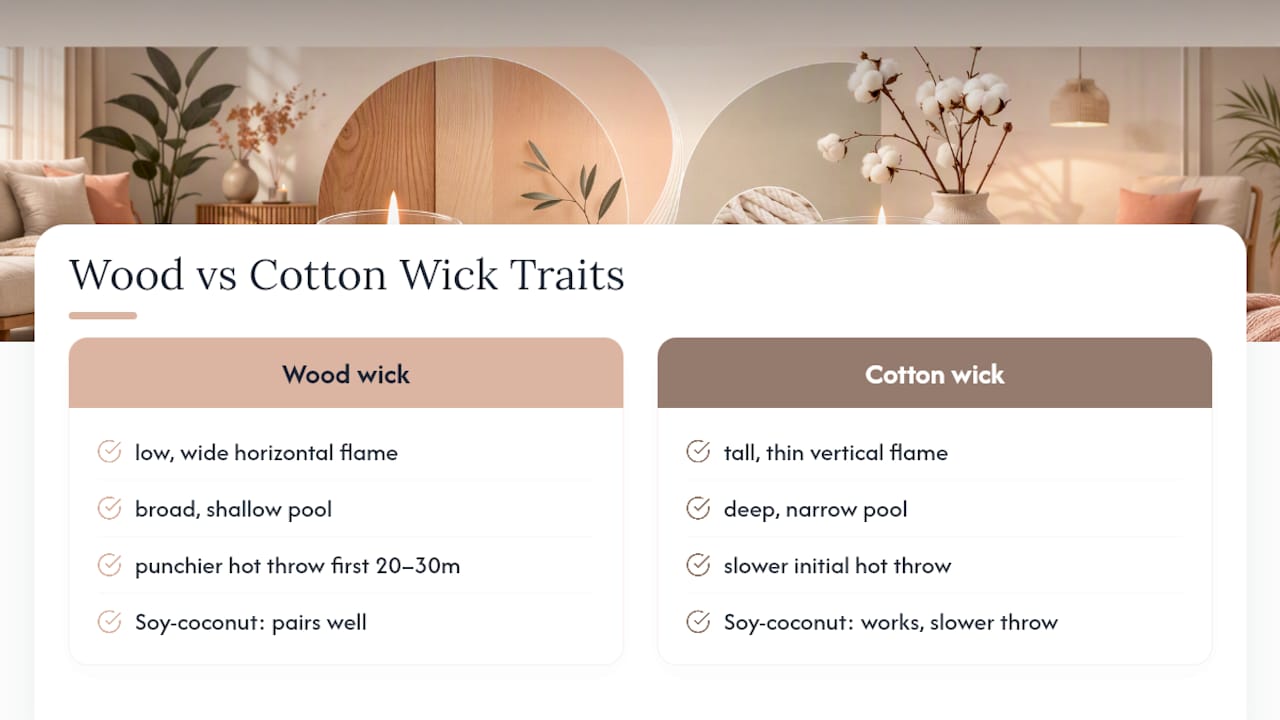
The difference comes down to geometry. A cotton wick is braided into a thin, flexible strand that burns in a tall, narrow, vertical flame, similar to a candle you’d picture in an old photograph. A wood wick is a flat strip that burns along its whole width, producing a low, horizontal flame that looks more like a tiny campfire than a single flicker.
That shape difference drives almost everything else. A wider flame heats a wider surface of wax, which is why wood wicks tend to carve out a broader, shallower melt pool while cotton wicks dig a deeper, narrower one. A bigger melt pool surface means more liquid wax exposed to heat at once, and that’s what pushes fragrance oil into the air faster. It’s also why people report a punchier hot throw from wood wicks in the first 20 to 30 minutes of a burn, even when the fragrance load is identical to a cotton-wick version of the same scent.
Burn temperature plays a role too. Wood combusts at a different rate than braided cotton, and that affects how completely the fragrance oil vaporizes versus how much simply sits unburned in the wax. This is also where wax type matters. Soy and coconut-soy blends melt at lower temperatures than paraffin, so they pair well with wood wicks that don’t need to work as hard to establish a full pool. Paraffin, which melts hotter on its own, can sometimes overpower a wood wick’s advantage since it already throws scent aggressively regardless of wick shape. Fragrance load matters on top of that: a heavily scented wax needs a wick that can sustain a hot enough melt pool without tunneling, which is exactly where sizing keeps coming up as the real variable brands test for.
Trimming, Char, and Relighting: Keeping Either Wick Happy
Most “bad wick” complaints are actually sizing or maintenance problems, not a flaw in the material itself. Here’s how to keep both types performing the way they’re supposed to.
- Trim wood wicks to about 1/8 inch before every burn, and knock off the charred tip with your fingers or a wick trimmer. A wood wick that still has last night’s char sitting on top often refuses to relight, which is the single most common complaint about this wick style.
- Trim cotton wicks to roughly 1/4 inch and watch for mushrooming, that little carbon ball at the tip. It’s more common in some fragranced soy blends and just needs a trim, not a wick swap.
- Let the first burn run long enough to melt wax edge to edge. This matters more for wood wicks, since a shallow first melt pool sets up tunneling for the rest of the candle’s life.
- If a wick won’t relight, check for leftover char first, then check whether the wick looks too thin for the vessel. Both are far more likely culprits than a defective wick.
- If you’re getting soot or a smoking flame, trim shorter and check for drafts. A flame bending sideways for more than a few seconds at a time is a sign the wick is being overworked.
Pro Tip: Keep a small dish of coarse sand or a butter knife near your candles. Pressing the char off a wood wick between your fingers works, but scraping it gently with a dull blade gets a cleaner edge and a more reliable relight.
For a deeper walkthrough on getting that crackle consistent burn after burn, Wick of Hope’s guide to wooden wick care covers the full troubleshooting list.
Matching the Wick to the Room and the Job
Not every candle needs the same wick, and thinking about where it’ll burn makes the decision easier.
- Living rooms and open spaces: wood wicks earn their keep here. The wider flame and stronger scent throw fill a bigger room, and the crackle adds a fireplace-like ambiance that a quiet cotton flame just can’t match.
- Bedrooms and bathrooms: smaller, often draftier spaces tend to favor cotton wicks, especially near a cracked window or a bathroom fan.
- Gifts: wood wicks make a stronger first impression out of the box, but include a quick care note since not every recipient knows to trim char before relighting.
- Multiwick containers: cotton is usually the safer bet, since keeping three wood wicks trimmed and evenly lit adds real maintenance overhead.
- New candle makers: start with cotton for your core line. It’s the more forgiving default while you’re still dialing in fragrance load and pour temperature, a point candle-making guides consistently back up.
Before lighting anything new, check that the wick size actually matches your vessel diameter and intended burn time. A wick built for a 3-inch tin will underperform, or overwork itself, in an 8-inch jar.
How Wick of Hope Tests and Supports Wooden Wick Candles
Wick of Hope builds every candle around FSC-certified wooden wicks paired with clean coconut-soy wax, precisely because that combination gives the sensory payoff wood wicks are known for without the soot concerns tied to lower-quality waxes. Sizing gets tested against vessel diameter before a candle ever ships, which is the detail that determines whether a wood wick performs or sputters.
Getting a wooden wick to hold a steady crackle isn’t luck. It comes down to matching wick width to wax pool size and giving that first burn enough time to melt fully across the surface.
The brand’s own guide on the benefits of wooden wick candles breaks down that sizing logic further, and it’s backed by a 4.9-star rating across more than 650 reviews. Every purchase also supports women and children escaping crisis, which is worth knowing if the story behind your candle matters as much as the scent.
The Wick You Choose Says More About Your Room Than Your Taste
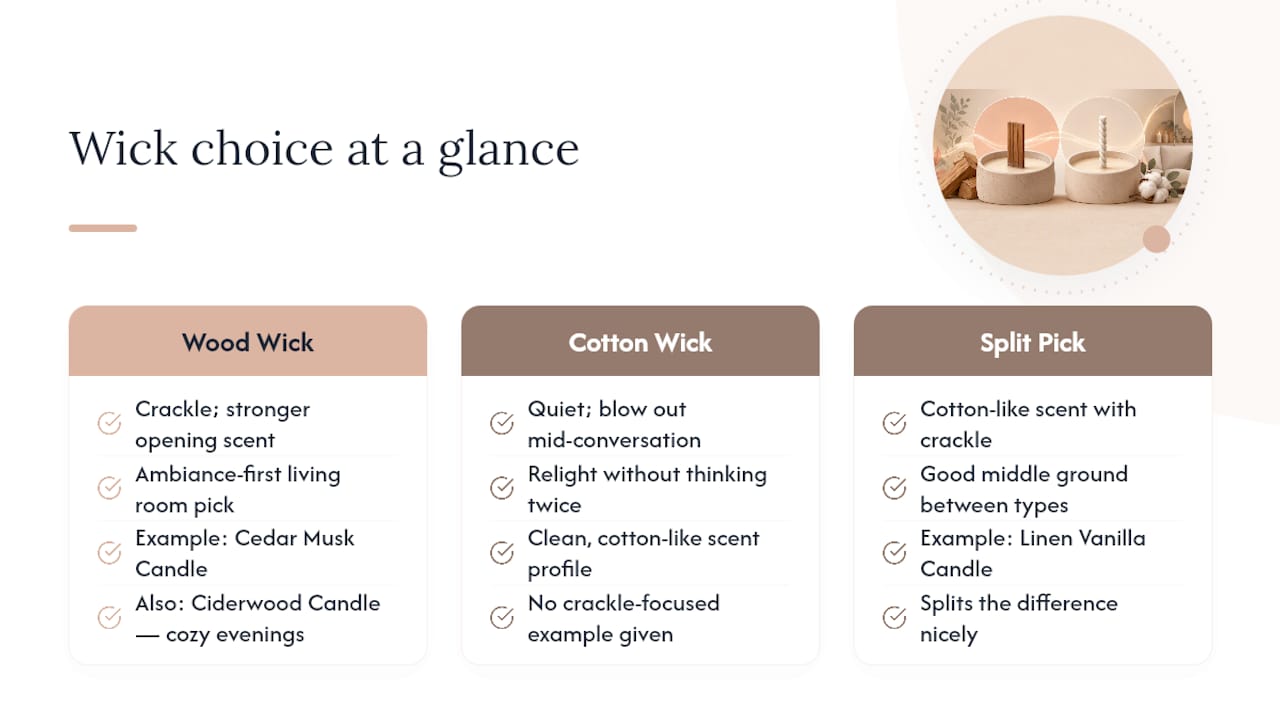
If you want a candle that fills a living room with sound and a stronger opening scent, pick wood. If you want something you can blow out mid-conversation and relight without thinking twice, pick cotton. Neither wick is objectively better; they’re just built for different jobs.
For the ambiance-first crowd, the Cedar Musk Candle with cedarwood and moss is a fitting living-room pick, while the Ciderwood Candle brings oak barrel cider and sandalwood for cozy evening burns. If you love a clean, cotton-like scent profile but still want the crackle, the Linen Vanilla Candle splits the difference nicely.
— Andy
Ready to Bring Wooden Wick Ambiance Home?
Wick of Hope’s candles pair FSC-certified wooden wicks with clean-burning coconut-soy wax, so you get the crackle and stronger hot throw without the soot or synthetic additives found in many mass-produced options.

If the room-by-room guidance above pointed you toward wood, the Cedar Musk Candle is a strong starting point for anyone furnishing a living room with scent and sound in mind, and pairs well with the kind of warm home styling that makes a space feel finished. Every candle purchase also helps fund support for women and children escaping crisis, so the mood you’re setting at home does double duty. Browse the collection and pick the scent that matches your room, then check the sizing notes on the product page before your first burn.
Sources
- Candle wick — Wikipedia
- Wooden Wick vs Cotton Wick Scented Candle: What’s the Difference? - The Ignition Co.
- Cotton vs Wooden Wicks for Candle Making: Which Burns Better? - DIY Products 101


