


Choose unscented candles when allergies, pets, or long indoor burns are part of your routine. Choose scented candles for short, well-ventilated sessions built around mood or sleep, using specific fragrances with a track record. Chamber studies show real emission differences between the two, but sensible use, meaning short burns with fresh air moving through the room, keeps most households well within safety guidance either way.
TL;DR:
- Unscented candles eliminate fragrance oil, reducing VOC emissions and making them safer for allergy-prone homes, pets, and long burns, especially in poorly ventilated spaces.
- Scented candles can emit notably more VOCs and particulate matter depending on fragrance load and oil composition, with longer, unventilated burns increasing health risks.
- Safety guidelines recommend limiting candle burns to three to four hours and ensuring good airflow to minimize indoor pollutant concentrations.
- Candles made from coconut-soy blends or beeswax burn cleaner than paraffin, and ingredient transparency helps consumers choose safer options.
- Short, ventilated scented candle use can support relaxation and mood, but extended burns in closed rooms should be avoided, especially for sensitive individuals.
Table of Contents
- Unscented vs. Scented Candles: What Actually Differs
- What Does the Research Say About Candle Emissions and Health?
- When Should You Use Scented vs. Unscented Candles?
- How Do You Choose the Right Candle for Your Space?
- How Can You Burn Candles More Safely?
- How Wick of Hope’s Non-Toxic Candles Fit These Guidelines
- Which Candle Should You Actually Buy?
- See Wick of Hope’s Scented and Unscented Options
- Primary Sources Worth Reading
- Sources
- FAQ
Unscented vs. Scented Candles: What Actually Differs
The difference starts with what’s inside the wax. Scented candles carry fragrance oil, typically anywhere from 3% to 10% of total wax weight, along with the compounds that create that oil’s smell. Unscented candles skip fragrance oil entirely, leaving just wax, wick, and whatever dye (if any) is added for color.
That single ingredient changes what comes off the flame. Fragrance oils introduce additional volatile organic compounds into the air as they burn, on top of the standard combustion byproducts every candle produces. Unscented candles release only those combustion byproducts, since there’s no fragrance load to volatize.
Here’s how the two stack up in practice:
- Scented candles work best for aromatherapy, short-term ambiance, and masking household odors.
- Unscented candles work best for allergy-prone homes, pet households, long burns, and spaces where a neutral scent profile matters (dinner tables, nurseries, meditation rooms).
- Wax type matters for both. Coconut-soy blends and beeswax tend to burn cleaner than paraffin, meaning less soot regardless of whether fragrance is present.
- Fragrance load varies by brand, so two “scented” candles can behave very differently in the air.
What Does the Research Say About Candle Emissions and Health?
Controlled chamber testing on 24 different candle types found that scented and unscented candles produce meaningfully different emission profiles, and the gap isn’t small or consistent. It shifts depending on which fragrance oil is used and how it’s blended with the wax. Some scented candles released noticeably more VOCs, polycyclic aromatic hydrocarbons, and fine particulate matter (PM2.5) than their unscented counterparts, according to measurements of gaseous and particulate emissions from burning candles.
The reassuring part: in most modeled household scenarios, calculated indoor concentrations stayed below established reference values, but that finding leaned heavily on ventilation. A closed bathroom behaves nothing like a living room with airflow.
What the numbers show: Survey research on university students found that scented candle exposure beyond 60 minutes correlated with a higher rate of reported headaches, sneezing, and wheezing, especially in rooms without ventilation. The association wasn’t universal. It showed up more often in people already prone to respiratory sensitivity.
A related cross-sectional study found that longer, more frequent scented-candle use tracked with higher symptom prevalence in some groups, reinforcing that duration and airflow, not just candle type, drive most of the risk.
What this means in practice:
- Short sessions (20 to 30 minutes) in ventilated rooms carry a different risk profile than four hours in a sealed bedroom.
- People with asthma, fragrance sensitivity, or migraine history should treat scented candles with more caution than the general population.
- Unscented candles remove the fragrance-VOC variable entirely, leaving only standard combustion emissions to manage through ventilation and wick care.
The practical takeaway holds up across every study reviewed here: avoid continuous, multi-hour scented burns in closed rooms, and let fresh air move through the space you’re burning in.
When Should You Use Scented vs. Unscented Candles?
Each type earns its place for different reasons. Scented candles carry real albeit modest aromatherapy benefits. A pilot study on soy-based candles scented with lavender and lychee found measurable relaxation and sleep-related improvements after short, repeated exposures, though the sample sizes were small and the findings need more replication before anyone calls them conclusive. Beyond aromatherapy, scented candles handle ambiance for dinner parties, cover cooking odors, and set a mood for an evening in.
Unscented candles solve different problems:
- Mealtimes where fragrance would compete with food aromas.
- Households with scent-sensitive guests, infants, or pets that react to strong fragrance.
- Emergency lighting during a power outage, where scent adds nothing but risk of irritation.
- Religious or ceremonial settings that call for a neutral flame.
Wax choice shapes both categories. Coconut-soy blends burn at a lower, steadier temperature than paraffin, which tends to carry fragrance oil more cleanly and produce less soot. That matters whether you’re lighting a lavender candle before bed or an unscented one at the dinner table.
How Do You Choose the Right Candle for Your Space?
Start with three questions: who’s in the room, how big is the room, and how long will the candle burn? Someone with a cat and mild asthma in a 150 square foot bedroom needs a different answer than someone hosting a two-hour dinner party in an open-plan kitchen.
Before buying, check the label for:
- Ingredient transparency, ideally a full list of wax type, wick material, and fragrance source.
- Fragrance load percentage, if the brand discloses it (most don’t, but the ones that do deserve credit).
- IFRA compliance or allergen declarations, which signal the maker screened fragrance chemicals against industry safety standards.
- Wick material, since cotton and wood wicks behave differently in terms of soot and burn rate.
Run a short trial burn (20 to 30 minutes) with any new scented candle before committing to a full evening. Watch for headache, throat irritation, or a scent that feels heavier than expected, then adjust burn time accordingly.
Pro Tip: When you’re stocking a shared space, like a living room, office, or guest bedroom, default to unscented. It removes the guesswork of whether a fragrance will bother someone you can’t ask in advance.
How Can You Burn Candles More Safely?
Safe burning comes down to a handful of habits that apply to scented and unscented candles alike.
- Let the first burn create a full melt pool across the entire surface, which prevents tunneling and uneven burns later.
- Trim the wick to about a quarter inch before every lighting to reduce soot and flame flare-ups.
- Burn in a ventilated room, cracking a window or running an exhaust fan when possible, since airflow is what keeps pollutant concentrations low.
- Cap burn sessions at three to four hours, then let the wax cool before relighting.
- Keep candles away from drafts, pets, and curious hands, and skip scented options entirely in rooms with asthmatic children until you know how they react.
How Wick of Hope’s Non-Toxic Candles Fit These Guidelines
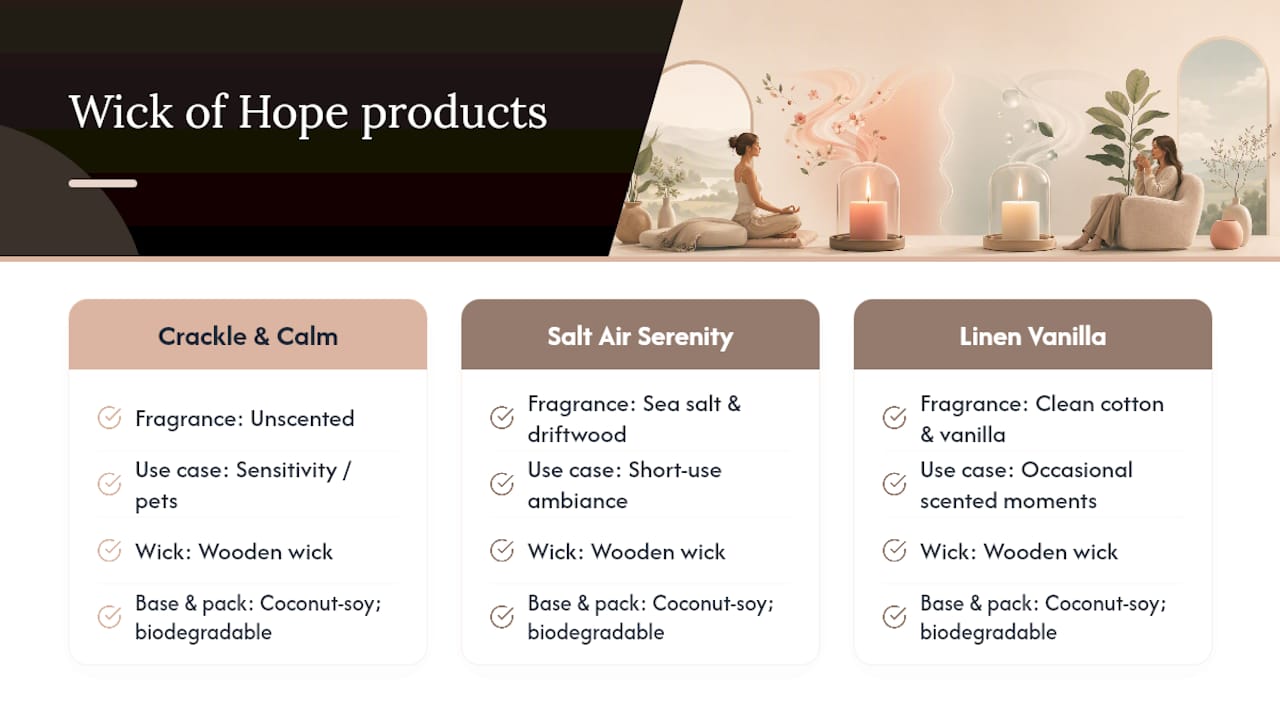
Wick of Hope builds every candle from coconut-soy wax and wooden wicks, with biodegradable packaging and full ingredient disclosure on every product page. Each purchase also supports women and children escaping crisis, tying the everyday act of lighting a candle to a larger mission.
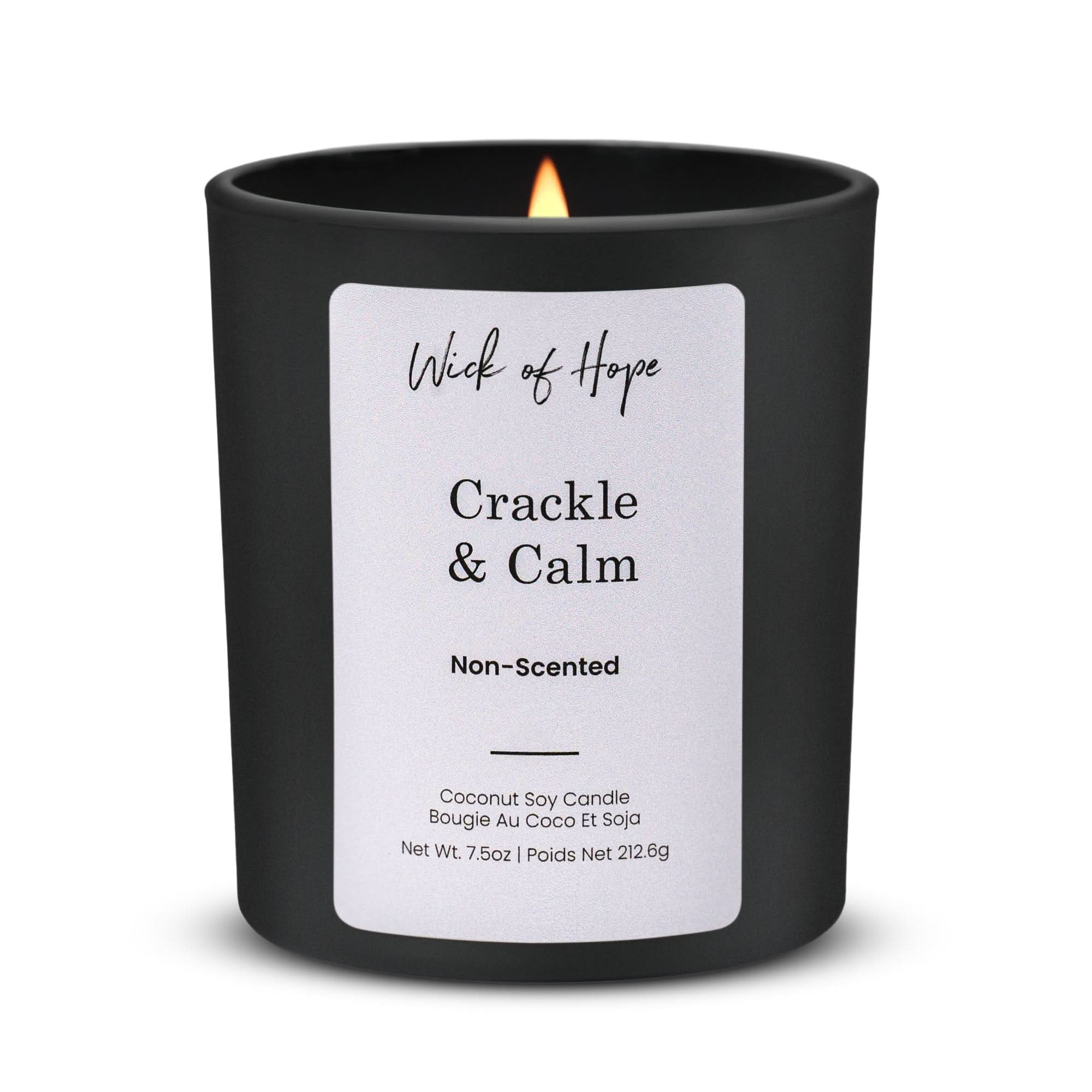
For sensitivity-prone households or pet owners, the Crackle & Calm Candle skips fragrance entirely while keeping the crackling wooden wick experience. For short-use ambiance, the Salt Air Serenity Candle pairs sea salt and driftwood notes for an evening at home. For occasional scented moments, the Linen Vanilla Candle blends clean cotton and vanilla. Check each product page for ingredient details before buying.
Which Candle Should You Actually Buy?
Unscented candles are the safer default for shared spaces, homes with pets, or anyone managing allergies or asthma. Scented candles still have a place. Short, ventilated sessions with a well-documented fragrance can genuinely support relaxation, and the pilot data on lavender and lychee scents backs that up, within limits. What should change is how casually people burn scented candles for hours on end in closed rooms. Push manufacturers for ingredient transparency, treat fragrance load numbers as a real purchasing factor, and let the evidence, not the marketing copy, decide what’s on your shelf.
— Andy
See Wick of Hope’s Scented and Unscented Options
Wick of Hope gives you both sides of this comparison without the toxins that show up in a lot of mass-produced candles: no paraffin, no hormone disruptors, just coconut-soy wax and wooden wicks in every product line.
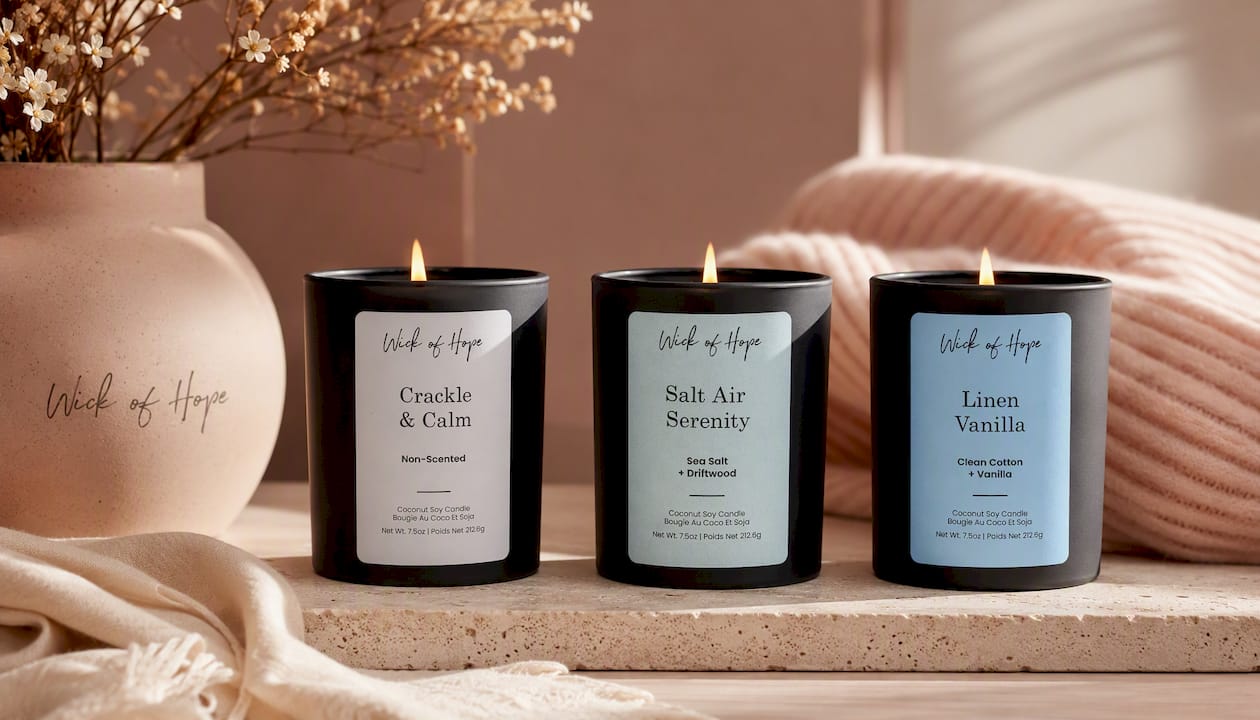
Every candle page lists its full ingredient breakdown, so you can match a product to your own household’s needs the same way this article just walked through. If you’re stocking a sensitivity-prone space, start with the Non-Toxic Candles collection and filter for unscented options. If you want the same clean-burning approach in a different format, the Non-Toxic Wax Melts line skips the open flame entirely. Curious what past customers noticed after switching? Wick of Hope holds a 4.9-star rating across more than 650 reviews, and every purchase, candle or gift card, helps fund support for women and children escaping crisis. Browse the current lineup and pick the option that matches the room you’re lighting it in.
Primary Sources Worth Reading
For readers who want the underlying research: the chamber study on candle emissions measured VOCs and particulates directly. The university exposure survey links duration to symptoms. The IFRA regulation overview explains fragrance safety screening.
Sources
- Measurement and evaluation of gaseous and particulate emissions from burning scented and unscented candles
- Extent of exposure to scented candles and prevalence of respiratory and non-respiratory symptoms amongst young university students
FAQ
What’s the Point of Unscented Candles?
Unscented candles provide light and ambiance without introducing fragrance chemicals into the air, which makes them a practical choice for allergy-prone households, pet owners, and shared spaces. They also work well for mealtimes and religious or ceremonial use, where a neutral scent matters more than fragrance.
What Is the Three Hour Rule for Candles?
The three hour rule refers to the general safety guidance to burn a candle for no more than three to four hours at a stretch, then let it cool before relighting. Longer sessions can overheat the container, cause uneven wax pools, and increase soot buildup, regardless of whether the candle is scented or unscented.
What Is the Healthiest Candle to Burn?
There’s no single “healthiest” candle, but candles made from coconut-soy or beeswax with cotton or wooden wicks tend to burn cleaner and produce less soot than paraffin. Choosing an unscented option removes fragrance-related VOCs entirely, while a well-ventilated room reduces exposure from any candle type, according to chamber-study findings on candle emissions.
Do Unscented Candles Get Rid of Smells?
Unscented candles don’t mask odors the way scented candles do, since they carry no fragrance oil to compete with existing smells. They’re better suited to neutral lighting than odor control. If odor masking is the goal, a scented option like Wick of Hope’s Salt Air Serenity Candle is the more direct fit.


