


Candles make you cough because burning wax and fragrance oils releases fine particles (PM2.5) and volatile organic compounds (VOCs) that irritate the lining of your airways. If a candle triggers a coughing fit, put it out, open a window or step outside, and skip scented products until your breathing settles. Call a doctor if you’re wheezing, short of breath, or symptoms don’t ease within an hour or two.
TL;DR:
- Candles produce PM2.5 particles that bypass nasal filters and penetrate deep into the lungs, causing irritation and coughs; soot from untrimmed wicks worsens this effect.
- Fragrance compounds like phthalates, limonene, linalool, and VOCs from paraffin waxes significantly increase respiratory irritation and can trigger asthma or allergic responses.
- Distinguishing irritation from allergy involves tracking symptoms during elimination and reintroduction; allergies involve immune responses, skin reactions, and consistent triggers.
- Immediate actions include extinguishing candles, increasing ventilation with open windows or fans, and avoiding scented products until symptoms subside; longer-term, choosing natural wax blends and proper wick maintenance reduces risk.
Table of Contents
- Why Do Candles Irritate Your Airways? The Science Behind PM2.5 and VOCs
- How Common Is Coughing From Scented Candles?
- Is It Airway Irritation or a True Fragrance Allergy?
- What to Do the Moment a Candle Sets Off Your Cough
- Safer Candle Choices That Reduce the Risk of Coughing
- What Wick of Hope Brings to This Conversation
- When Coughing Means It’s Time to See a Doctor
- Beyond Candles: Cutting Cough Triggers From Your Indoor Air
- An Honest Take on the “Just Stop Burning Candles” Advice
- Try a Cleaner-Burning Candle Without Guessing at the Ingredients
- Sources
- FAQ
Why Do Candles Irritate Your Airways? The Science Behind PM2.5 and VOCs
A lit candle is a small, slow combustion event happening right in your living room, and combustion always produces byproducts. The two that matter most for your lungs are particulate matter and volatile organic compounds, and understanding what each one does explains almost everything about why scented candles coughing spells happen so predictably.
PM2.5 refers to particles smaller than 2.5 micrometers, roughly 30 times thinner than a human hair. They’re small enough to bypass your nose’s natural filtering and travel deep into your lungs, where they trigger the kind of irritation your body responds to with, you guessed it, a cough. Soot from an uneven flame or a wick that’s too long adds even more of this particulate load to the air you’re breathing.
VOCs are the second piece. These are the chemicals responsible for a candle’s throw, the reason a room smells like fresh apple or smoky cedar within minutes of lighting the wick, is that many fragrance compounds double as respiratory irritants. Common culprits include:
- Phthalates, often used to stabilize synthetic fragrance oils, linked to airway inflammation.
- Limonene, a citrus-scent compound that can react with indoor ozone to form formaldehyde.
- Linalool, a floral note found in lavender-type scents, associated with skin and respiratory sensitivity in some people.
- Benzene and toluene, trace combustion byproducts more common in paraffin-based candles.
Wax matters here, too. Paraffin, a petroleum byproduct, tends to burn with more soot and a heavier VOC profile than plant-based waxes like coconut-soy blends. That’s a real difference, but it’s not a free pass for natural wax. Any candle that burns, scented or not, releases some measurable PM2.5 and VOCs. The California Department of Public Health notes that fragrance ingredients can act as asthmagens, meaning they’re capable of triggering or even causing asthma in sensitive individuals, not just aggravating existing symptoms.
Measured effects can outlast the smell. A controlled exposure study tracking exhaled breath markers found candle-specific VOC signatures were still detectable up to five hours after exposure, even though the changes had faded by the 24-hour mark. Your cough might stop the moment you blow out the wick, but your airways may still be processing what they inhaled hours later.
How Common Is Coughing From Scented Candles?
If you’ve ever wondered whether you’re overreacting to a candle, the numbers say you’re not alone. A cross-sectional study of university students found that 24.8% reported some kind of health-related problem tied to scented candle use, with cough affecting 7.8% of respondents and shortness of breath affecting 8.9%.
Symptoms tend to cluster around a fairly predictable list:
- Dry, tickling cough that starts within minutes of lighting the candle
- Tightness or a “closing” sensation in the throat
- Wheezing, especially in people with existing asthma
- Shortness of breath in poorly ventilated rooms
- Headache, often from strong or layered fragrance blends
Timing is a useful clue for figuring out what’s happening. Irritation symptoms usually show up almost immediately, within the first 10 to 15 minutes of a candle burning, and often ease once the candle is out and the room airs out. But that doesn’t mean your airways bounce back instantly. Breath-marker studies show measurable changes can persist for up to about five hours after exposure, which is a longer recovery window than most people assume. Health reporting on the topic, including a CNN synthesis of the current research, notes that overall risk still depends heavily on candle type, burn duration, and ventilation, so your mileage really will vary by product.
Is It Airway Irritation or a True Fragrance Allergy?
This distinction changes what you should actually do about it, so it’s worth taking seriously rather than guessing.
Irritation is dose-related. The more smoke, soot, or concentrated fragrance in the air, the worse you feel, and it tends to affect most people if the exposure is strong enough. A true allergy is different: it involves your immune system reacting to a specific compound, sometimes at a very low dose, and it usually shows up consistently every time you’re exposed to that trigger, not just when the room is stuffy.
Here’s a simple way to sort out which one you’re dealing with:
- Run a two-week elimination test. Remove all scented candles, air fresheners, and fragranced cleaning products from your home and track your symptoms.
- Reintroduce one product at a time. If coughing returns predictably with a specific candle or scent family, that points toward a consistent trigger rather than random irritation.
- Check for skin involvement. A rash, redness, or delayed contact dermatitis where fragrance touched your skin (from a wax melt, for instance) suggests a true allergic mechanism rather than airway sensitivity alone.
- Note whether it happens with unscented products too. If plain, fragrance-free candles still trigger a cough, particulate matter itself, not fragrance, is likely your main issue.
Pro Tip: Keep a simple notes-app log of what you burned, how long, and how you felt an hour later. Patterns that feel invisible in the moment often jump out after a week of data.
If your elimination test points toward allergy, a clinician can run spirometry or a peak flow test to measure airway function, and a dermatologist can perform patch testing, which the DermNet NZ clinical resource describes as the standard tool for confirming fragrance contact allergy. Some reactions also turn out to be conditioned responses, where your brain has learned to associate a scent with feeling unwell, according to research from Norway’s Institute of Public Health. That’s not “in your head” in a dismissive sense. It’s a real physiological response worth mentioning to a doctor.
What to Do the Moment a Candle Sets Off Your Cough
Speed matters here. The faster you cut off exposure, the faster your airways calm down.
- Extinguish the candle immediately and remove it from the room rather than just blowing it out and leaving it to smolder nearby.
- Open windows on opposite sides of the room to create a cross-breeze, or turn on a kitchen range hood or bathroom fan to pull air outside.
- Step outside for a few minutes if coughing is significant. Fresh air resets your exposure faster than anything you can do indoors.
- Run a HEPA air purifier if you have one, since it captures the fine particulate matter that lingers in the air long after the flame is out.
- Hold off on all scented products, including plug-ins, sprays, and diffusers, for at least a few hours while your airways recover.
Ventilation is genuinely the single best tool you have. Public health guidance from the World Health Organization points to source reduction and improved airflow as the two most effective ways to lower short-term exposure to indoor PM2.5. That’s also the logic behind the so-called “3-hour rule” some candle brands recommend: capping burn sessions limits how much particulate matter accumulates before you air out the room.
Wick maintenance plays a bigger role than most people expect, too. A wick trimmed to a quarter inch burns cleaner and produces noticeably less soot than a long, untrimmed one. If your candle smokes heavily or the flame flickers and jumps, our guide to fixing candle smoke and our wood wick care instructions walk through the exact fixes.
Pro Tip: Never burn a candle in a closed bathroom or bedroom “for the smell.” Small, unventilated rooms concentrate PM2.5 far faster than open living spaces.
Safer Candle Choices That Reduce the Risk of Coughing
Switching candles won’t make you immune to every irritant, but the right choices meaningfully lower your exposure.
Unscented candles remove fragrance-related VOCs from the equation entirely, which helps if fragrance chemicals are your main trigger. But don’t assume “unscented” means “harmless.” Even fragrance-free candles still produce some PM2.5 and trace VOCs from the wax and wick themselves, so ventilation still matters regardless of what you burn.
When you do want scent, look for a few specific features:
- Coconut-soy wax blends instead of paraffin, since they generally burn with less soot and a cleaner emissions profile.
- FSC-certified wooden wicks, which tend to burn more evenly than cotton wicks and produce that gentle crackle without excess smoke.
- Full ingredient transparency from the brand, so you know exactly what’s producing the scent rather than guessing at a vague “fragrance” listing.
- Avoidance of paraffin-derived synthetic fragrance oils, which carry a heavier VOC load than naturally derived scent blends.
If you’d rather skip flame entirely, reed diffusers offer scent without combustion byproducts, though they still release VOCs into the air continuously. Single-ingredient essential oil diffusers are another option, used cautiously and in moderation, since concentrated essential oils can themselves irritate sensitive airways.
Whatever you choose, test before you commit. Burn any new candle for a short session, 30 to 45 minutes, in a well-ventilated room before making it a regular part of your routine. That short trial tells you a lot about how your particular airways respond before you’re three candles deep into a fragrance you can’t tolerate.
What Wick of Hope Brings to This Conversation
Coughing around candles is a topic we think about constantly, because clean-burning air quality is the entire reason Wick of Hope exists. Our founder, Andy, has written extensively on how candles affect indoor air quality and on what the term “hypoallergenic candle” actually means, since it gets thrown around loosely in candle marketing.
A few things worth knowing about how we build our candles:
- Every candle is made from coconut-soy wax, not paraffin, paired with FSC-certified wooden wicks.
- Packaging is designed to be environmentally friendly, and ingredients are selected to be vegan and cruelty-conscious throughout the line.
- Customers have given very positive ratings across numerous reviews, which we take seriously as feedback on both scent quality and how candles feel to burn at home.
- Every purchase supports women and children escaping crisis, part of the mission behind the scented candle collection.
If you’re testing a lower-emission scented candle for the first time, start small and short: one burn session, one ventilated room, and pay attention to how you feel.
When Coughing Means It’s Time to See a Doctor
Most candle-related coughing resolves once you clear the air and step away from the source. But some signs mean you shouldn’t wait it out.
Get medical attention if you experience severe or worsening shortness of breath, chest pain or tightness, fainting or lightheadedness, or a cough that persists or gets worse over several days instead of easing.
When you see a clinician, expect questions about your exposure history: what you were burning, for how long, and in what kind of room. They may run spirometry or a peak flow test to check lung function, order chest imaging if symptoms are severe, or refer you to an allergist for patch testing if a fragrance allergy seems likely. Before your appointment, jot down a quick log of which products triggered symptoms and how long you burned them. That detail speeds up diagnosis more than you’d think.
Beyond Candles: Cutting Cough Triggers From Your Indoor Air
Candles are rarely the only thing stressing your airways indoors, so it’s worth looking at the bigger picture of your home’s air quality.
A HEPA air purifier running continuously in your main living space captures fine particulate matter from multiple sources, not just candles, including cooking, dust, and pet dander. Humidity control matters too: air that’s too dry can dry out your airways and make you more reactive to irritants, while air that’s too humid encourages mold, another common cough trigger.
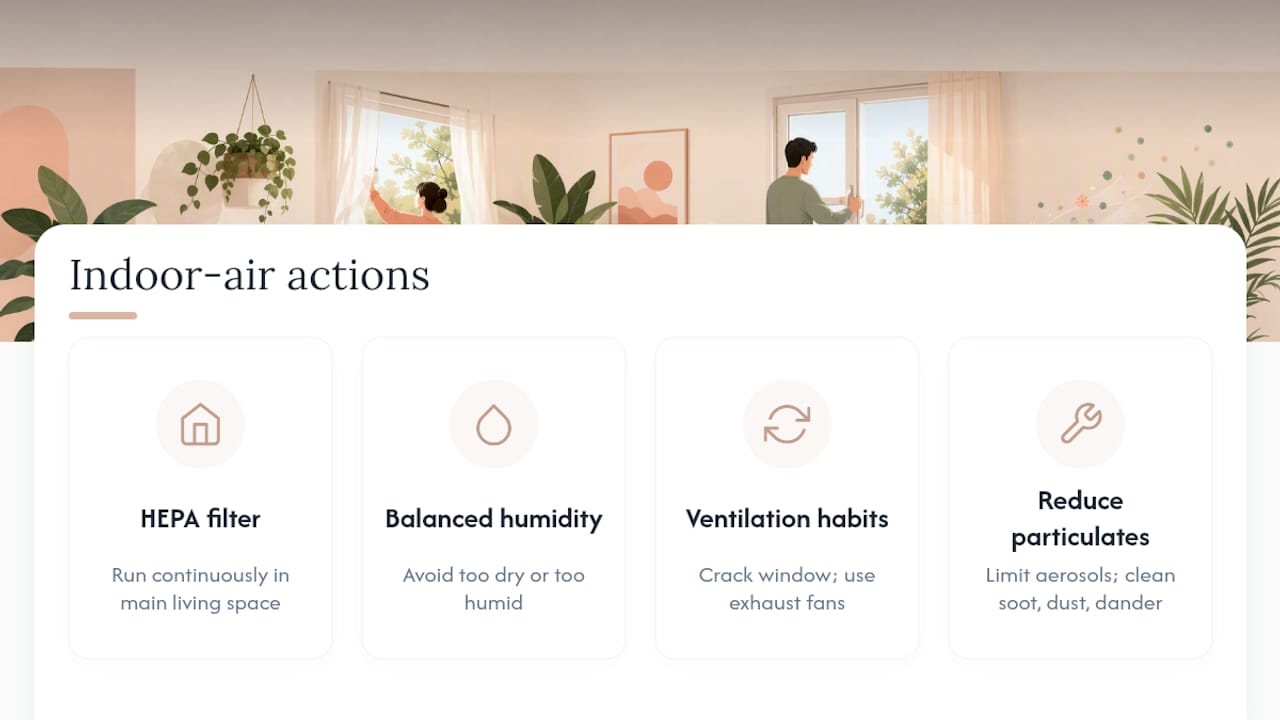
Ventilation habits you build for candles carry over everywhere else. Cracking a window during and after cooking, running exhaust fans in bathrooms, and avoiding aerosol cleaning sprays in closed rooms all reduce your household’s baseline particulate load. If soot from candles or fireplaces has settled onto surfaces like cabinets over time, it’s worth addressing that buildup directly. Resources on refinishing smoke-stained cabinets cover what heavy soot exposure looks like on surfaces, which is a decent visual reminder of what’s also landing in your lungs.
Small changes stack up. None of them require replacing your entire home setup, just a few consistent habits layered on top of smarter candle choices.
An Honest Take on the “Just Stop Burning Candles” Advice
The easiest answer to candle-related coughing is also the least useful one: stop burning candles entirely. It technically works, but it ignores why people burn them in the first place and it skips the more useful question, which is why a specific candle is causing the reaction.
Conventional advice tends to treat all candles as equally risky, when the evidence points to real differences in wax composition, fragrance load, and burn practices. It also tends to lump irritation and allergy together, which leads people to abandon candles altogether when a fragrance swap or better ventilation habit would have solved the problem.
My honest read on the research: ventilation is the most underrated fix in this entire conversation. It’s free, it’s immediate, and the Healthline coverage of exposure studies backs it as one of the most effective controls available. Pair that with a cleaner-burning candle and shorter sessions, and most people can keep candles in their life without the coughing fits.
— Andy
Try a Cleaner-Burning Candle Without Guessing at the Ingredients
If cutting fragrance chemicals and soot is the goal, Wick of Hope gives you a straightforward path: coconut-soy wax, wooden wicks, full ingredient transparency, and biodegradable packaging, without the paraffin and vague “fragrance” labels found in most mass-produced candles.
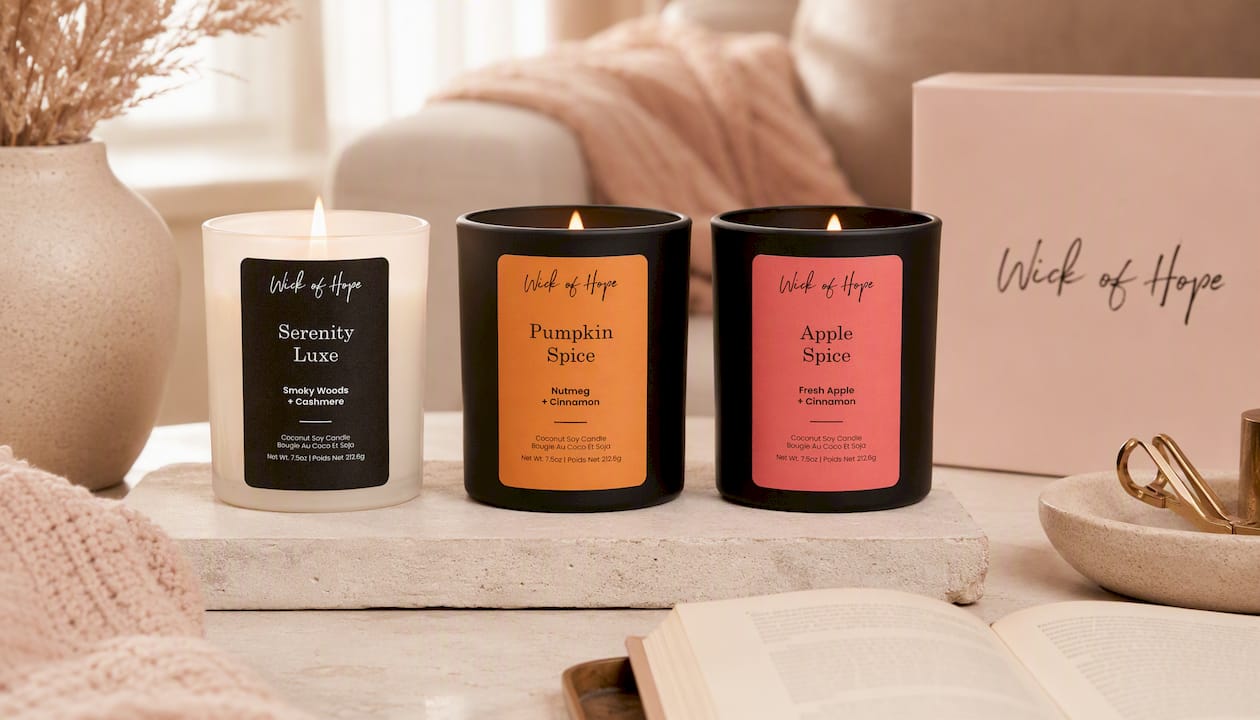
Start with a short, ventilated test burn of the Serenity Luxe Candle in Smoky Woods and Cashmere, a scent built to feel cozy without the heavy synthetic load. If you’re leaning seasonal, the Pumpkin Spice Candle with nutmeg and cinnamon or the Apple Spice Candle with fresh apple and cinnamon offer the same clean-burning foundation in a warmer profile. For a broader look, browse the full Non-Toxic Candles collection or the Non-Toxic Wax Melts line if you’d rather skip an open flame entirely. Every purchase supports women and children escaping crisis, and if you’re shopping for someone else, a gift card lets them pick their own safer scent. Explore the Hope Club for updates on new clean-burning releases.
This article is general information, not a substitute for advice from a qualified doctor. Consult a qualified healthcare professional about your own circumstances before acting on anything here.
Sources
- Are candles bad for you? What the science says — Healthline
- Extent of exposure to scented candles and prevalence of respiratory and non-respiratory symptoms amongst young university students — PMC
- Fragrance allergens — California Department of Public Health
- What are the WHO air quality guidelines? — WHO
FAQ
What is the 3-hour rule for candles?
The 3-hour rule recommends limiting each candle-burning session to roughly three hours before extinguishing it and airing out the room, since particulate matter and VOCs accumulate the longer a candle burns in an unventilated space.
Is breathing in candle fumes bad for you?
Candle fumes contain PM2.5 and VOCs that can irritate your airways and, in controlled studies, produce measurable changes in exhaled breath markers lasting up to five hours. The risk depends heavily on candle type, ventilation, and how sensitive your airways are to begin with.
What are the symptoms of candle toxicity?
Common symptoms include coughing, throat tightness, headache, wheezing, and shortness of breath, with a university study finding cough in 7.8% and shortness of breath in 8.9% of respondents who reported problems from scented candles.
What are the symptoms of a candle allergy?
A true fragrance allergy often causes skin reactions like contact dermatitis in addition to respiratory symptoms, and it tends to recur consistently with the same scent or ingredient, unlike general irritation, which scales with smoke and fragrance concentration. Patch testing, described by DermNet NZ, is the standard way to confirm it.
Can unscented candles still make me cough?
Yes. Unscented candles remove fragrance-related VOCs, but any burning candle still produces some PM2.5 and trace VOCs from the wax and wick, so ventilation remains important even with fragrance-free options.


