


Coconut wax is a plant-derived wax made by hydrogenating (and sometimes fractionating) coconut oil until it turns solid, then blending it in many commercial products with other vegetable waxes for stability. Candle makers reach for it because of its creamy texture and its knack for holding onto fragrance oil better than most alternatives. Before you buy a bag or a finished candle, check the technical data sheet, because “coconut wax” on a label can mean pure hydrogenated wax or a blend with soy or another vegetable base.
TL;DR:
- Pure coconut wax has a melting point of about 38 to 42°C, making it softer and less heat-resistant than most vegetable waxes, which limits its use in large pillars or warm environments.
- Many commercial coconut wax products are blends with soy or other waxes, which enhances hardness and shipping stability but can affect fragrance throw and burn behavior.
- Proper testing of wick size, fragrance load, and pour temperature is essential to achieve optimal burn quality and reduce soot or mushrooming issues in coconut wax candles.
- Verified safety claims require independent emission testing, detailed technical data sheets, and supplier documentation, as marketing labels alone do not guarantee clean-burning performance.
- Coconut wax excels in products like wax melts, massage candles, and container candles where scent throw and a creamy finish are priorities, but less so in traditional pillars or large outdoor candles.
Table of Contents
- What Is Coconut Wax, and How Does It Differ From Coconut Oil?
- How Coconut Wax Is Made, From Coconut Meat to Finished Blend
- Coconut Wax Properties That Actually Affect How Your Candle Burns
- Where Coconut Wax Actually Shines: Best Uses and Formats
- A Formulation and Testing Checklist for Candle Makers
- What to Check Before You Trust a “Clean-Burning” Claim
- When Pure Coconut Wax Beats a Blend, and When It Doesn’t
- Try Coconut-Soy Wax Without the Guesswork of DIY Testing
- Sources
- FAQ
What Is Coconut Wax, and How Does It Differ From Coconut Oil?
Coconut oil is liquid at room temperature (softening around 76°F) and stays that way until it’s processed further. Coconut wax starts as that same oil, then goes through hydrogenation, a process that adds hydrogen atoms to the fat molecules until the oil turns solid and shelf-stable. Some suppliers take it a step further with fractionation, isolating specific fat components to fine-tune hardness and melting point.
That processing gap is exactly why “coconut oil candle” and “coconut wax candle” are not interchangeable phrases, even though marketing copy sometimes treats them that way.
Two label types show up on the market:
- 100% hydrogenated coconut wax — pure processed coconut oil, softer and lower melting than most vegetable waxes.
- Coconut-blend waxes — hydrogenated coconut oil mixed with soy, palm, or other waxes to raise hardness and improve shipping tolerance.
When you’re comparing a technical data sheet, four fields matter most: melting point, acid value, iodine value, and recommended pour temperature. Skip these and you’re guessing at how the wax will actually behave in your vessel.
How Coconut Wax Is Made, From Coconut Meat to Finished Blend
Coconut wax production starts with the same raw material as coconut oil: pressed coconut meat, refined and deodorized before any further processing happens. From there, manufacturers take it in different directions depending on the intended use.
- Extraction — coconut oil is pressed and refined from the meat, removing impurities and odor.
- Hydrogenation — the refined oil is hydrogenated, converting it from liquid to a solid, candle-ready wax.
- Fractionation (optional) — some producers isolate specific fat fractions to control melting behavior more precisely.
- Blending — many commercial candle waxes mix hydrogenated coconut oil with soy or other vegetable waxes to raise melting point, improve hardness, and survive warehouse heat during shipping.
That last step explains most of the confusion around this material. Manufacturing research on coconut oil processing notes that some commercial candle products blend hydrogenated coconut oil with other vegetable waxes rather than selling it pure, and the label doesn’t always spell that out.
Reading an INCI list or supplier spec sheet is the only reliable way to know what you’re actually working with. A “hard coconut wax” product line, for instance, is marketed specifically as 100% fully hydrogenated coconut wax built for pillar candles, while other coconut-labeled products are hydrogenated vegetable glyceride blends positioned as coconut-based wax substitutes. Same category name, different performance.
Coconut Wax Properties That Actually Affect How Your Candle Burns
Melting point is the number that shapes almost everything else. A representative coconut wax data sheet lists a melting range of 38 to 42°C (about 100 to 108°F) with a recommended pour temperature of 50 to 60°C. That’s soft compared to many vegetable waxes, which is why pure coconut wax candles can struggle in a hot car trunk or an un-air-conditioned shop in July.
Here’s what that softness buys you in exchange:
- A creamy, opaque finish that looks polished straight out of the mold
- Strong scent throw, since the loose crystal structure holds fragrance oil well
- A smooth, even melt pool when the wick is properly matched to the vessel
But “clean-burning” needs a caveat here. Combustion research on candle emissions found that soot and gas output depend on fuel, fragrance load, wick type, and burn conditions together, not on wax type alone. A controlled emission study measuring gaseous and particulate output across fuels and fragrances reached the same conclusion: emission behavior shifts with fragrance load and wick construction, so it has to be tested, not assumed. A perfect coconut wax base can still smoke with the wrong wick or an overloaded fragrance pour.
Where Coconut Wax Actually Shines: Best Uses and Formats
Pure coconut wax earns its keep in a few specific formats, mostly ones that don’t need structural rigidity.
- Wax melts benefit most from pure or high-coconut blends, since there’s no vessel to worry about melting and scent throw is the whole point.
- Massage candles and cosmetic pours lean on coconut wax’s low melting point and skin-friendly feel.
- Container candles with strong fragrance goals do well with coconut-soy blends, which is why coconut soy blends show up so often in commercial lines.
- Large pillars and taper candles usually need a blend or a different wax entirely, since pure coconut wax can soften and slump at room temperature in warmer climates.
Store finished coconut wax candles away from direct sun and heat sources. A softened surface isn’t a safety issue, but it does dent easily and can look messy in transit if packaging isn’t snug.
A Formulation and Testing Checklist for Candle Makers
Skipping the testing phase is the single most common reason coconut wax candles disappoint. Here’s a tighter path through it.
- Start with the TDS. Note the melting point, the recommended pour temperature, and the wick range the supplier lists.
- Match your vessel. Wick sizing that works in a narrow tin will tunnel in a wide jar, and vice versa.
- Test your actual fragrance load. Higher fragrance oil percentages change how the wax burns, not just how it smells.
- Run a full first burn. Let the melt pool reach the vessel edge before judging burn quality. A burn testing note points out that a rushed first burn often looks like tunneling when it’s really just an incomplete melt pool.
- Watch for soot and mushrooming. If you see either, drop your wick size before you touch the fragrance load.
Pro Tip: Keep your vessel diameter, fragrance percentage, and wick brand identical across test batches. Changing more than one variable at a time means you’re testing noise, not wax.
If you want a documented starting formula rather than building from scratch, an 8 oz coconut-soy recipe with tested specs gives you a real baseline to adjust from.
What to Check Before You Trust a “Clean-Burning” Claim
“Clean-burning” gets printed on a lot of labels with very little behind it. The documentation that actually backs up a safety or performance claim looks like this:
- A supplier or brand technical data sheet listing melting point, pour temp, and recommended wick range
- A Safety Data Sheet (SDS) covering the raw wax and any fragrance additives
- Independent combustion or emission testing rather than marketing copy alone
- A track record of customer reviews reflecting real burn performance, not just scent preference
Wick of Hope builds its candles on coconut soy wax with FSC-certified wooden wicks and biodegradable packaging, and backs those choices with SDS-supported safety documentation rather than a bare “non-toxic” label. Before you buy raw wax or a finished candle from any brand, ask for the TDS and SDS directly. If a supplier hesitates to share either one, treat that as your answer.
When Pure Coconut Wax Beats a Blend, and When It Doesn’t
Pure coconut wax wins when scent throw is the priority: wax melts, massage candles, anything not carrying its own weight in a tall pillar. Blends win when you need heat tolerance, shipping stability, or lower cost per batch, especially for container candles sold in warmer regions. And don’t assume “natural” settles the sustainability question. Coconut supply chains vary in cultivation and transport impact just like any agricultural product, so ask about sourcing instead of taking the plant-based label at face value.
— Andy
Try Coconut-Soy Wax Without the Guesswork of DIY Testing
Some brands offer coconut-soy formulations, wooden wicks, and SDS-backed clean-burning claims without requiring customers to run their own melting-point trials or wick tests at home. Every candle and wax melt goes through the formulation and burn testing this guide just walked you through, so you’re buying the tested result instead of the experiment.
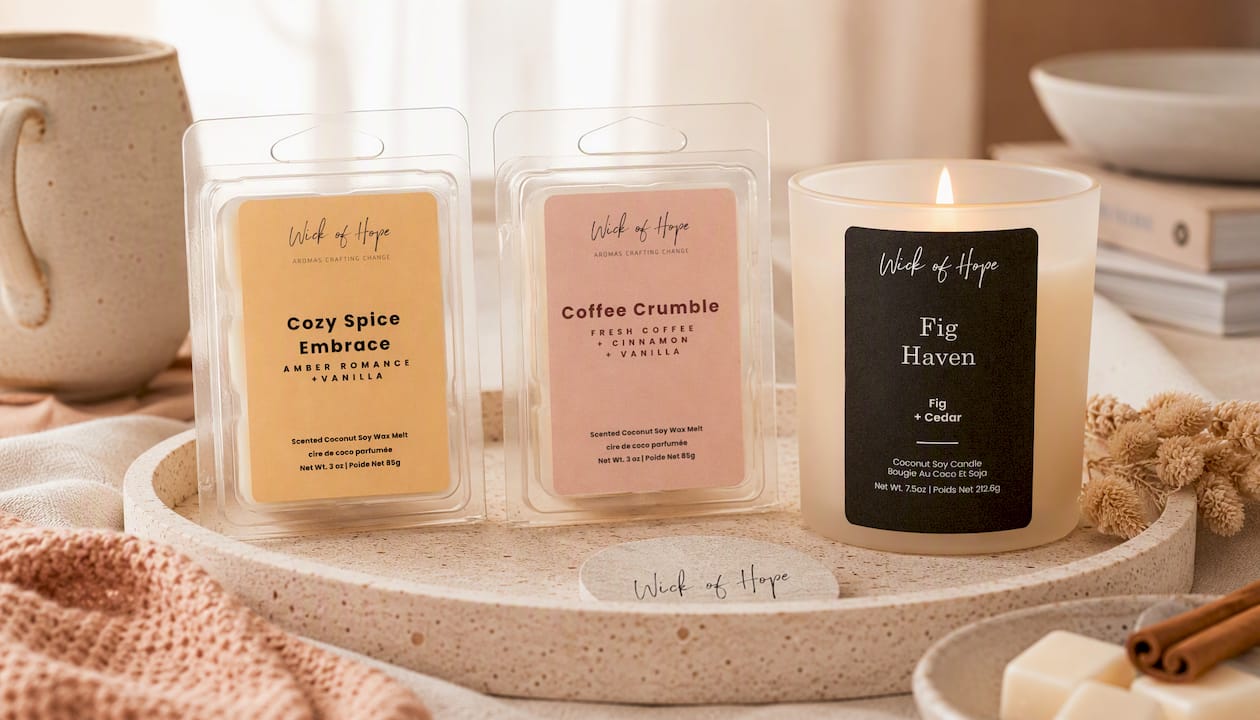
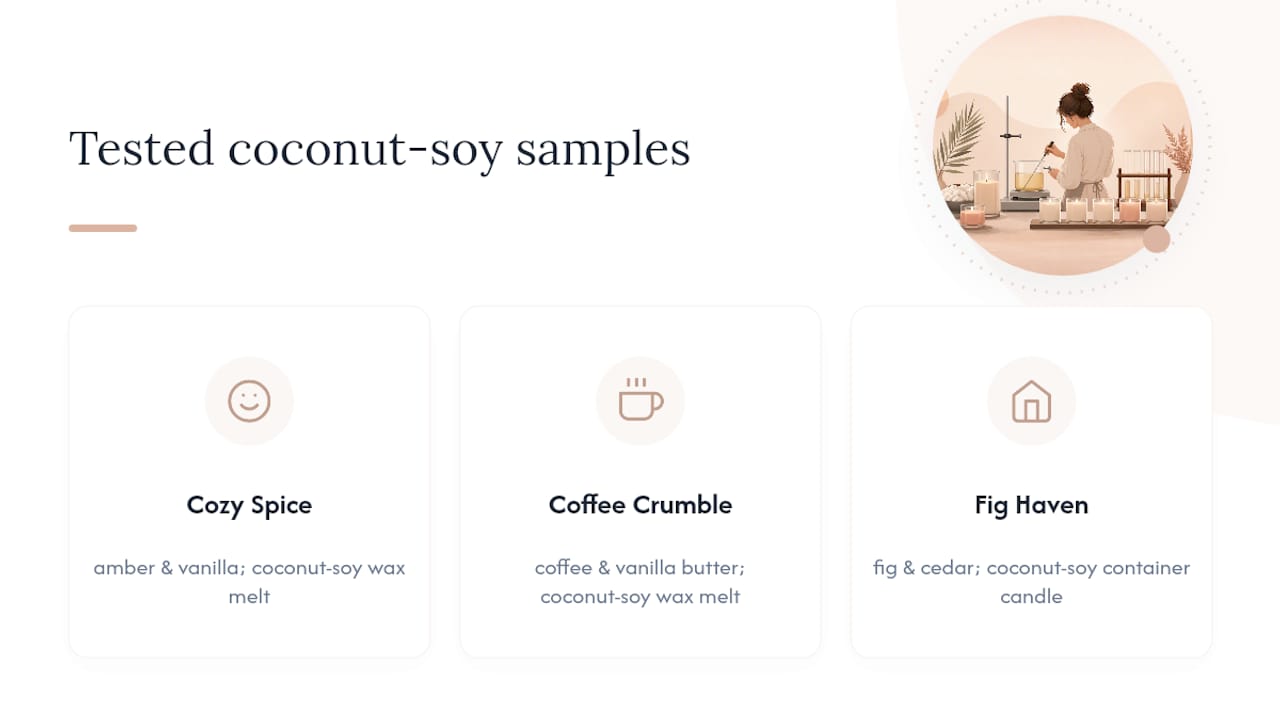
If you want to sample the fragrance throw coconut wax is known for, the Cozy Spice Embrace wax melt pairs amber and vanilla in a coconut-soy base built for scent, not structure. The Coffee Crumble wax melt leans into fresh coffee and vanilla butter for a similar effect in a different mood. For a finished container candle, the Fig Haven candle shows how fig and cedar perform in a coconut-soy blend meant for everyday burning.
Browse the full non-toxic candle collection or the wax melt lineup to find your fragrance, and know that every purchase also supports women and children escaping crisis. Curious about ongoing perks? Take a look at Hope Club for what’s available to returning customers, or grab a gift card if you’re shopping for someone else.
Sources
For melting-point specs, see the AvenaLab TDS. For emissions data, see the candles.org report.
- Going Coconuts (Talcott lab) — coconut oil extraction and processing overview
- Coconut Wax TDS (AvenaLab) — example technical data sheet
- Study: emissions and indoor air from candle combustion (PubMed)
- Candles
FAQ
Is Coconut Wax Just Coconut Oil?
No. Coconut wax is coconut oil that has been hydrogenated, and sometimes fractionated, until it turns solid at room temperature. Raw coconut oil stays liquid above roughly 76°F, while finished coconut wax typically melts in the 38 to 42°C range.
Is Coconut Wax Better Than Beeswax?
They serve different goals rather than one beating the other outright. Coconut wax generally holds fragrance oil better and gives a creamier finish, while beeswax runs harder and higher melting, which suits pillar candles and warmer storage conditions better than pure coconut wax can.
How Is Coconut Wax Made?
Producers extract and refine coconut oil from coconut meat, then hydrogenate it until it solidifies into a wax. Many commercial candle products then blend that hydrogenated coconut oil with other vegetable waxes to improve hardness and shipping stability.
What Can Coconut Wax Be Used For?
Coconut wax works well in wax melts, massage candles, and coconut-soy container candles, especially when strong scent throw matters more than heat resistance. Wick of Hope uses coconut soy wax across its candle and wax melt lines for exactly this reason.
Does Coconut Wax Need to Be Blended?
Not always, but blending is common because pure coconut wax softens more than many makers want for pillar candles or hot climates. A coconut-soy blend, like the one detailed in Wick of Hope’s tested recipe, balances scent throw against structural stability.


