


Most reactions to scented candles are sensitivity, not allergy. What you’re feeling is usually your body responding to fragrance concentration, ventilation, and combustion byproducts, not an immune attack. The exception is skin: a red, itchy rash where lotion or a spilled candle touched you can signal true allergic contact dermatitis. Either way, the first move is the same: stop burning it, air out the room, note when symptoms hit, and see a doctor if you’re wheezing or the rash keeps spreading.
TL;DR:
- Sensitivity reactions to candles are mainly caused by exposure to combustion byproducts and VOCs, with symptoms varying based on ventilation, burn time, and fragrance load.
- Fragrance ingredients can oxidize and become sensitizers, making allergy diagnosis complex, especially since most scent complaints reflect irritation rather than true allergy.
- Shorter burns, improved airflow, and choosing candles with lower fragrance loads and natural ingredients significantly reduce exposure and reaction risks.
- Inhalation symptoms like eye or throat irritation suggest sensitivity, whereas delayed skin rashes indicate potential allergy, and individual medical history influences these responses.
- Patch testing helps confirm skin allergies, but inhalation reactions rely on exposure history and behavioral modifications instead of specific diagnostic tests.
Table of Contents
- Chemical Irritation vs. True Allergy: How the Mechanisms Differ
- What Candles Release: Emissions, VOCs, and the Fragrance Chemicals That Matter
- Who Reacts, and What Your Symptoms Are Telling You
- How to Tell the Difference: Testing and At-Home Checks
- Practical Ways to Cut Exposure and Choose Safer Candles
- Why Ingredient Transparency Changes the Calculation
- The Overrated Fear, and the Underrated Fix
- Want to Try a Scented Candle With Nothing to Hide?
- Sources
- FAQ
Chemical Irritation vs. True Allergy: How the Mechanisms Differ
Your nose doesn’t know the difference between “this is dangerous” and “this is just a lot.” That’s the core problem with judging candle reactions by symptoms alone. Irritant responses are dose-dependent. Burn a candle longer, in a smaller room, with a heavier scent throw, and irritation gets worse regardless of your immune system’s opinion on the matter. A true allergy works differently. It’s immune-mediated, meaning your body has to first “learn” to recognize a specific molecule as a threat, then mount a delayed reaction the next time you’re exposed.
That distinction matters most on the skin. Allergic contact dermatitis shows up hours or even a day after contact, usually right where a lotion, spilled wax, or candle jar touched your skin. Inhaled reactions rarely work this way. Fragrance compounds are volatile chemicals, not proteins, and clinical guidance notes that most scent complaints reflect irritation rather than classic inhalant allergy, amplified by concentration and airflow, not antibodies.
A wrinkle worth knowing: many fragrance ingredients are prehaptens or prohaptens, molecules that are harmless until they oxidize on your skin or in the air, at which point they become capable of triggering true sensitization. That’s part of why fragrance contact allergy is so complicated to diagnose.
What this means for you:
- The same symptom, say, an itchy nose, can come from irritation or allergy. Symptoms alone don’t tell you which.
- Skin rash that shows up hours after contact points toward allergy.
- Instant eye or throat irritation while a candle is burning points toward sensitivity.
- Your medical history (asthma, eczema, prior fragrance reactions) shapes which mechanism is more likely.
What Candles Release: Emissions, VOCs, and the Fragrance Chemicals That Matter
Every burning candle produces a mix of combustion byproducts and, if it’s scented, fragrance-driven volatile organic compounds (VOCs) layered on top. Chamber studies measuring both scented and unscented candles found a consistent cocktail: fine particulates (PM2.5), formaldehyde, benzene, acrolein, and soot, with scented versions adding a distinct fragrance VOC signature that unscented candles simply don’t produce.
What changes the exposure:
- Wax type affects soot and particulate output, with some blends burning cleaner than others.
- Wick material and trim length influence how much soot gets thrown into the air.
- Fragrance load (how much scent oil is in the wax) scales roughly with VOC output.
- Scent family matters more than people expect.
Statistic Callout: Fragrance family, not just wax type, drives emission differences. Chamber testing has found that floral and fresh fragrances often generate higher VOC output than oriental or spice-forward blends, and while most calculated indoor concentrations stayed below reference guidance levels, certain combinations of heavy fragrance load, poor ventilation, and long burn times pushed specific pollutants close to those limits.
That last point is the one to sit with. Emissions aren’t fixed. They’re a function of your specific room, your specific candle, and how long you let it burn, which is exactly why the same candle can feel fine in a living room and rough in a small bathroom. Curious about the mechanics behind this? Chamber study data on candle VOCs breaks down how researchers measure it.
Who Reacts, and What Your Symptoms Are Telling You
Not everyone in the room reacts the same way, and the pattern of your symptoms is actually useful diagnostic information.
Immediate airway and eye symptoms while a candle is lit, think stinging eyes, a scratchy throat, coughing, or a headache that builds within minutes, usually point toward irritation from smoke and VOCs rather than true allergy. Our guide to fragrance-triggered headaches covers the mechanism in more detail.
Delayed, localized, itchy rash at a point of skin contact (a candle jar you handled, lotion with the same fragrance base) is the pattern more consistent with allergic contact dermatitis.
Certain people carry higher baseline risk: those with asthma, eczema, a documented fragrance sensitivity, or self-reported multiple chemical sensitivity tend to react at lower thresholds than the general population. Anxiety and anticipation play a role too. Expecting to feel sick around a “chemical” smell can genuinely amplify how strongly your body responds, which doesn’t make the symptoms fake, it just means the trigger is more complicated than the candle alone.
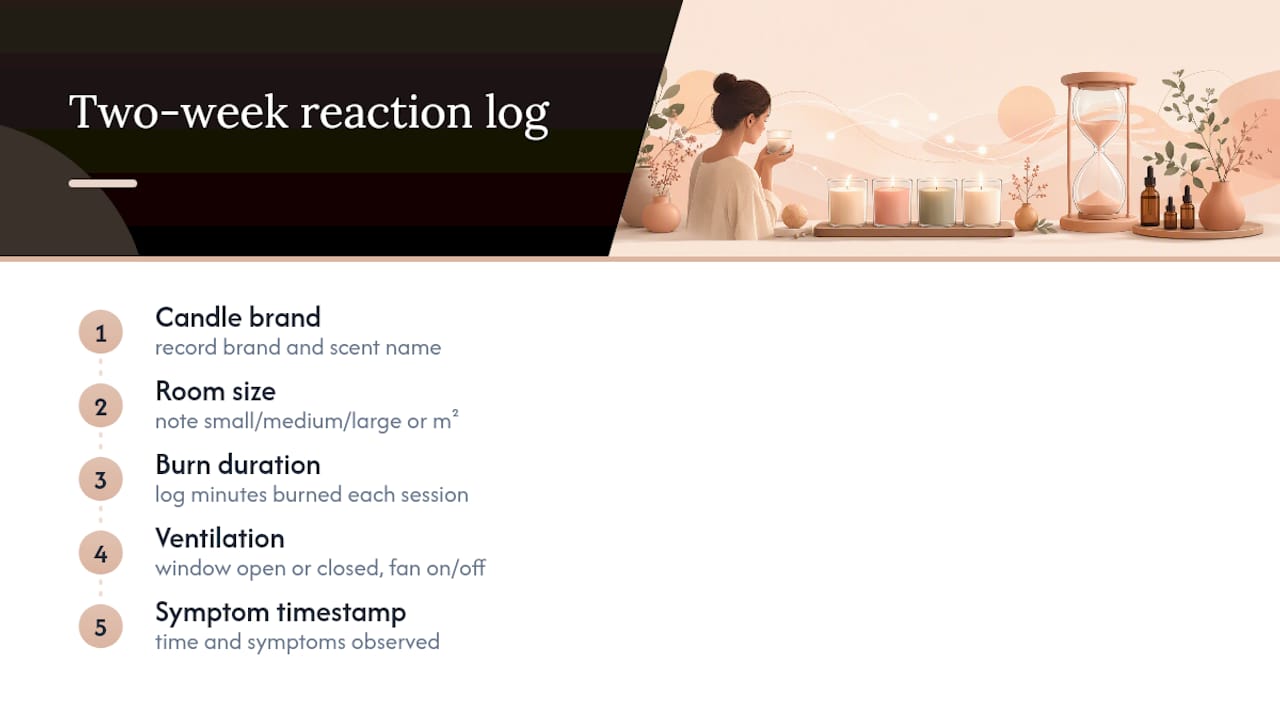
Pro Tip: Keep a simple log for two weeks: candle brand, room size, burn duration, ventilation (window open or closed), and symptoms with a timestamp. Patterns jump out fast once it’s on paper.
How to Tell the Difference: Testing and At-Home Checks
There’s no single blood test or skin prick panel for “candle allergy.” Diagnosis depends on matching your symptom pattern to the right kind of investigation.
- For skin reactions, a dermatologist may recommend patch testing, applying small amounts of suspected allergens (often specific fragrance mix compounds) to your back and checking for a reaction over several days. This only works for contact allergy; it does nothing for inhalation complaints.
- For inhalation symptoms, there’s no equivalent test. Clinicians rely on your exposure history and a trial of avoidance instead.
- At home, compare the unlit candle’s cold scent against how you feel when it’s actually burning; reactions to both suggest fragrance sensitivity, while reactions only during burning point to combustion emissions.
- Test an unscented version of the same wax and wick to isolate fragrance from smoke.
- Vary ventilation and burn duration one at a time so you’re not changing three variables at once.
Seek urgent medical attention for wheezing, real difficulty breathing, or facial swelling. Those aren’t sensitivity symptoms, and they don’t wait for a diary entry.
Practical Ways to Cut Exposure and Choose Safer Candles
Most people don’t need to give up candles entirely. They need to change how and where they burn them.
- Crack a window or run an exhaust fan while the candle is lit, and for a while after you blow it out.
- Cap burn sessions around 3 to 4 hours rather than letting one candle run all evening.
- Trim the wick to about a quarter inch before each burn to cut soot output.
- Never run several scented candles at once in a small space; the VOC load stacks.
- Choose larger rooms over bathrooms or bedrooms for anything scented.
If you’re testing whether it’s the candle or the room, run a single-product trial: one unscented or low-fragrance-load candle, in a room you can ventilate, for a short burn, and track how you feel. Cleveland Clinic’s guidance notes there’s no solid evidence that ordinary candle use is broadly dangerous; risk tracks with candle type, duration, airflow, and your own health status, not candle burning as a category.
Pro Tip: If scented products consistently trigger symptoms, LED candles remove the combustion and fragrance variables entirely. If you want scent without a flame, be cautious with ultrasonic essential-oil diffusers in a closed room; they can aerosolize concentrated compounds fast. Our candle safety checklist walks through the rest of the basics, and indoor air quality guidance digs into ventilation specifics if you want to go deeper.
Why Ingredient Transparency Changes the Calculation
Andy here, sharing insights from our team. The candles discussed here are crafted from natural coconut soy wax and FSC certified wooden wicks, with ingredient listings provided to help sensitive readers understand what they’re testing. Lower fragrance load and clear ingredient disclosure won’t turn a true allergy into nothing, but they narrow the odds of unnecessary irritant exposure and unlabeled sensitizers landing on your skin. If you’re testing a new candle after a reaction, start small: a compact room, a cracked window, a short first burn. That’s the same low-risk approach behind our own trial recommendations, and it’s a big part of why the brand holds a 4.9-star rating across more than 650 reviews.
The Overrated Fear, and the Underrated Fix
Here’s where I think the conventional advice oversells the drama: most candle reactions aren’t a medical emergency in disguise, they’re a dose problem. The internet loves a “candles are secretly toxic” headline, and the chamber study data doesn’t support that framing. Most measured concentrations stayed under reference limits. What the same data actually supports is narrower and more useful: fragrance load, ventilation, and burn duration move the needle far more than “scented versus unscented” as a blunt category.
Where I’d push back hardest is on people treating patch testing as a catch-all diagnostic. It’s genuinely valuable if you’ve got a rash, and close to useless if your only symptom is a headache from across the room. That’s an inhalation problem, and the fix is behavioral (shorter burns, better airflow, lower fragrance load), not a dermatology referral.
If you take one thing from this: track your symptoms before you swear off candles entirely. The pattern usually points somewhere specific, and specific problems have specific fixes.
— Andy
Want to Try a Scented Candle With Nothing to Hide?
If your instinct after a bad reaction is to swear off scented candles for good, you don’t necessarily have to. This brand builds every candle from natural coconut soy wax and FSC certified wooden wicks, with full ingredient listings instead of a vague “fragrance” line, so buyers can better understand what they’re testing before burning.
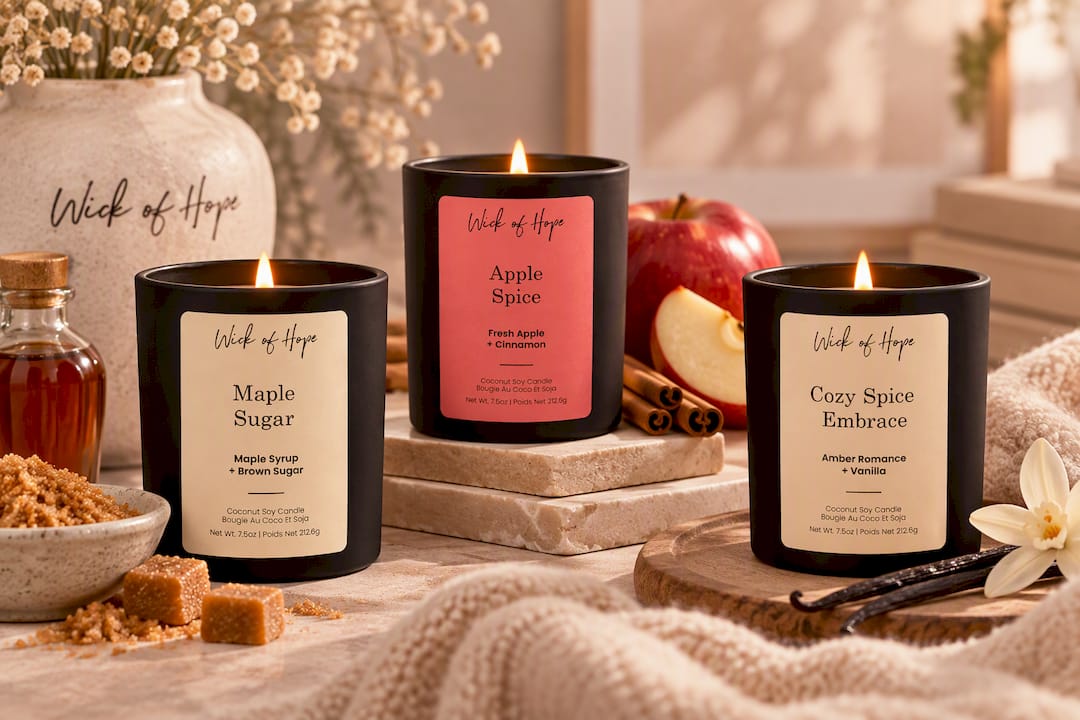
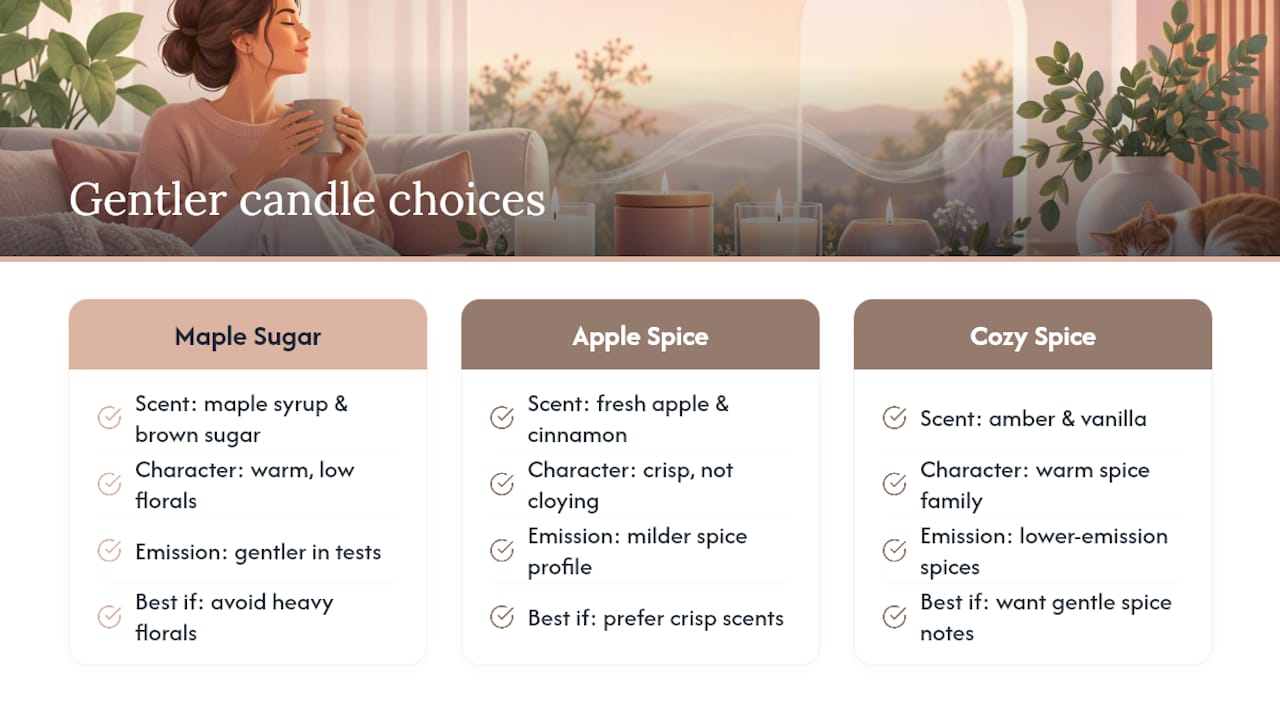
If you want to try a gentler reintroduction, start with a single candle in a room you can air out. The Maple Sugar Candle leans into warm maple syrup and brown sugar without the heavy florals that tend to run hottest in emission testing. The Apple Spice Candle, built on fresh apple and cinnamon, is a good pick if you want something crisp rather than cloying. And the Cozy Spice Embrace Candle, with amber and vanilla, sits in that lower-emission spice family the chamber data flagged as generally gentler than florals.
Run a short first burn, ventilate the room, and see how you feel before committing to a full evening. Browse the full non-toxic candle collection or check out clean wax melts if you’d rather skip an open flame altogether. Every purchase also supports women and children escaping crisis, so testing a safer candle does double duty.
Sources
For deeper reading beyond this guide: the scent sensitivity review covers irritation versus allergy mechanisms, the candle emissions chamber study details VOC and particulate data, and UC Davis Dermatology explains patch testing for contact allergy. For understanding VOC behavior more broadly, this look at off-gassing and indoor air is a useful companion read.
This article is general information, not a substitute for advice from a qualified doctor. Consult a qualified healthcare professional about your own circumstances before acting on anything here.
FAQ
How Can I Tell If I’m Allergic to a Candle?
Watch for a delayed, itchy, localized rash where your skin touched the candle, jar, or wax; that pattern suggests true allergic contact dermatitis. Immediate eye, nose, or throat irritation while the candle burns is more likely sensitivity to smoke and fragrance VOCs, not a classic allergy.
What Is the 3-Hour Rule for Candles?
It’s a safety guideline recommending you burn a candle for no more than 3 to 4 hours at a time before letting it cool and the room air out. Longer sessions let soot, VOCs, and heat build up in the wax pool and the room air.
Why Am I Suddenly Reacting to Scents I Never Reacted to Before?
Fragrance sensitivity can develop over time, especially with repeated exposure to the same compounds, and some fragrance ingredients only become allergenic after oxidizing on skin or in air. A change in your health (new asthma diagnosis, eczema flare, viral illness) can also lower your reaction threshold without warning.
What Are the Signs of Candle Toxicity?
Persistent headache, dizziness, coughing, or breathing difficulty during or right after burning are signs you’re overexposed, not signs the candle is inherently toxic. Seek medical care immediately for wheezing, real trouble breathing, or facial swelling, and otherwise focus on shorter burns, better ventilation, and lower fragrance load.


