


Candle sweating is usually fragrance oil or wax pulling away from the container, not water, and it is normally cosmetic and fixable. Those glossy droplets or cloudy patches you’re seeing on your favorite soy candle rarely mean it’s ruined. Move the candle to a stable room temperature, blot any visible oil with a paper towel, and read on to find the exact cause and the right fix.
TL;DR:
- Candle sweating in natural wax blends is caused primarily by thermal expansion and fragrance oil separation, not water or leakage.
- Using the correct pour temperature, within supplier-recommended fragrance loads, and controlling storage and shipping conditions can prevent sweating before it starts.
- Most surface oil beads or cloudy patches are cosmetic and do not affect how the candle burns or scents, but pooling near the wick may indicate the need for re-pouring.
- Wiping or gently warming the surface can temporarily fix sweating issues, but consistent problems may require troubleshooting upstream factors like storage, pour technique, or formulation.
- Natural wax flaws like frosting and wet spots are normal signs of natural wax movement, not necessarily defects, especially in coconut soy blends.
Table of Contents
- What Causes Candle Sweating in Soy and Coconut Wax Blends
- How to Fix a Sweating Candle Right Now
- Preventing Candle Sweating Before It Starts
- Does Sweating Change How a Candle Burns or Smells?
- What Wickofhope Recommends for Clean, Stable Candles
- An Honest Take on Sweating and Natural Wax
- Shop Candles Made to Resist Sweating
- Sources
- FAQ
What Causes Candle Sweating in Soy and Coconut Wax Blends
Sweating shows up as tiny oil beads on the surface or as wet, glassy patches where the wax has pulled slightly away from the container wall, typically a cosmetic effect. Both are texture issues, not moisture. Natural waxes like coconut soy expand and contract more than paraffin as they heat and cool, and that movement is behind most of what you’re seeing.
Thermal expansion is the biggest culprit. Wax grows when warm and shrinks when it cools, and glass doesn’t move at the same rate. When a candle cools too fast, or unevenly, tiny gaps form between the wax and the jar. What looks like a wet spot is often the wax pulling away from the glass during cooling rather than any kind of leak or defect, according to a soy wax troubleshooting guide from CandleScience. Pour into a cold container straight from a cupboard, and you’ve set that process in motion before the candle even finishes setting.
Fragrance oil separation is the second major driver. Every wax has a fragrance load limit, the maximum percentage of oil it can hold without the oil eventually working its way to the surface. For soy and coconut soy blends, fragrance load limits commonly recommended by suppliers usually range within moderate percentages. Push past roughly 8 to 10 percent, and you’re inviting oil beads to form on top of the candle, since excess fragrance oil beyond supplier recommendations is one of the top causes of sweating. Thorough mixing matters just as much as the percentage. Oil that isn’t fully incorporated during pouring separates out later, even at a technically safe load.
A handful of other conditions compound both problems:
- Pour temperature mismatches. Pouring wax too hot into a cool jar, or too cool into a warm one, creates stress points as the mixture sets.
- Humidity and drafts. Damp air or an uneven draft across a curing candle causes one side to cool faster than the other, which encourages pull-away spots.
- Shipping temperature swings. A candle that rides in a hot delivery truck for hours, then sits in a cold entryway, has already been through two rounds of expansion and contraction before you even light the wick.
- Manufacturing shortcuts. Trapped air bubbles, an undersized wick, or wax that isn’t suited to the container’s shape can all show up later as surface texture problems.
Here’s a detail that surprises most first-time candle makers: natural wax “flaws” like frosting and wet spots are common precisely because these waxes are natural. It’s often a sign of composition rather than a defect, not a sign that something went wrong in the pour. Paraffin’s uniform, engineered structure hides these quirks. Coconut soy wax, being closer to its natural state, shows them.
Pro Tip: If you’re troubleshooting a batch of homemade candles, check your fragrance load percentage before you blame your technique. A scale and a calculator will tell you more than a dozen repours.
How to Fix a Sweating Candle Right Now
Start with the least invasive step and work your way up. Most sweating candles need nothing more than a few minutes of attention.
- Blot the surface. Use a paper towel or soft cloth to gently press away any visible oil beads or moisture-looking droplets. Do this before you do anything else, so you can see the actual wax surface underneath.
- Inspect the wick and check for pooling. Look closely at the area right around the wick. If oil has collected there rather than spread evenly across the surface, that’s worth noting, since it can affect how the candle burns later.
- Try a controlled warming pass. A heat gun or hair dryer on low, held several inches away and moved constantly, can gently remelt the top layer and reincorporate stray oil back into the wax. Heat-gun surface warming can temporarily remelt the surface and pull oil back in, but it has to be done gently. Hold the heat source too close or too long, and you risk scorching the wick or creating new frosting where none existed.
- Let it settle somewhere stable. After blotting or warming, move the candle to a cool, steady spot away from windows, vents, and heat sources, and leave it alone for a day or two. Many wet spots simply reduce on their own once the wax finishes settling into the jar.
- Know when to repour instead. If oil has pooled thickly near the wick, if the surface looks pitted rather than just glossy, or if the same candle keeps sweating every time the room temperature shifts, it may be time to melt it down and start over. If you’re reusing the container, a guide to removing wax from glass jars walks through the cleanup.
Surface warming is a real fix, but treat it as temporary if the same conditions caused the problem in the first place. A candle that sweats because it lives on a sunny windowsill will sweat again if you put it right back there.
If you’re the one making the candles, run through this quick checklist before you troubleshoot further:
- Confirm your fragrance load sits within the wax supplier’s recommended range, usually 6 to 10 percent for soy and coconut soy blends.
- Check your stirring time. Fragrance oil needs to be fully blended in, not just added and poured.
- Verify your pour temperature against the wax manufacturer’s spec sheet rather than a habit from a different wax.
- Note the ambient temperature of your workspace at the time of the pour. A cold garage in winter behaves very differently than a heated studio.
Preventing Candle Sweating Before It Starts
Prevention comes down to controlling temperature at every stage: the pour, the cure, the storage, and the shipping. Get those four right, and sweating becomes the exception instead of the rule.
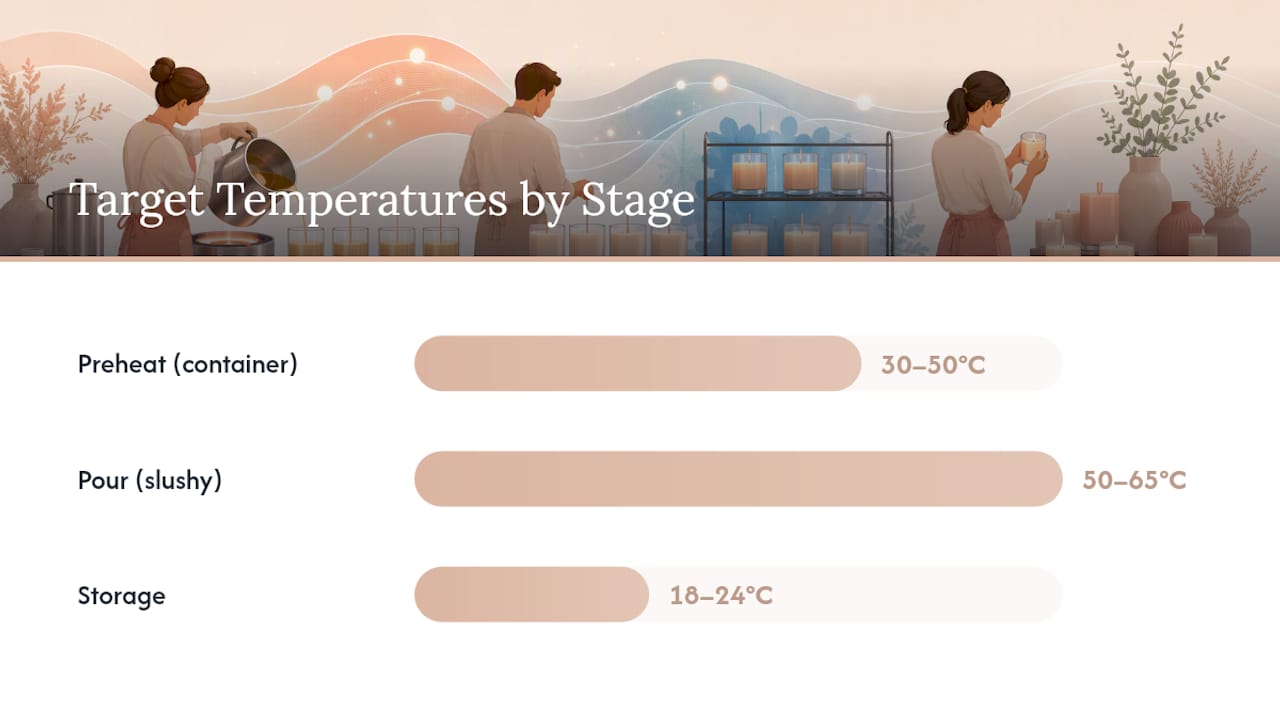
During the pour, preheat your containers before adding wax. Preheating jars to roughly 30 to 50°C and pouring the wax itself at a cooler “slushy” stage, often somewhere between 50 and 65°C depending on the wax, reduces the thermal shock that causes adhesion problems. Skipping the preheat step is one of the most common reasons a home-poured candle develops wet spots within its first week.
During the cure, let candles cool slowly and evenly. Don’t set a freshly poured candle next to an open window or in a drafty hallway. Uneven cooling on one side of the jar is a direct path to the wax pulling away unevenly, exactly the mechanism behind most wet spots.
During storage, keep candles somewhere steady. A storage guide recommends a stable range of roughly 18 to 24°C (about 65 to 75°F), away from direct sunlight, AC vents, and radiators. Keeping candles in their original box or under an airtight lid adds another layer of protection against humidity and temperature swings.
During shipping, both makers and buyers can limit damage. If you’re mailing candles, avoid peak heat days when possible and use insulated packaging for long transit times. If you’re receiving one, unbox it and let it acclimate to room temperature before setting it on display, rather than moving it straight from a cold porch to a warm mantel.
| Prevention stage | What to do | Target range or practice |
|---|---|---|
| Pouring | Preheat container, pour at recommended temp | Preheat ~30–50°C, pour ~50–65°C |
| Curing | Cool slowly, avoid drafts and direct sun | Even ambient temperature, no direct airflow |
| Storage | Keep in stable, cool location | 18–24°C (65–75°F) |
| Shipping | Use insulated packaging, acclimate on arrival | Avoid extreme heat/cold exposure |
A few consumer habits round this out. Skip the windowsill, no matter how good the light looks. Keep candles away from stovetops, space heaters, and sunny car dashboards. If you buy candles seasonally, a guide to where and how to store candles at home covers the specific rooms and shelves that tend to work best.
Does Sweating Change How a Candle Burns or Smells?
Almost always, no. Wet spots are typically cosmetic and don’t affect how a candle burns. A candle with a few surface droplets or a cloudy patch on the glass will still light, burn, and throw scent close to normal.
The exception worth watching for is oil that pools specifically near the wick rather than spreading across the surface. That concentration can throw off the fuel mix right where the flame draws from, which sometimes reduces scent throw or leads to an uneven burn pattern. Watch for these signs that a candle needs more than a wipe down:
- A pool of oil sitting directly around the wick base rather than scattered lightly across the top.
- Noticeably weaker scent throw compared to when the candle was new.
- Excessive smoking, a flame that’s unusually tall, or flickering that seems constant rather than occasional.
If you notice any of those, a candle safety checklist is worth a quick read before your next burn.
What Wickofhope Recommends for Clean, Stable Candles
Wickofhope builds every candle from natural coconut soy wax and FSC certified wooden wicks, chosen specifically because they burn clean without the paraffin and additives that mass-produced candles rely on. Every purchase also supports women and children escaping crisis, so the formulation choices carry weight beyond the jar.
A few practices we hold ourselves to, consistent with what wax suppliers and industry troubleshooting guides recommend:
- Fragrance loads kept within tested ranges rather than pushed to the maximum for a stronger scent claim.
- Containers preheated before pouring, and wax cooled slowly rather than rushed to speed up production.
- Storage and shipping guidance shared with customers, not just makers, since a candle’s life after it leaves the workshop matters just as much as how it was poured.
Customers have responded positively to that approach, reflecting satisfaction with how candles perform once they’re burning at home. Small-batch attention to pour temperature and fragrance ratios doesn’t eliminate every natural-wax quirk, but it keeps them rare rather than routine.
An Honest Take on Sweating and Natural Wax
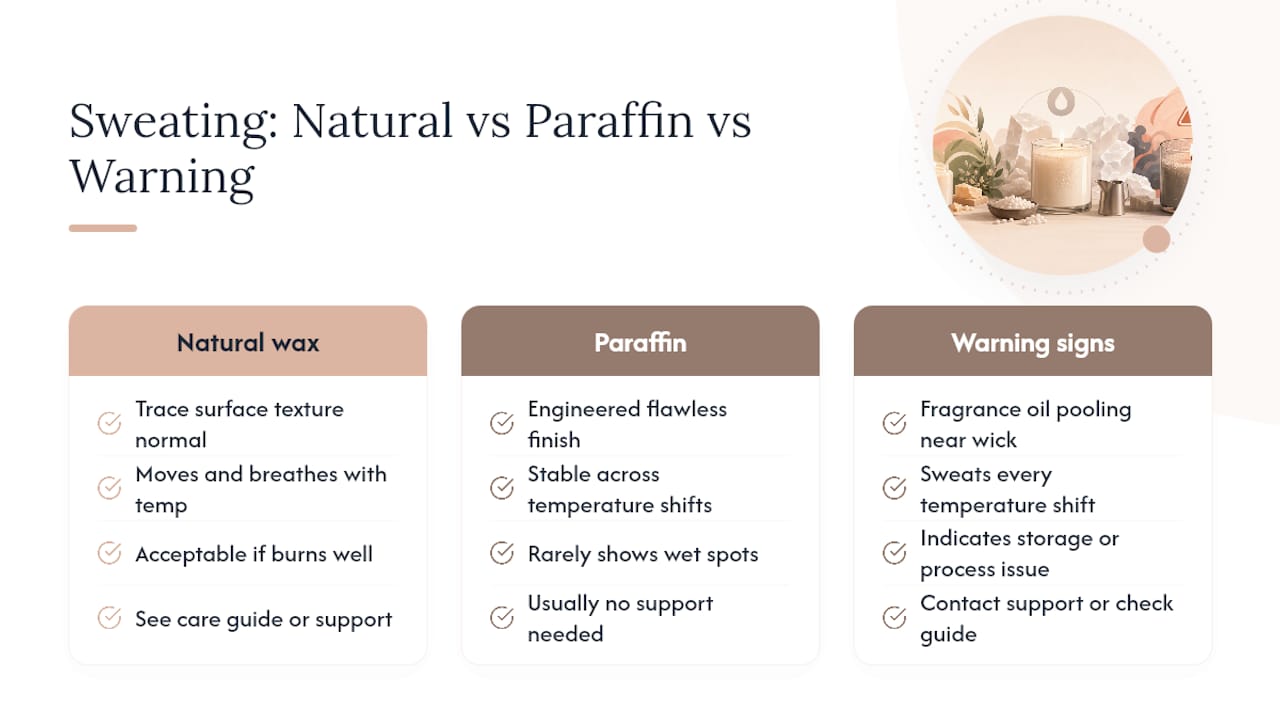
Most guides treat wet spots like a failure to correct. I’d push back on that a little. A trace of surface texture on a natural coconut soy candle isn’t a flaw so much as a fingerprint of the wax doing what natural wax does. The trade-off is real: paraffin looks flawless because it’s engineered to, while a natural blend moves and breathes with temperature the way the plant oils it’s made from always have.
That doesn’t mean every wet spot gets a pass. If fragrance oil is pooling near your wick or a candle sweats every single time the temperature shifts, something upstream needs fixing, whether that’s your storage spot or the maker’s process. But a little surface texture on an otherwise well-burning candle? I’d rather see that than a candle so processed it never varies at all. If you’re still unsure, our candle care guide or our customer service team can take a closer look at your specific situation.
— Andy
Shop Candles Made to Resist Sweating
Wickofhope formulates every candle to minimize the fragrance separation and adhesion issues covered above, using coconut soy wax blended within tested fragrance load ranges and poured with the temperature control that prevents thermal shock. That means fewer surprises once your candle is sitting on your shelf at home.
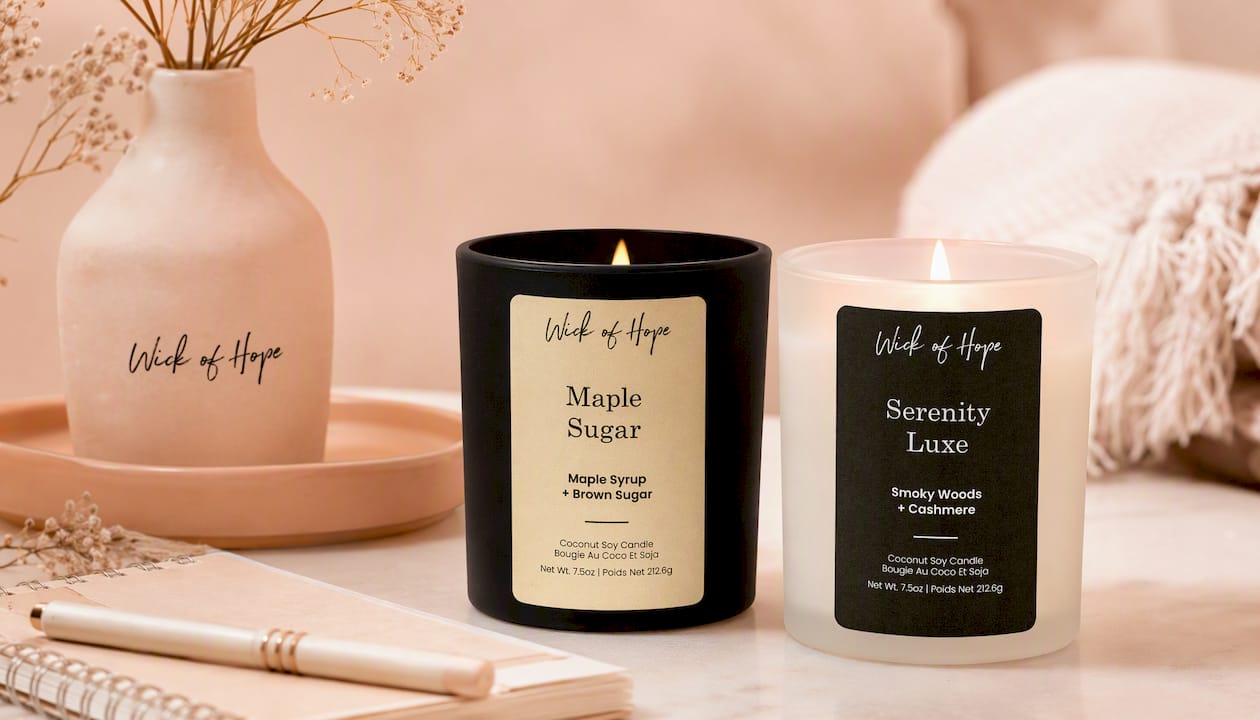
The Maple Sugar Candle, with its warm maple syrup and brown sugar profile, and the Serenity Luxe Candle, built around smoky woods and cashmere, both showcase how a carefully measured fragrance load delivers strong scent throw without pushing past the point where oil starts to separate. If a little natural surface texture doesn’t bother you and you want the same clean formulation at a lower price, the 8oz Candle Seconds line offers candles with minor cosmetic marks at a discount, which is honestly the most practical answer to sweating there is: buy a candle from a brand that already accounts for it. Browse the full Non-Toxic Candles collection, check out our Non-Toxic Wax Melts if you’d rather skip wicks entirely, or pick up a gift card for someone who’d appreciate a cleaner burn. Head to the shop page now and choose the scent that fits your space.
Sources
For deeper technical detail, CandleScience’s soy wax troubleshooting guide and Nature’s Garden’s explainer on wet spots are two of the most cited references among candle makers. NI Candle Supplies covers fragrance load thresholds in more detail, and Fragrances for Candles breaks down preheat and pour temperature ranges. If you make candles professionally, check your specific wax supplier’s technical data sheet, since exact pour temperatures and fragrance limits vary by blend.
- Soy Wax Troubleshooting Guide - CandleScience
- What Are Wet Spots in Candles? – Nature’s Garden
- Preventing wet spots and frosting in container candles — Fragrances for Candles
- Candle Sweating: Causes And Solutions Explained (2025) – NI Candle Supplies LTD
FAQ
Why is my candle sweating?
Your candle is sweating because of fragrance oil separating from the wax or the wax pulling slightly away from the container as it cools, not because of actual moisture. Temperature swings during cooling, storage, or shipping, along with a fragrance load pushed past the recommended 6 to 10 percent range for soy and coconut soy blends, are the most common triggers.
What is the 3-hour rule for candles?
The 3-hour rule is a general burning guideline that says you shouldn’t burn a candle for more than about three hours at a stretch. It’s meant to prevent the wax pool from getting too hot, overheating the container, or drowning the wick, which our candle safety checklist covers in more detail.
What are the symptoms of candle toxicity?
Symptoms tied to lower-quality candles typically involve heavy black soot, a harsh chemical smell instead of clean scent throw, and headaches or irritation after burning in an enclosed room, usually linked to paraffin-based waxes and synthetic additives. Wickofhope candles are made from coconut soy wax specifically to avoid these issues, since the brand emphasizes non-toxic, clean-burning formulations across its collection.
Do candles give off moisture?
No, candles don’t give off actual water moisture during normal storage or burning. What looks like moisture on a candle’s surface is almost always oil beads or wax pulling away from the glass, both cosmetic issues rather than signs of dampness or a leak.


