


A tall, flickering flame is almost always fixable at home. Extinguish the candle, let the wax cool completely, then trim the wick to a quarter inch before you relight it. Common culprits are an overgrown wick, a draft, or too much fragrance oil competing for fuel. If the flame stays tall after cooling, trimming, and relighting in still air, stop burning that candle and treat it as a safety issue, not a maintenance one.
TL;DR:
- A tall, flickering flame is often caused by an overgrown wick, drafts, or excessive fragrance oil, and these issues can usually be fixed at home by trimming and cooling the wick.
- Flame height should be around one inch and shaped like a steady teardrop; taller or dancing flames indicate a safety concern or formulation problem.
- Always extinguish, cool, and trim the wick to a quarter inch before relighting, and avoid burning the candle longer than three to four hours to prevent heat buildup.
- If the flame remains high despite proper trimming and setup, the candle may have a production issue, requiring replacement rather than further troubleshooting.
- Signs to stop using a candle include persistent mushrooming, soot, excessive heat, or a flame that licks the container wall, indicating unsafe burning conditions.
Table of Contents
- What Does a Correct Candle Flame Look Like?
- Why Does a Candle Flame Grow Too Tall?
- How to Fix a Candle Flame That’s Too High
- When Should You Stop Using a Candle Entirely?
- What Wick of Hope Recommends for Safer Burning
- Why We Care About Flame Control, Not Just Fragrance
- Choose Candles Built to Burn Clean From the Start
- Sources
- FAQ
What Does a Correct Candle Flame Look Like?
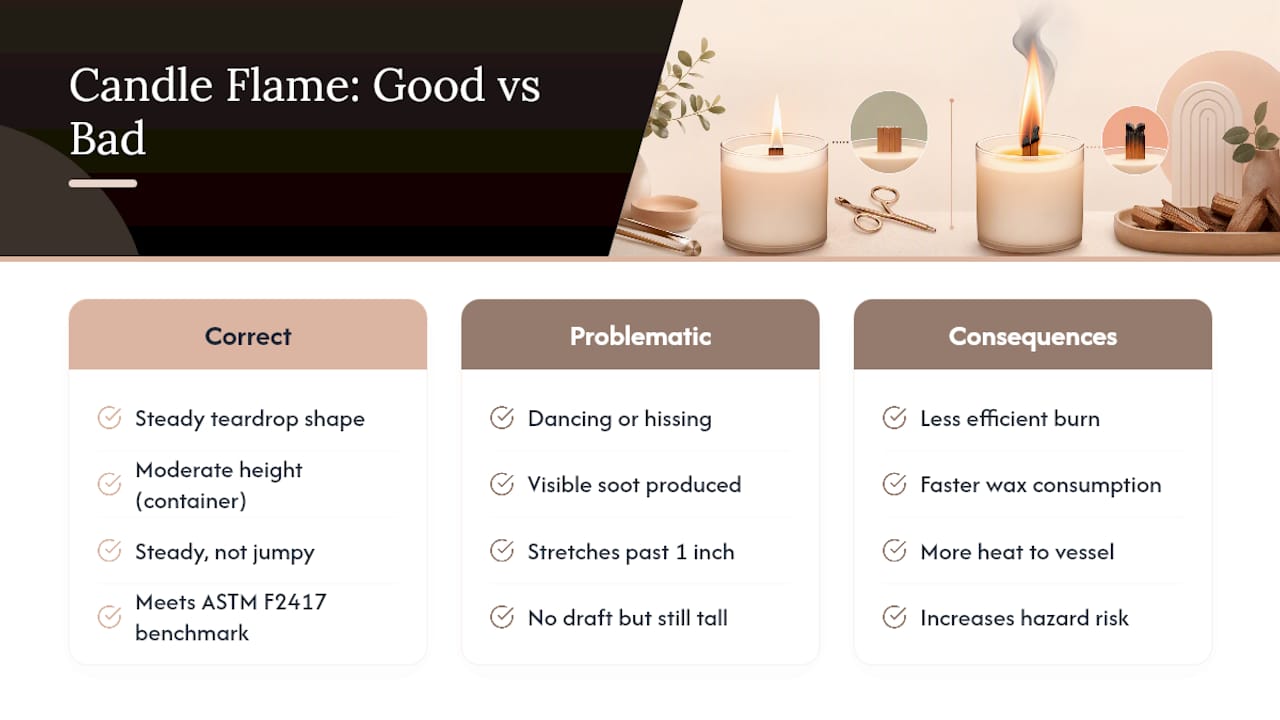
A healthy flame on a container candle is typically under a moderate size and steady shape, shaped like a gentle, steady teardrop rather than a jumpy spike. Pillars and tapers can run a touch taller, but the same rule applies: steady beats tall. If your flame is dancing, hissing, throwing off visible soot, or stretching well past an inch with no draft in the room, something is off.
The industry benchmark here is ASTM F2417, the consumer candle safety specification that sets baseline expectations for how a candle should perform, including flame behavior. Flame height matters beyond looks. A taller flame burns less efficiently, which means more soot, faster wax consumption, and more heat transferred to the glass or vessel holding your candle. That heat buildup is exactly what turns a cosmetic annoyance into a real hazard.
Why Does a Candle Flame Grow Too Tall?
Most tall flames trace back to one of five causes, and figuring out which one you’re dealing with tells you exactly how to fix it.
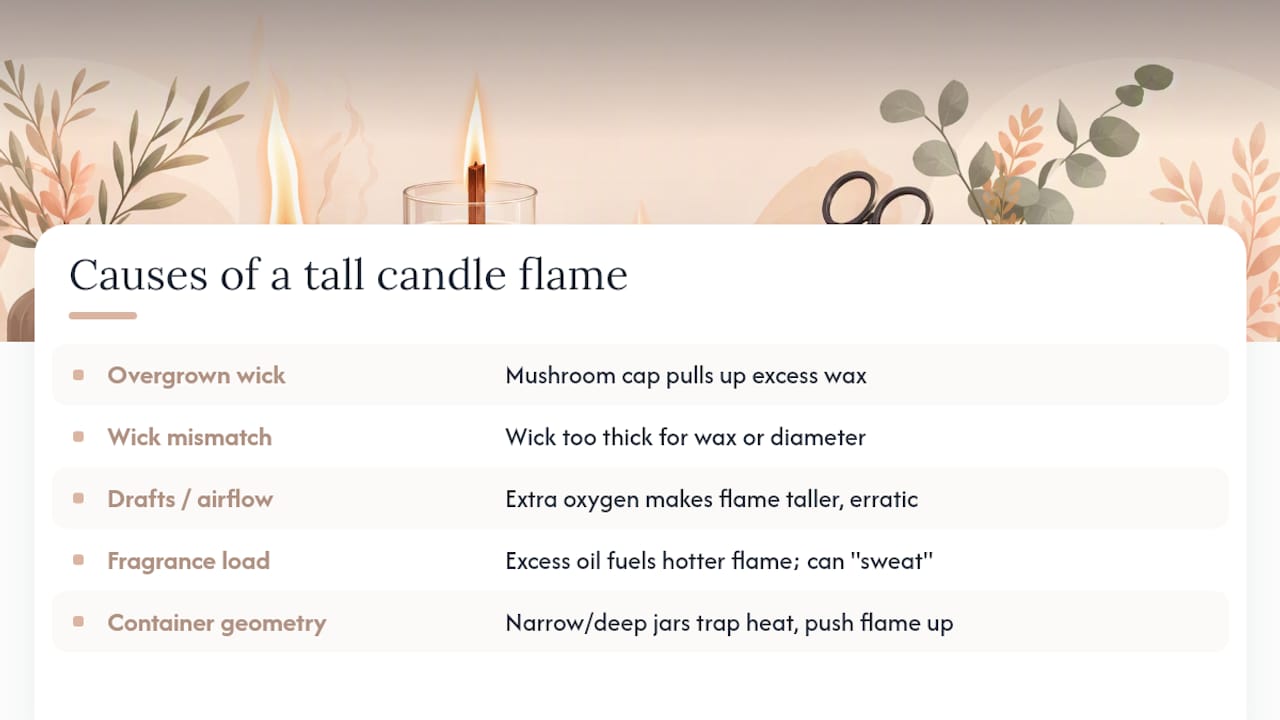
An overgrown or mushrooming wick is the most common offender. As a wick burns unchecked, capillary action pulls up more melted wax than the flame can efficiently burn, and carbon builds up on the tip into a bulbous “mushroom” cap. That cap increases the wick’s effective surface area and can trigger sudden flare-ups if left alone.
Wick size mismatch happens when a wick series is simply too thick for the wax blend or container diameter it’s paired with. No amount of trimming fixes this permanently. It’s a manufacturing issue.
Drafts and airflow feed a flame more oxygen than it needs, making it taller and more erratic. A ceiling fan, an open window, or foot traffic near the candle can all cause this.
Fragrance load plays a bigger role than most people realize. Excess fragrance oil in the wax acts as extra fuel, and an overloaded blend can separate and “sweat” oil to the surface, feeding a hotter flame even right after trimming.
Container geometry also matters. Narrow, deep jars trap heat and can push flames higher, while wide jars sometimes need a stronger wick just to reach the edges evenly.
How to Fix a Candle Flame That’s Too High
Work through these steps in order. Skipping ahead, especially skipping the cooling step, is how people burn their fingers.
- Extinguish the candle safely. Use a snuffer or gently blow it out, then step back. Never leave a candle with an unusually tall flame unattended while you go looking for scissors.
- Let it cool completely. Wait until the wax has fully hardened, usually 15 to 20 minutes. Manufacturer guidance is consistent on this: cooling before you touch the wick prevents burns and keeps the wick from bending sideways.
- Trim to a quarter inch. Use a wick trimmer or sharp scissors. If the tip has mushroomed into a carbon cap, snip that off entirely rather than trying to trim around it.
- Clear away debris. Fish out any trimmed bits with a toothpick or bobby pin so they don’t smolder or clog the flame once you relight.
- Move the candle to still air. Set it away from vents, fans, and open windows before relighting.
- Relight and observe for a few minutes. A properly trimmed wick in calm air should settle into that steady, inch-tall teardrop within a minute or two.
Pro Tip: Center the wick before you relight. A wick that’s leaning against the glass wall will run hot on one side no matter how well you’ve trimmed it, and it can crack or discolor the container over time.
If the flame is still tall after all six steps, the problem isn’t your technique. It’s the candle. Overwicked or over-fragranced candles from a poor batch won’t correct themselves no matter how carefully you trim, and that’s a formulation issue best handled by the maker, not something to keep troubleshooting at home. For guidance on wooden-wick specific care, Wick of Hope’s wooden wick safety guide walks through the slightly different trimming rhythm those wicks need.
When Should You Stop Using a Candle Entirely?
Once you’ve trimmed, cleared debris, and relit in still air, the next few minutes tell you everything.
Signs the fix worked:
- The flame settles into a steady teardrop around one inch tall
- No visible black smoke or soot ring forming on the jar
- The flame holds steady even with normal room movement nearby
Signs to stop burning that candle for good:
- The wick mushrooms again within the same burn session
- Smoke or soot continues after a clean trim
- The glass or vessel feels hot to the touch, not just warm
- The flame licks close to the container wall
- You hear popping, cracking, or see the container discoloring
Burn duration matters here too. Most makers recommend burning no longer than three to four hours at a stretch. Longer sessions let heat build up in the wax pool and container, which raises flame height even on a candle that started out fine. If a candle keeps failing the trim-and-relight test after two attempts, stop using it and, if it’s still within a return window, contact the seller rather than pushing through it.
What Wick of Hope Recommends for Safer Burning
Every Wick of Hope candle care recommendation starts with the same habit: trim before every single burn, not just when the flame looks off. On the first burn, let the melt pool reach the container’s edge before extinguishing. That prevents tunneling, which is its own cause of uneven, unpredictable flames later in the candle’s life. Wooden wicks in particular respond to a slightly different rhythm than cotton wicks, and Wick of Hope’s wood wick care guide breaks down the trimming angle and timing that keep that signature crackle without letting the flame get away from you. For a broader safety rundown covering drafts, burn times, and placement, the candle safety checklist covers the ten things worth checking before you strike a match.
Why We Care About Flame Control, Not Just Fragrance
A candle that throws a wild, tall flame isn’t just a safety concern to us. It’s a design failure. We build our candles around coconut soy wax and wooden wicks specifically because that combination tends to burn flatter and cleaner than paraffin blends fighting an oversized cotton wick. Good flame control also means better scent throw and a longer-lasting candle, since an efficient burn wastes less wax to soot and heat. Proper care isn’t a chore layered on top of enjoying a candle. It’s how you get the full life out of one.
— Andy
Choose Candles Built to Burn Clean From the Start
You can trim and troubleshoot forever, but the easiest fix for a temperamental flame is starting with a candle designed not to have one. Wick of Hope’s Non-Toxic Candles collection uses coconut soy wax paired with wooden wicks sized to match, so you’re not fighting an overwicked cotton wick from the first light.

The Velvet Ember Candle in Saffron and Tobacco is a good example of that pairing in action: a warm, layered scent without the flare-ups that come from an overloaded fragrance blend. If you want something lower-commitment to test how a clean burn should feel, the Tealight is a small, contained way to get familiar with a steady flame. Budget-conscious shoppers can find the same quality at a lower price through the 8oz Candle seconds line, which are just as clean-burning with minor cosmetic imperfections. Every purchase also supports women and children escaping crisis, so a cleaner burn at home does more than sit on your shelf. Browse the collection and check current pricing, or take a look at wax melts if you’d rather skip an open flame altogether.
Sources
Flame height guidance here draws on ASTM F2417 for consumer candle safety, ScienceInsights for wick and draft mechanics, and Yankee Candle’s help center for cooling and trimming steps. For product-specific care, see Wick of Hope’s candle care guide.
- Why Is My Candle Flame So High? Causes & Fixes - ScienceInsights
- ASTM F2417-17 Consumer Candle Safety Specification
- Why Is My Candle Flame Too High? Causes and Fixes - DIY Products 101
FAQ
Why Is My Candle’s Flame So High?
The most common cause is a wick that’s grown too long or mushroomed with carbon buildup, which pulls up more wax than the flame can burn cleanly. Drafts and heavy fragrance loads can also push a flame taller than normal. Extinguishing, cooling, and trimming the wick to a quarter inch fixes most cases.
How High Is Too High for a Candle Flame?
Anything noticeably taller than about one inch on a container candle, especially if it’s dancing, sooty, or throwing black smoke, counts as too high. A steady, teardrop-shaped flame around an inch tall is the target for most jar candles.
What Does It Mean if a Candle Flame Is Tall?
A tall flame usually means the wick is drawing up more fuel than it can efficiently combust, whether from excess wick length, a draft feeding extra oxygen, or too much fragrance oil acting as fuel. It’s a sign to extinguish, cool, and check the wick before relighting rather than something to ignore.
What Is the Three-Hour Rule for Candles?
Most makers recommend burning a candle for no more than three to four hours at a stretch to avoid overheating the wax pool and container. Burning longer than that raises the risk of mushrooming, soot, and flame height creeping up as heat builds in the vessel.


