


Typical candle use at home is unlikely to cause chronic disease for most people, but it does raise indoor particulate and VOC exposure while a candle burns. The main pollutants are soot (PM2.5 and black carbon), volatile organic compounds like benzene and toluene, and PAHs, and people with asthma, heart disease, or young lungs may notice symptoms sooner than others. Ventilate the room, skip paraffin when you can, and keep your wick trimmed. Those three habits address most of the risk.
TL;DR:
- Most regular candle use in well-ventilated homes does not significantly increase long-term cardiovascular or respiratory risks, according to a large Danish cohort study.
- Stressful burning conditions, such as drafts or long wicks, cause short spikes in soot and volatile organic compound emissions, which can trigger immediate health reactions in sensitive individuals.
- Children, pregnant people, older adults, and those with pre-existing respiratory or heart conditions are more vulnerable to the effects of candle soot and VOC exposure.
- Choosing candles made with plant-based waxes and natural wooden wicks, along with proper burning techniques, can substantially reduce indoor soot and VOC emissions.
- Maintaining good ventilation, trimming wicks, and avoiding drafts during burning significantly decrease the risk of soot spikes and irritation from candle fumes.
Table of Contents
- What Is Candle Soot and Why Does It Matter for Your Health?
- What Does the Research Actually Show About Candle Soot?
- Who Should Worry Most About Candle Smoke Exposure?
- Which Waxes and Wicks Produce Less Soot?
- How Do You Reduce Exposure When You Burn Candles?
- How Wick of Hope Approaches Cleaner Candle Design
- What Air Quality Standards Apply to Candle Smoke?
- What Are the Long-Term Risks of Chronic Candle Soot Exposure?
- Your Safe-Use Checklist for Burning Candles at Home
- Andy’s Take: Where the Candle Safety Conversation Gets It Backward
- Try a Cleaner Way to Burn Candles at Home
- Sources
- FAQ
What Is Candle Soot and Why Does It Matter for Your Health?
Soot is the black carbon left behind when a flame burns fuel incompletely. It floats through your living room as part of a broader pollutant mix that includes PM2.5, the fine particulate matter small enough to slip past your nose and throat and settle deep in your lungs, and ultrafine particles smaller still. Particle size is the whole story here: bigger particles get trapped in your upper airway and mostly get coughed or swallowed away, while anything under 2.5 microns can reach the alveoli, where gas exchange with your bloodstream happens.
Candles don’t just release particles. Burning wax and fragrance oils sends a cocktail of gases into the air, some of which fall into the volatile organic compound category:
- Benzene, a byproduct of incomplete combustion linked to blood and immune effects at high, sustained exposure
- Toluene, common in many fragrance and solvent formulations
- Formaldehyde, released in small amounts from certain wax and fragrance combinations
- Polycyclic aromatic hydrocarbons (PAHs), particle-bound compounds that ride along with soot
The amount released depends heavily on how the candle burns, not just what it’s made of. A steady, undisturbed flame burns fuel almost completely and produces relatively little visible soot. Introduce a draft, a fan, an open window with a crosswind, or a wick that’s grown too long, and the flame starts flickering. That flickering pushes the candle into what emission researchers call stressed burn, where the flame temporarily lacks enough oxygen to combust the wax vapor fully. The result is a soot-mode spike, a short burst where particle and PAH output can jump far above what the same candle produces during calm, steady burning, according to chamber research on stressed candle burning. Wax composition and wick design shift the baseline up or down, but burning behavior decides how bad the peaks get.
What Does the Research Actually Show About Candle Soot?
The strongest population-level evidence comes from a Danish cohort study that tracked 6,757 adults and looked for a connection between candle use and hospital visits for cardiovascular or respiratory events. It found none.
Hazard ratios for cardiovascular and respiratory hospital contacts stayed close to 1.0 even among frequent candle users, meaning the Danish cohort study detected no measurable increase in real-world disease risk tied to regular candle burning.
That’s a meaningful result, but it answers a specific question: does everyday candle use in real homes lead to hospital-level cardiovascular or respiratory events? It doesn’t rule out milder, shorter-term effects that never send anyone to the emergency room.
That’s where chamber studies fill the gap. A randomized crossover trial exposed young adults with mild asthma to candle emissions in controlled conditions and tracked exhaled-breath VOCs alongside biomarkers of airway inflammation. Researchers found transient changes after a five-hour exposure window, changes that had largely resolved by the 24-hour mark in some of the study’s participants. That’s a real, measurable acute response, even if it’s a temporary one.
Emission-measurement studies add the mechanical piece. Under stressed burning conditions, researchers have recorded particle mass emissions running orders of magnitude higher than during steady burning, with soot, PM2.5, and particle-phase PAHs all spiking together. A separate analysis found that scented candle use can raise indoor PM concentrations enough to shift the airborne particle profile of a room, with fine particles lingering and traveling several meters from the source, according to research on scented candles and indoor air.
None of this evidence is airtight on its own. The cohort study relies on self-reported burning habits and can’t isolate brief high-exposure episodes. The chamber trials use small samples and short timeframes that don’t tell us much about decades of exposure. Emission studies happen in controlled lab settings that don’t perfectly mirror a living room with pets, cooking, and open windows. Put together, though, the picture is consistent: background risk from typical use looks low, while short bursts of stressed burning create real, if temporary, biological responses in sensitive people.
Who Should Worry Most About Candle Smoke Exposure?
Not everyone reacts to candle emissions the same way. Some people burn candles nightly for years without noticing a thing, while others get a headache within twenty minutes. Age, existing lung function, and cardiovascular health all shift where that line sits.
The groups most likely to notice effects, or to face higher stakes if they do, include:
- Children, whose smaller airways and higher breathing rates relative to body size mean greater particle deposition per breath
- Pregnant individuals, given general guidance to minimize airborne pollutant exposure during pregnancy
- Older adults, particularly those with reduced cardiovascular or respiratory reserve
- People with asthma or COPD, whose airways are already primed to react to irritants
- Anyone with existing heart disease, since fine particulate exposure is a known cardiovascular stressor at higher, sustained levels
Watch for eye or nose irritation, a dry cough, a mild headache, or an asthma flare that starts shortly after lighting candles and eases once you’re out of the room. Those are classic acute-irritation signs, and they’re your body’s way of telling you the air quality in that space just changed.
Pro Tip: If symptoms show up consistently with candle use, don’t tough it out. Extinguish the candle, open a window or run an exhaust fan for a few minutes, and step outside briefly. If symptoms persist beyond that or keep recurring, it’s worth mentioning to your doctor, especially if you already manage asthma or a heart condition.
Which Waxes and Wicks Produce Less Soot?
Wax choice sets a baseline, but it isn’t the whole equation. Paraffin, a petroleum byproduct, tends to release more VOCs during combustion than plant-based alternatives, a pattern echoed across consumer health reviews of candle safety. Plant-based waxes like soy, coconut, and beeswax generally produce less soot, though formulation still matters. A poorly blended soy candle with heavy fragrance load can still smoke more than a well-made paraffin one.
Wick material plays its own role:
- Cotton and natural-fiber wicks generally burn cleaner and more predictably than synthetic alternatives
- Wooden wicks tend to burn at a steadier rate, which helps avoid the flicker that triggers stressed burn
- Metal-core wicks, once common, raised safety concerns tied to metal particulate release and are now rare in quality candles
Fragrance oil concentration, dye additives, and manufacturing consistency all layer on top of wax and wick choices. A cheaply made candle with a clean-sounding wax type can still underperform a well-formulated one, so material labels only tell part of the story.
How Do You Reduce Exposure When You Burn Candles?
Small adjustments to how you burn make a bigger difference than most people expect, since stressed burning drives the worst soot spikes more than wax type alone.
- Trim the wick to about a quarter inch before each burn. A long wick burns hotter and less evenly, pushing the flame toward stressed conditions.
- Let the first burn create a full melt pool across the entire surface. This prevents tunneling and keeps later burns steadier.
- Keep candles away from drafts, fans, and open windows that cause flickering, and limit any single burn to a few hours at most.
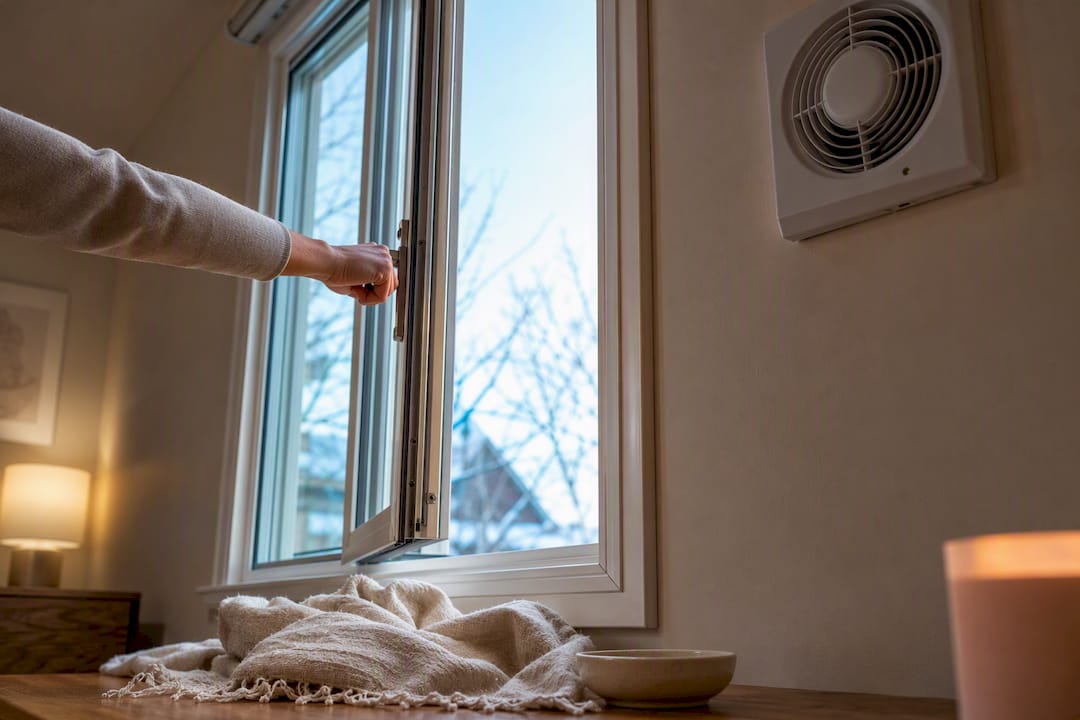
- Ventilate the room, cracking a window or running a kitchen or bathroom exhaust fan, and consider a HEPA air cleaner if you burn candles often in a closed space.
- Choose lighter fragrance loads or unscented options if anyone in the household is sensitive, and lean toward plant-based waxes with quality wicks.
Never leave a burning candle unattended, and keep candles well out of reach of children and pets. Extinguishing a candle also releases a brief pulse of particles, so ventilating for a minute or two after blowing it out helps clear that final release before it settles.
Pro Tip: Trim wicks with actual wick trimmers rather than scissors. Scissors tend to leave a jagged, uneven cut that promotes flickering, exactly the burning pattern you’re trying to avoid.
How Wick of Hope Approaches Cleaner Candle Design
Material choices set the ceiling on how clean a candle can burn, which is the whole premise behind Wick of Hope’s build. Every candle uses natural coconut soy wax rather than paraffin, paired with FSC-certified wooden wicks chosen for steadier, more predictable burns. Packaging is biodegradable and every formula is vegan, decisions rooted in reducing what ends up in your home air and in landfills alike.
Wick of Hope also treats candle education as part of the product. Guides on how candles affect indoor air quality and a full candle safety checklist walk through the same burning practices covered above, plus guidance on essential oil candle limits around pets and asthma for households managing extra sensitivity. That content, along with a candle care guide for day-to-day maintenance, backs up a 4.9-star rating across more than 650 reviews.
- Natural coconut soy wax base across the product line
- FSC-certified wooden wicks for steadier burns
- Biodegradable, vegan packaging throughout
- Educational resources on burning safety and air quality built into the brand’s content
What Air Quality Standards Apply to Candle Smoke?
No regulatory body sets a candle-specific pollution limit for your living room, but general indoor air quality guidance still applies to the pollutants candles release. The World Health Organization’s air quality guidelines set target thresholds for PM2.5 exposure because of its established links to cardiovascular and respiratory strain at sustained, elevated levels. Those thresholds were built around outdoor and long-term exposure data, not short bursts from a dinner candle, but the underlying logic holds indoors too: less fine particulate in the air you breathe is better, especially over cumulative daily exposure.
Consumer-health guidance takes a more practical angle for households. Reviews of candle emissions data generally conclude that normal home use stays below WHO thresholds for most people, provided rooms are ventilated and candles aren’t burned constantly in tightly sealed spaces. The gap between “detectable” and “harmful” is where most of the household guidance lives. Candles add measurable pollutants to indoor air. Whether that measurable amount matters for your health depends on room size, ventilation, burn frequency, and your own sensitivity. Treating ventilation as a baseline habit, not an occasional afterthought, is the simplest way to stay comfortably under any meaningful threshold.
What Are the Long-Term Risks of Chronic Candle Soot Exposure?
The honest answer is that long-term human data hasn’t found a strong signal. The Danish cohort tracking thousands of adults over years of real-world candle use found no significant increase in cardiovascular or respiratory hospital events tied to frequent burning. For the average household burning candles a few times a week in a ventilated room, that’s reassuring.
Where more caution is warranted is at the extremes: daily, hours-long burning in poorly ventilated spaces, especially with paraffin candles prone to stressed burning. Repeated exposure to PM2.5 and PAHs at meaningfully elevated levels is associated with cardiovascular and respiratory strain over time in the broader air pollution literature, even if candle-specific long-term data remains limited. The uncertainty cuts both ways. Absence of proof of harm at typical exposure levels isn’t the same as proof of safety at every exposure level, which is exactly why burning technique and ventilation matter more the more often you burn.
Your Safe-Use Checklist for Burning Candles at Home
Pull all of this together and the guidance is straightforward enough to run through before you strike a match, including practical advice on ventilation in home design to reduce exposure.
- Trim the wick to a quarter inch every time
- Burn in a ventilated room, window cracked or fan running
- Avoid drafts and fans that cause flickering
- Limit burns to a few hours at a stretch
- Choose plant-based waxes and quality wicks when buying
- Go lighter on fragrance if anyone nearby is sensitive
- Never leave a burning candle unattended
- Keep candles away from children and pets
- Ventilate briefly after extinguishing
Most of this comes down to steady burning and fresh air. Get those two things right and you’ve addressed the bulk of what the research flags as risk.
Andy’s Take: Where the Candle Safety Conversation Gets It Backward
Most candle safety advice fixates on wax type, as if switching from paraffin to soy solves the whole problem. It doesn’t. The emission research on stressed burning makes a stronger case for burning technique than for ingredient labels: a flickering, drafty burn on a “clean” wax can throw off more soot than a steady burn on a lesser one.
What the evidence actually supports is a layered approach. Start with better materials, because a well-made soy or coconut wax candle on a wooden wick gives you a lower emissions ceiling to work from. Then treat burning habits, wick trimming, avoiding drafts, ventilating the room, as non-negotiable rather than optional extras. The Danish cohort data is genuinely reassuring for casual use. It’s not a green light to ignore how you burn.
If you have asthma, young kids, or a heart condition in the house, don’t wait for symptoms to show up before adjusting habits. Small changes now cost nothing and prevent the acute reactions the chamber studies keep turning up.
— Andy
Try a Cleaner Way to Burn Candles at Home
Everything covered above points to the same conclusion: material quality and burning habits together determine how much soot and VOC exposure a candle adds to your home. Wick of Hope builds every candle around that principle, using natural coconut soy wax and wooden wicks designed for steadier, less stressed burns than paraffin blends with cheaper wick cores.
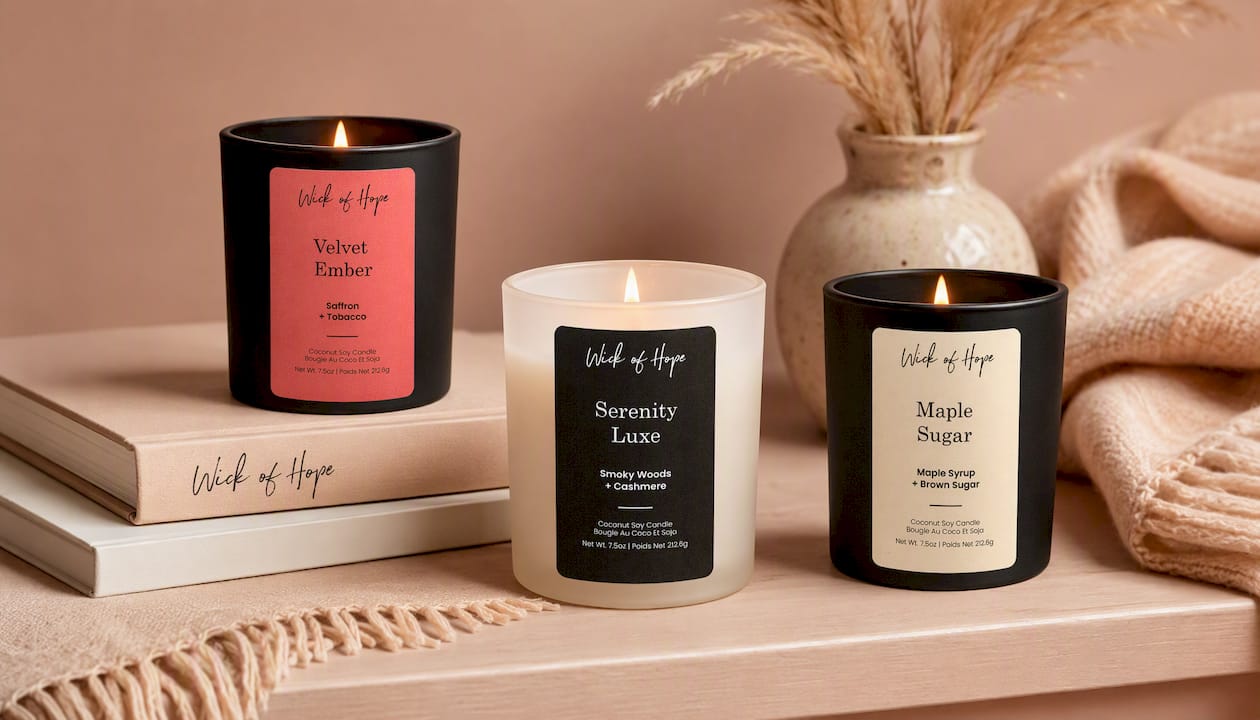
The Velvet Ember Candle | Saffron + Tobacco works well for evening use in a living room or study, where a steady burn and good ventilation let its warmer notes come through without overloading the air. If you’re shopping for a gift or want something suited to a bedroom or quiet reading nook, the Serenity Luxe Candle | Smoky Woods + Cashmere pairs a softer scent profile with the same wooden wick construction. For a lighter, everyday option, especially around the holidays or for gifting, the Maple Sugar Candle | Maple Syrup + Brown Sugar offers a milder fragrance load that suits sensitive households.
Whichever one you choose, trim the wick before lighting, let the first burn form a full melt pool, and keep a window cracked. Browse the full collection at Wick of Hope and pick the scent that fits your space.
This article is general information, not a substitute for advice from a qualified doctor. Consult a qualified healthcare professional about your own circumstances before acting on anything here.

Sources
Candles are one entry on a long list of things that put particulate matter into your home’s air, and they’re rarely the biggest one. Gas stoves, wood-burning fireplaces, cigarette smoke, and even frying food on high heat all generate PM2.5 and, in several cases, VOCs at levels that can exceed what a candle produces during normal use.
Cooking, particularly high-heat frying and searing, is a heavier and more frequent contributor to indoor PM2.5 in most households than occasional candle burning. Wood-burning fireplaces produce substantial particulate and black carbon output, often for hours at a stretch. Cigarette smoke carries a far denser load of carcinogens and fine particulate than candle smoke, and unlike a candle, it’s designed to be inhaled directly rather than diffused into room air.
That comparison isn’t a reason to dismiss candle soot. It’s a reason to keep it in proportion. A well-made candle burned with good technique in a ventilated room adds a modest, manageable slice to your total indoor air pollutant load. Stacking multiple sources, running a gas stove, a fireplace, and several stressed-burning candles in the same closed room, adds up faster than any single source would on its own. Ventilation habits that reduce cooking and fireplace pollutants do double duty for candle emissions too.
- Use of candles and risk of cardiovascular and respiratory events in a Danish cohort study (2022)
- Emissions of soot, PAHs, ultrafine particles, NOx and other health relevant compounds from stressed burning of candles in indoor air (2021)
- Investigating short-term lung inflammation using exhaled breath VOCs from exposure to candles (2026)
- Are Candles Bad for Your Health? | Consumer Reports (2023)
- Impact of scented candle use on indoor air quality and airborne microbiome | Scientific Reports (2025)
FAQ
Are candle fumes unhealthy?
Candle fumes contain VOCs and fine particulate matter that can irritate sensitive airways, but a large cohort study found no significant link between regular candle use and hospital visits for cardiovascular or respiratory events. Ventilation and steady burning keep fume exposure low for most households.
Is candle smoke worse than cigarette smoke?
No. Cigarette smoke carries a much denser concentration of carcinogens and fine particulate designed for direct inhalation, while candle smoke diffuses into room air at generally lower, intermittent concentrations.
What are the signs of candle toxicity?
Watch for eye or nose irritation, a dry cough, a mild headache, or an asthma flare that starts shortly after lighting a candle and improves once you leave the room or ventilate. Persistent or severe symptoms warrant a conversation with a doctor.
Is black smoke from a candle bad for you?
Visible black smoke signals a stressed, flickering burn producing elevated soot, PM2.5, and PAHs, and it’s worth addressing right away by trimming the wick and removing drafts. Occasional brief black smoke isn’t an emergency, but candles that smoke consistently need a wick trim, a draft check, or a different product like Wick of Hope’s coconut soy candles, built around steadier wooden wicks.


